

By Khawaja Hamza
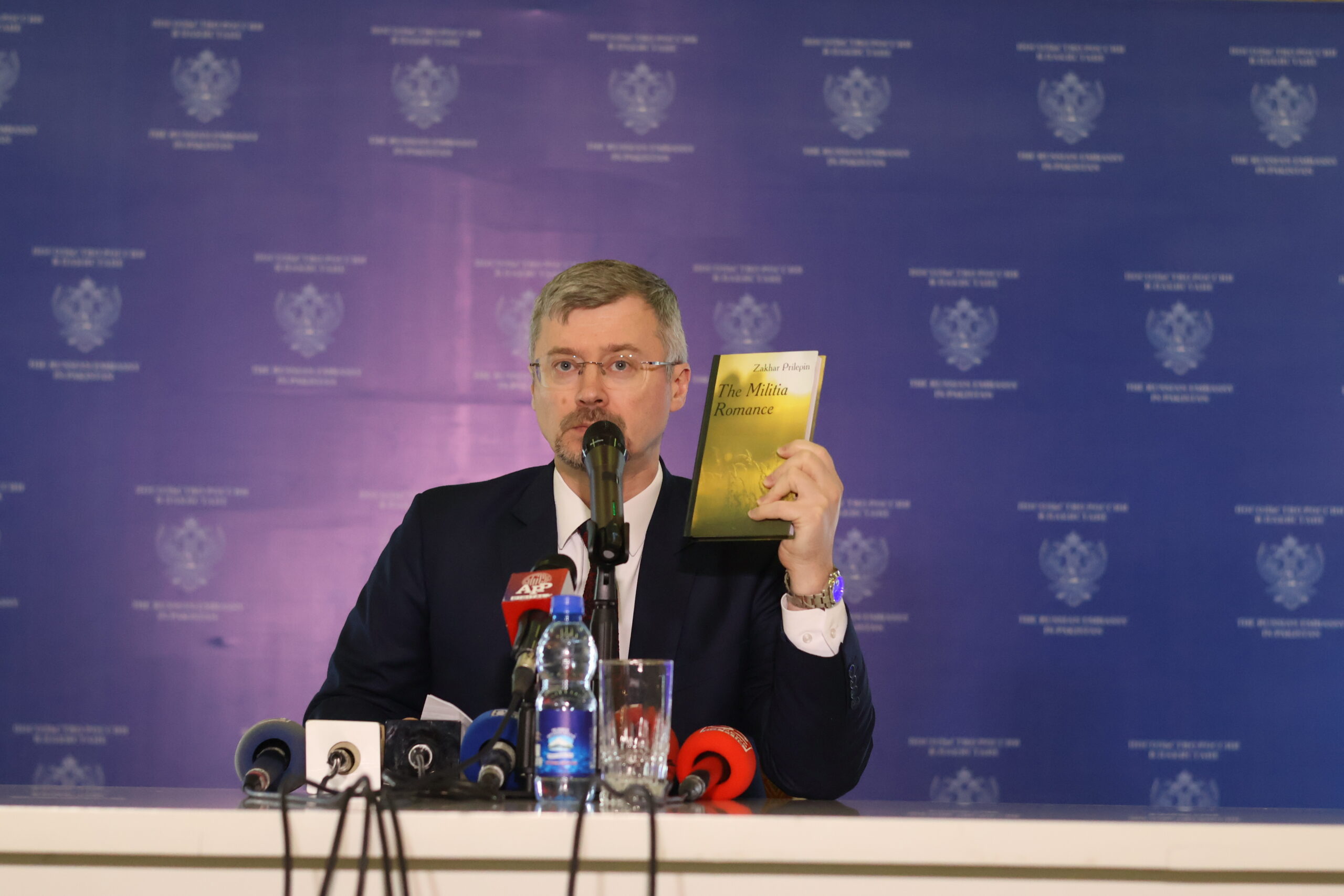
Russian Ambassador to Pakistan Albert P. Khorev on Tuesday delivered an extensive statement on the situation in and around Ukraine, while also praising Pakistan’s diplomatic role and acknowledging Islamabad’s growing importance in international affairs.
Addressing journalists during a media briefing held on May 19, 2026, Ambassador Khorev began by referring to the recent commemoration of the 81st anniversary of Victory Day, marking the Soviet Union’s role in defeating Nazi Germany during World War II. He described Victory Day as Russia’s most sacred national holiday and criticized what he called growing attempts in several countries to vandalize or remove monuments dedicated to those who fought against Nazism and fascism.
Khorev highlighted Russia’s annual United Nations resolution titled “Combating glorification of Nazism, neo-Nazism, and other practices that contribute to fuelling contemporary forms of racism, racial discrimination, xenophobia and related intolerance.” He noted that the latest version of the resolution was adopted by the 80th UN General Assembly on December 15, 2025, with support from 119 countries, including Pakistan. The ambassador thanked Pakistan for consistently supporting the initiative.
Discussing the Russia-Ukraine conflict, Khorev stated that Russia had announced a ceasefire from May 8 to May 11 as a goodwill gesture during Victory Day commemorations, claiming Russian forces fully respected the truce. However, he accused Ukraine of violating the ceasefire more than 30,000 times during the three-day period, according to figures from the Russian Ministry of Defense. He also alleged that Ukraine ignored a previous Easter ceasefire in April 2026.
The ambassador questioned Ukraine’s ability to implement a broader ceasefire while accusing President Volodymyr Zelensky and Western governments of prolonging the conflict. Khorev alleged that forced mobilization inside Ukraine had intensified since 2022, with citizens reportedly being detained in public places and compelled to join military service. He claimed corruption, bribery, desertions, and abuses connected to recruitment centers had increased significantly.
Khorev further accused Western countries of continuing military support for Ukraine and stated that foreign mercenaries from several NATO countries, including the United States, the United Kingdom, France, Germany, Poland, Canada, and others, were participating in combat operations alongside Ukrainian forces. According to the ambassador, additional Western military aid to Ukraine in 2026 could amount to approximately $95 billion.
The Russian envoy also alleged that Ukraine had recently targeted Russian-linked energy infrastructure, including the Turkish Stream and Blue Stream gas pipelines, and accused Kiev of carrying out drone attacks on the Caspian Pipeline Consortium oil network, causing major financial losses to Kazakhstan and threatening regional energy security.
Khorev additionally claimed that Ukraine faced worsening problems related to corruption, organized crime, illegal arms trafficking, narcotics trade, and human trafficking. He alleged corruption within Ukraine’s leadership and defense procurement system, accusing some Western companies of supplying overpriced or poor-quality military equipment.
The ambassador rejected Western-backed legal initiatives against Russia, including the proposed “Special Tribunal for the Crime of Aggression against Ukraine,” calling them illegitimate and politically motivated. He also dismissed accusations regarding the “Bucha massacre,” describing them as fabricated propaganda designed to damage Russia internationally.
On the issue of Ukrainian children transferred during the conflict, Khorev said Russia and Ukraine had discussed the matter during negotiations in Istanbul in June 2025. He claimed only 339 minors had officially been identified as separated from their guardians and stated that several children had already been reunited with relatives through mediation efforts involving Qatar and the Vatican.
Khorev also referred to the 12th anniversary of the Odessa tragedy of May 2, 2014, where anti-Maidan protesters died during clashes in Odessa, saying those responsible had still not been brought to justice.
He further marked the 12th anniversary of Crimea’s reunification with Russia and criticized the transfer of the “Scythian gold” archaeological collection from Dutch authorities to Ukraine instead of Crimean museums, insisting the artifacts should eventually return to Crimea.
During the briefing, Ambassador Khorev also praised Pakistan’s balanced and constructive diplomacy. He welcomed Pakistan’s efforts in regional mediation and stated that if Islamabad wished to contribute toward mediation between Russia and Ukraine, Moscow would appreciate and support such efforts.
Khorev said Pakistan was steadily emerging as an important diplomatic player globally due to its balanced relations with Russia, China, Western countries, and regional powers, as well as its growing role in international dialogue and conflict resolution.
