

Islamabad — Pakistan is making every possible effort to bring the United States and Iran back to the negotiating table under the Islamabad Memorandum of Understanding (MoU) signed last month, the Foreign Office (FO) said on Thursday.
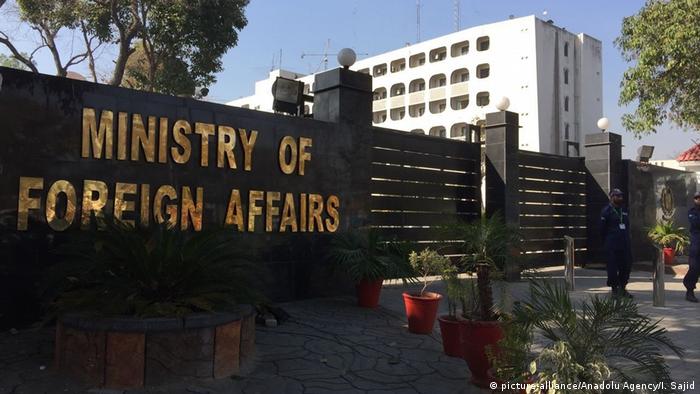
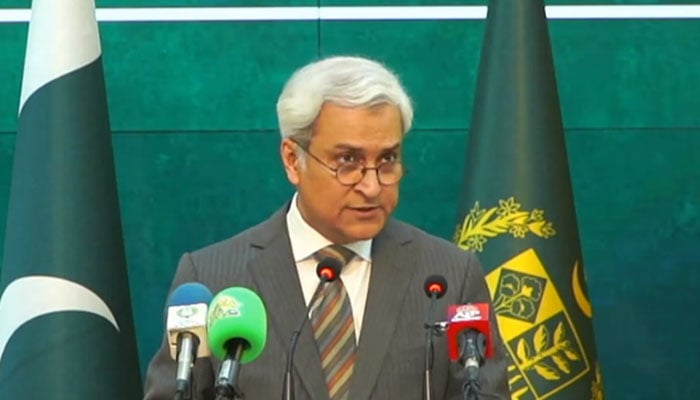
Speaking at the weekly media briefing, Foreign Office spokesperson Tahir Andrabi said Pakistan remains concerned over the fragile security situation in the Middle East despite a recent lull in hostilities that had raised hopes for a lasting ceasefire and renewed diplomatic engagement.
He reiterated that dialogue and diplomacy remain the only viable path toward resolving the crisis, adding that Pakistan welcomes all initiatives aimed at maintaining the cessation of hostilities and resuming negotiations between Washington and Tehran.
According to Andrabi, discussions are continuing to normalize the situation, particularly in the Strait of Hormuz, and to reduce tensions across the region. He said Pakistan is actively working to bring both sides back to the Islamabad MoU so that outstanding issues can be addressed in accordance with the agreement and the Pakistan-Qatar joint statement issued on June 22.
The spokesperson urged both the United States and Iran to exercise maximum restraint and honour their commitment to resume technical-level talks under the framework of the Islamabad MoU.
The agreement, signed on June 18 following weeks of diplomatic engagement, was intended to reopen the Strait of Hormuz and create a pathway toward ending the Middle East conflict through a 60-day negotiation process. However, renewed hostilities on July 7 disrupted the process after Iran attacked commercial shipping in the Strait of Hormuz, prompting retaliatory US military strikes.
The conflict has since widened, with the Houthi movement imposing a naval blockade on Saudi Arabia and fighting spreading to additional fronts, including Iraq, Egypt, Jordan, and strategic maritime routes.
Separately, the Foreign Office rejected a recent documentary by Germany’s Deutsche Welle (DW) on Pakistan’s nuclear programme, describing it as misleading and based on speculative commentary and biased sources.
Andrabi said the documentary misrepresented the history and rationale of Pakistan’s nuclear programme and warned that airing poorly sourced and one-sided content could undermine DW’s credibility. He stressed that responsible journalism should be based on rigorous verification, balanced reporting, and factual context rather than speculation.
