
By Nayyer Khawaja
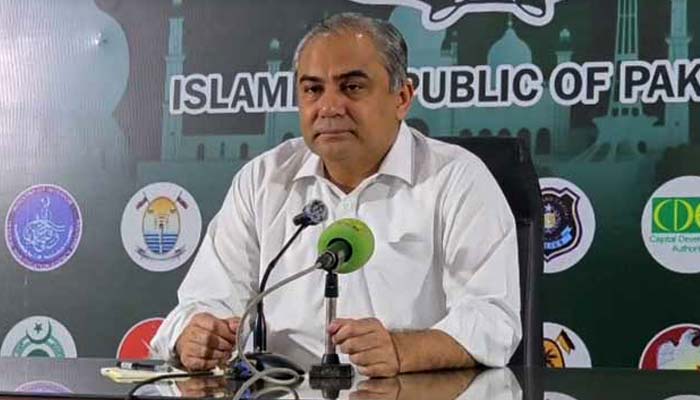
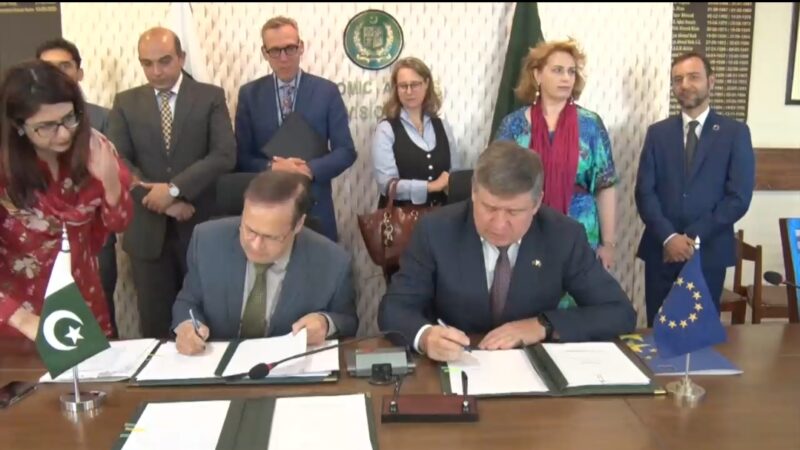
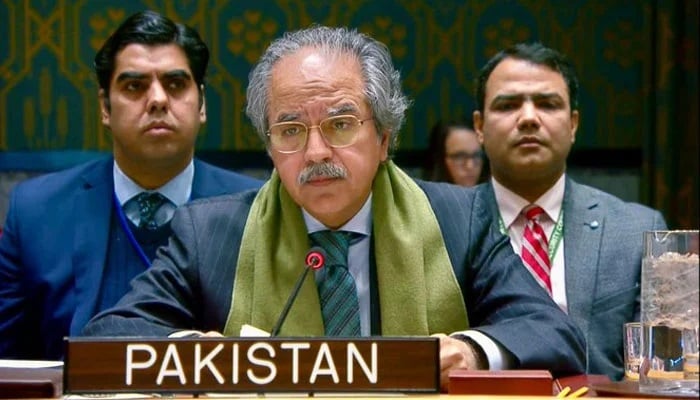
Islamabad: Pakistan on Thursday strongly rejected India’s remarks on the ongoing Legislative Assembly elections in Azad Jammu and Kashmir (AJK), reaffirmed its principled position on the Jammu and Kashmir dispute, highlighted its continuing diplomatic engagement in regional peace efforts, and outlined its positions on Bangladesh, Afghanistan, Iran, counterterrorism, Gaza, and regional maritime security during the Ministry of Foreign Affairs’ weekly media briefing.
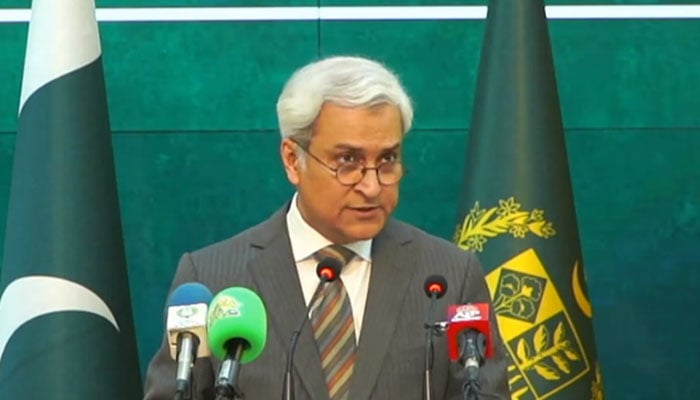
Foreign Office Spokesperson Tahir Andrabi described India’s comments on the AJK elections as “baseless, politically motivated and misleading,” saying they coincided with the seventh anniversary of India’s “illegal and unilateral actions” of 5 August 2019. He said those actions violated United Nations Security Council resolutions, international law and India’s own international commitments.
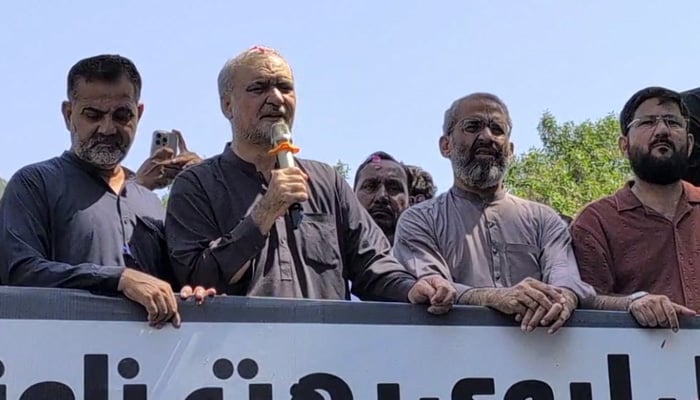
The spokesperson said the elections for the 13th Legislative Assembly of Azad Jammu and Kashmir were being conducted peacefully, transparently and in accordance with the constitutional and legal framework governing AJK, reflecting the democratic aspirations of its people. He maintained that India had neither the legal standing nor the moral authority to comment on the democratic process in AJK while continuing to deny political rights and democratic freedoms to the people of Indian Illegally Occupied Jammu and Kashmir (IIOJK).
Rejecting India’s response to Deputy Prime Minister and Foreign Minister Ishaq Dar’s remarks on Youm-e-Istehsal, Andrabi said no unilateral Indian action or political rhetoric could alter the internationally recognised disputed status of Jammu and Kashmir. He accused India of pursuing demographic changes, maintaining a heavy military presence, suppressing political freedoms and committing serious human rights violations in IIOJK.
Responding to questions regarding the United Nations’ recent remarks on Kashmir, the spokesperson welcomed the UN’s reaffirmation that India’s unilateral measures could not change the legal status of Jammu and Kashmir. He said the UN statement reflected established international law and reiterated Pakistan’s position that the dispute must be resolved through a free and impartial UN-supervised plebiscite in accordance with relevant Security Council resolutions.
On Bangladesh, Andrabi said Pakistan’s diplomatic engagement with Dhaka continued through normal diplomatic channels. While acknowledging recent political developments in Bangladesh, he reiterated Pakistan’s longstanding policy of non-interference in the internal affairs of other countries and said the issues arising from remarks made during an event hosted from India were matters between Bangladesh and India. He added that the people of Bangladesh were fully capable of resolving their internal affairs independently.
Rejecting allegations made by Sheikh Hasina’s son regarding the role of Pakistan’s intelligence agency in Bangladesh, the spokesperson categorically denied any such involvement and said Pakistan had no role in Bangladesh’s domestic political affairs.
Addressing regional diplomacy, Andrabi said Pakistan remained actively engaged in facilitating dialogue between Iran and the United States alongside brotherly countries, including Oman and Qatar. He welcomed recent progress on resolving tensions over the Strait of Hormuz, expressing hope that the understanding would create conditions for implementing the Islamabad Memorandum of Understanding, the Pakistan-Qatar Joint Statement and the resumption of technical-level talks between Tehran and Washington.
The spokesperson explained that while mediation is generally a long-term diplomatic process, Pakistan had played both facilitative and mediatory roles where appropriate and would continue supporting peaceful dialogue in coordination with regional partners.
On Gaza, Andrabi said any disarmament by Hamas must be accompanied by Israel’s withdrawal from occupied Gaza and restoration of the previous status. He described discussions regarding any future Pakistani peacekeeping role as premature, saying decisions would only be taken if an international proposal was formally presented.
Responding to reports of invitations extended to senior Iranian leaders, the spokesperson confirmed that invitations had been sent to Iranian Foreign Minister Dr. Seyed Abbas Araghchi and the Speaker of the Iranian Parliament. He said mutually convenient dates for the visit would be finalised through diplomatic channels.
Regarding the Saudi-led maritime security initiative, Andrabi said Pakistan was studying the evolving framework of the arrangement in consultation with military authorities. He noted that details regarding membership, operational modalities and future expansion were still being worked out. He also confirmed that the Chief of Army Staff and Chief of Defence Forces was accompanying Prime Minister Shehbaz Sharif during his visit to Saudi Arabia.
Commenting on attacks against commercial shipping in the Bab-el-Mandeb region, the spokesperson strongly condemned attacks on civilian maritime traffic, describing them as violations of international law. He said Pakistan’s defence cooperation with Saudi Arabia remained strong but did not confirm any plans for Pakistani naval escorts for Saudi vessels.
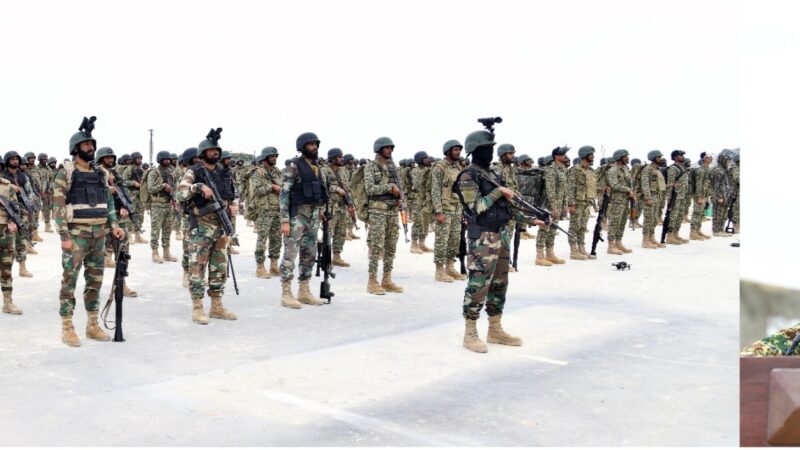
On the Pakistan-United States Counterterrorism Dialogue, Andrabi said both countries had agreed to strengthen cooperation on border security and dismantling terrorist facilitation networks operating across the region. He said discussions covered organisations operating from Afghan territory and specifically referred to the Balochistan Liberation Army (BLA) and other groups described by Pakistan as Fitna al-Hind. He confirmed that Pakistan and the United States continued to maintain intelligence cooperation and intended to deepen collaboration against terrorism.
Discussing Afghanistan, the spokesperson described recent clashes inside Afghanistan as an internal matter but reiterated Pakistan’s longstanding concern over the continued use of Afghan territory by the Tehreek-e-Taliban Pakistan (TTP). Referring to reported remarks by Taliban spokesperson Zabihullah Mujahid about improving relations with Pakistan, Andrabi said Pakistan sought peaceful and brotherly relations with Afghanistan but insisted that the Afghan authorities must eliminate support for the TTP if bilateral ties were to improve.
On Pakistan-Iran relations, Andrabi confirmed that the decision to keep border crossings open around the clock for trade fully complied with all applicable international sanctions while promoting bilateral commerce.
Responding to questions regarding Pakistan’s mineral sector, he said the country offered a transparent, competitive and level playing field for international investment, adding that participation by foreign companies would be governed by commercial considerations and national interests.
On defence exports, Andrabi explained that proceeds from arms sales formed part of Pakistan’s national exports, entered the country’s formal financial system through the State Bank of Pakistan and contributed to the national economy in accordance with established financial regulations.
The spokesperson also confirmed that Pakistan continued efforts, in coordination with Somalia, relevant ministries and international organisations, to secure the release of Pakistani sailors held captive by Somali pirates, acknowledging that operational and tribal complexities had delayed their repatriation.
Questions regarding domestic media regulations were referred to the Ministry of Information and Broadcasting, while the spokesperson declined to comment on internal political matters, including criticism of the government’s performance by a senior cabinet minister.
Concluding the briefing on a lighter note, Andrabi joked that although his posting to Geneva had been delayed, journalists would have to “bear with him” for a few more weeks before a new Foreign Office spokesperson takes over.
