


By Khawaja Hamza
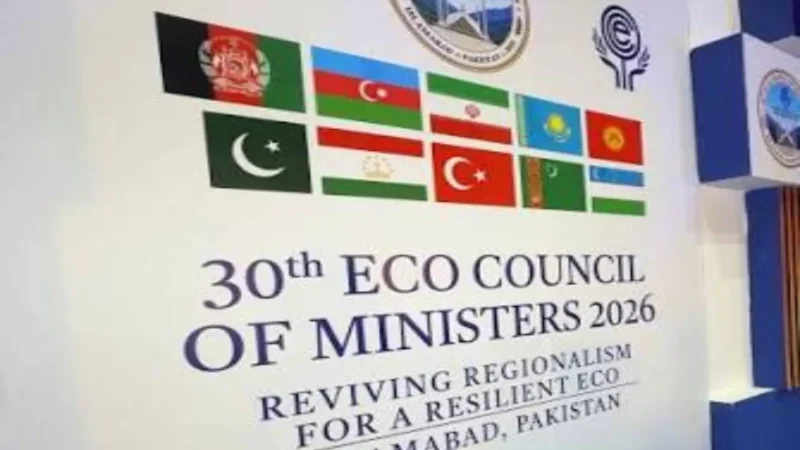
ISLAMABAD, The 30th two-day meeting of the Council of Ministers (COM) of the Economic Cooperation Organization (ECO) began in Islamabad on Sunday, bringing together foreign ministers, senior officials and representatives of member states to discuss regional cooperation, economic integration, trade and connectivity.
Pakistan is hosting the meeting on November 15-16, 2026, under its chairmanship of the organization for 2026-2027. The gathering is being held under the theme “Reviving Regionalism for a Resilient ECO.”
ECO Secretary-General Ambassador Asad Majeed Khan, Pakistan’s Foreign Secretary Asim Iftikhar Ahmad, foreign ministers, heads of delegations and representatives of the ECO Secretariat and affiliated institutions are participating in the meeting. The formal session of the Council of Ministers is scheduled for Monday.
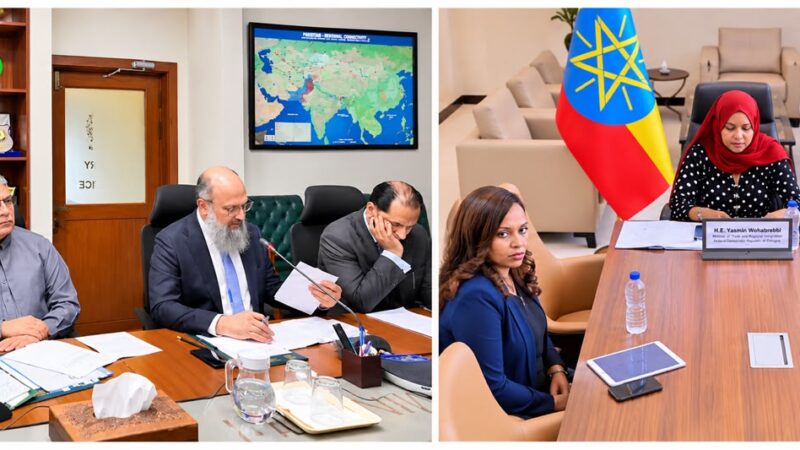
Ahead of the ministerial session, senior officials from ECO member states met on Sunday under the chairmanship of Foreign Secretary Asim Iftikhar Ahmad. The meeting reviewed the organization’s ongoing activities, programmes and the performance of its affiliated institutions, while discussing the agenda and proposed final documents for the ministerial meeting. ECO Secretary-General Asad Majeed Khan also briefed participants on the organization’s recent activities.
The meeting is expected to adopt the Islamabad Declaration, outlining common priorities and political commitments to strengthen regional cooperation. Participants are also expected to approve the Strategic Goals of Economic Cooperation 2035, known as ECO Vision 2035, which will provide a long-term framework for regional connectivity, economic integration, trade, investment and sustainable development over the next decade. The new vision will replace ECO Vision 2025, adopted at the 13th ECO Summit in Islamabad in 2017.
Pakistan will also pursue discussions on the ECO Trade Agreement (ECOTA) and the Transit Transport Framework Agreement (TTFA) to reduce trade barriers, facilitate transit and improve cross-border movement of goods. The meeting will provide opportunities for bilateral engagements with participating countries and international organizations, including the Organization of Islamic Cooperation (OIC) and the Conference on Interaction and Confidence Building Measures in Asia (CICA).
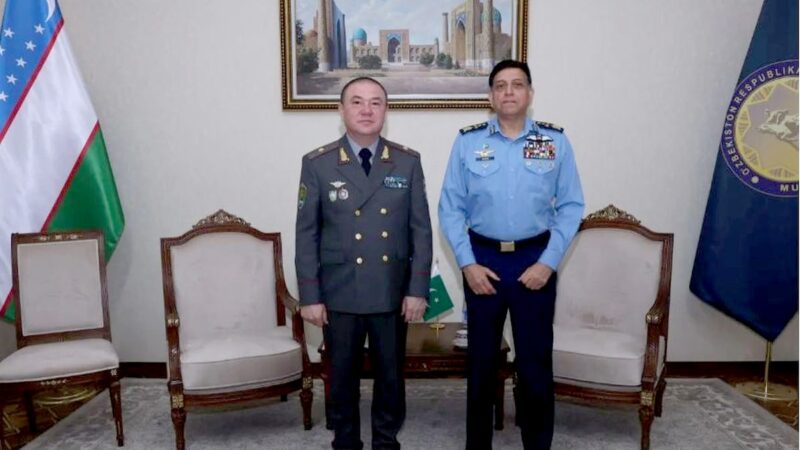
As ECO chair, Pakistan aims to strengthen its position as a regional connectivity hub by promoting trade, investment, transport and sustainable development. The proposed Uzbekistan-Afghanistan-Pakistan (UAP) railway project, supported by a framework agreement signed in July 2025, is expected to improve links between Central Asia and Pakistani seaports once implemented. Pakistan also intends to build on bilateral trade agreements with Uzbekistan, Tajikistan, Kyrgyzstan, Azerbaijan and Kazakhstan to expand commercial activities and regional supply chains.
The ECO has 10 member states: Pakistan, Türkiye, Azerbaijan, Iran, Kazakhstan, Kyrgyzstan, Tajikistan, Turkmenistan, Uzbekistan and Afghanistan. Established in its original form as the Regional Cooperation for Development (RCD) in 1964, the organization assumed its present name in 1985 and expanded to ten members in 1992. Pakistan, Iran and Türkiye are its founding members.
Pakistan has previously hosted major ECO gatherings, including the third ECO Summit in 1995 and the 13th ECO Summit in March 2017, which adopted the Islamabad Declaration and ECO Vision 2025. The country also hosts several ECO institutions, including the ECO Science Foundation in Islamabad and the representative office of the ECO Trade and Development Bank in Karachi.
Meanwhile, Lahore has been designated the ECO Tourism Capital for 2027. A five-day programme is planned for March or April next year to showcase Pakistan’s cultural heritage, tourism potential and hospitality, with the inauguration expected at Lahore Fort. An ECO Tourism Ministers Meeting is also envisaged.
The current ministerial meeting is expected to enhance Pakistan’s diplomatic standing and strengthen its role in regional cooperation ahead of major international engagements in 2027, including the ECO and Shanghai Cooperation Organization (SCO) summits.
Through its chairmanship, Pakistan seeks to translate regional commitments into practical results by expanding trade, improving transport connectivity, facilitating logistics and strengthening economic and institutional cooperation among member states.
