

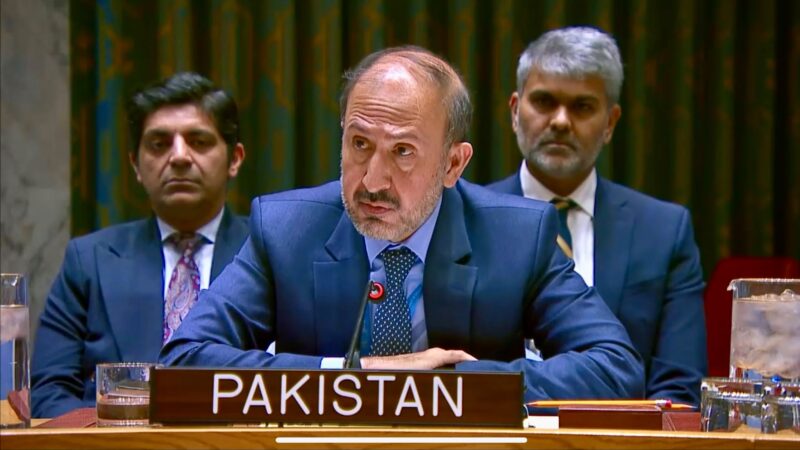

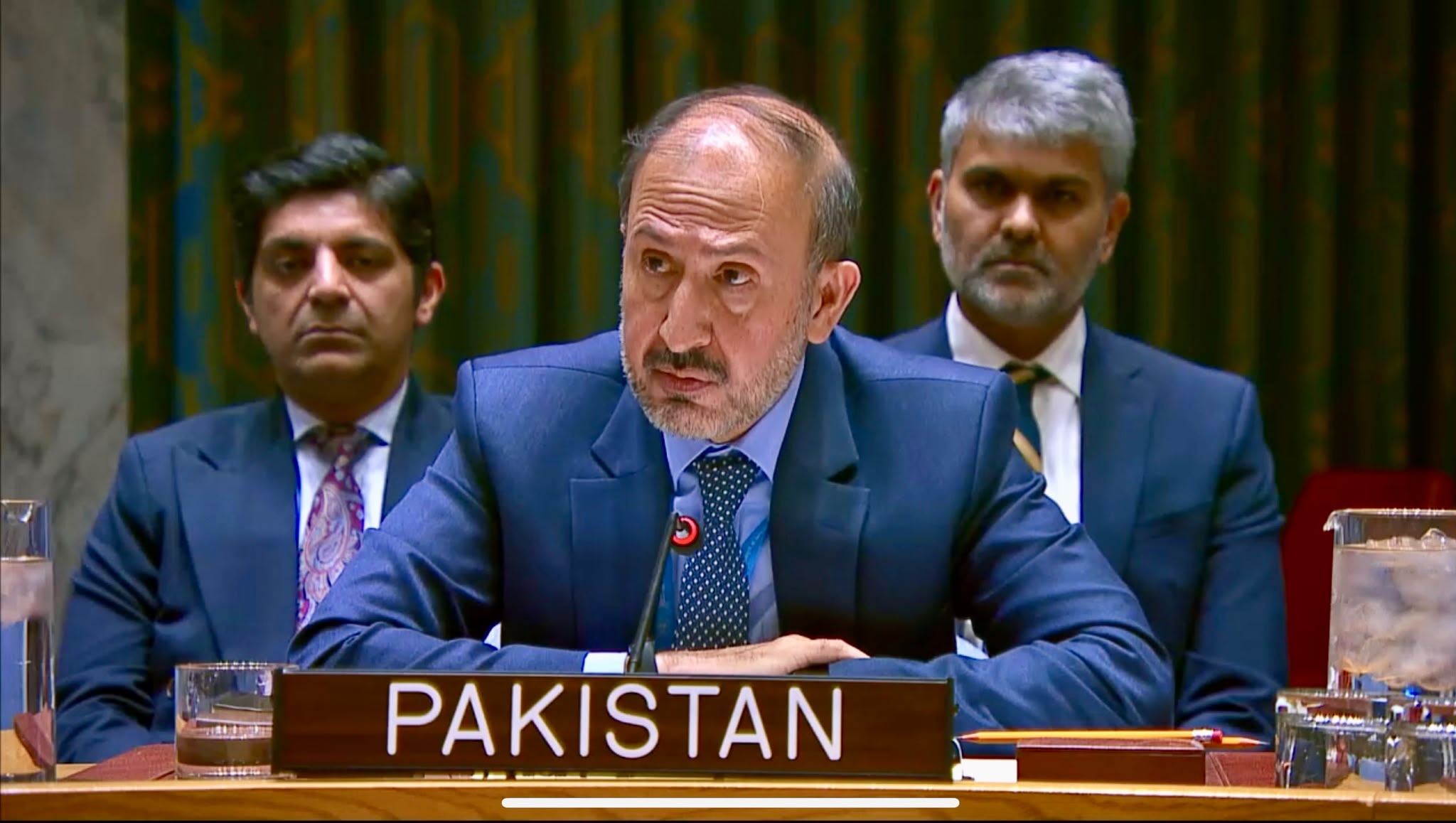
United Nations, Pakistan has called for strengthening and reforming the United Nations Security Council’s counter-terrorism (CT) architecture to effectively address the evolving global terrorism landscape, including threats posed by terrorist groups operating from Afghanistan and the growing misuse of emerging technologies.
Speaking during the briefing by the Chairs of the Security Council’s subsidiary bodies established under resolutions 1267, 1373 and 1540, Pakistan’s Permanent Representative, Ambassador Syed Haider Shah, stated that prolonged unresolved conflicts, external interventions and unaddressed root causes of terrorism continue to fuel the menace.
Highlighting Pakistan’s immense sacrifices as a frontline state in the global fight against terrorism, he stated that the country had suffered over 90,000 casualties and billions of dollars in economic losses. He said that in the past three years alone, more than 4,700 Pakistanis had lost their lives to terrorism emanating from Afghanistan. He also underscored Pakistan’s role in the dismantling of Al-Qaeda.
Ambassador Shah expressed concern over the activities of terrorist organizations, including ISIL-K, Tehreek-e-Taliban Pakistan (TTP), its affiliates, the Balochistan Liberation Army (BLA), the Majeed Brigade and the East Turkistan Islamic Movement (ETIM), operating from Afghanistan and threatening regional stability.
Calling for a more effective and impartial implementation of the 1267 sanctions regime, he urged that listing criteria to be broadened to address all forms of terrorism, without discrimination based on religion, nationality or ethnicity. He also called for measures to address violent far-right, ultra-nationalist, xenophobic and Islamophobic movements, stressing that the UN counter-terrorism framework must respond to all manifestations of terrorism.
The Permanent Representative emphasized that listing and delisting decisions must be fair, transparent and free from political considerations, while the Office of the Ombudsperson should be provided with adequate resources and operational autonomy.
On the 1373 Committee, Ambassador Syed Haider Shah appreciated the work of the Counter-Terrorism Committee Executive Directorate (CTED) in assisting Member States in assessing emerging threats. He called for greater attention to terrorist exploitation of the internet, dark web, cryptocurrencies, digital wallets, artificial intelligence and social media platforms.
He stressed the need for international cooperation and appropriate regulatory measures to prevent online radicalization, hate speech, terrorist propaganda and the exploitation of vulnerable youth.
Regarding the 1540 Committee, he reaffirmed Pakistan’s commitment to global efforts to prevent the proliferation of weapons of mass destruction to non-state actors, while emphasizing that non-proliferation efforts must remain consistent with the UN Charter and States’ treaty-based obligations, including their inalienable right to peaceful uses of nuclear and other dual-use technologies.
Ambassador Haider Shah also called for stronger coordination among the Security Council’s subsidiary bodies and their expert groups, and stated inclusive consultations with Council members and the timely appointment of committee chairs will ensure their effective functioning
