

By Khawaja Hamza
ISLAMABAD, President Asif Ali Zardari and Bangladesh Parliament Speaker Hafiz Uddin Ahmad Bir Bikram have emphasised strengthening bilateral relations between Pakistan and Bangladesh through enhanced parliamentary exchanges, trade and economic cooperation, educational links, defence collaboration and people-to-people contacts.
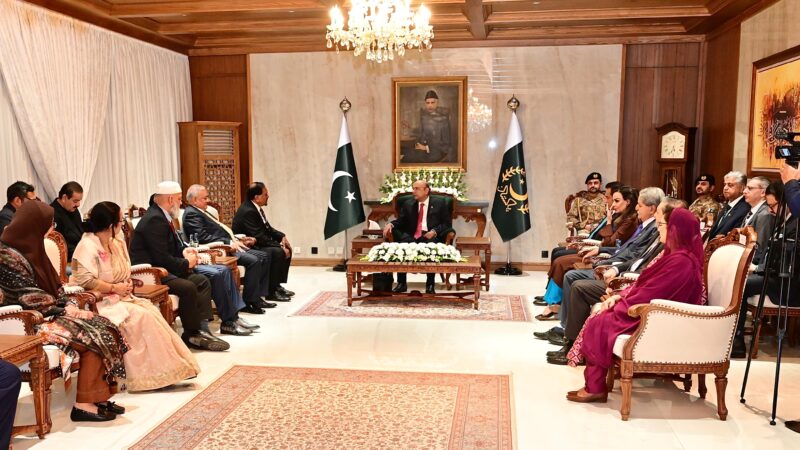
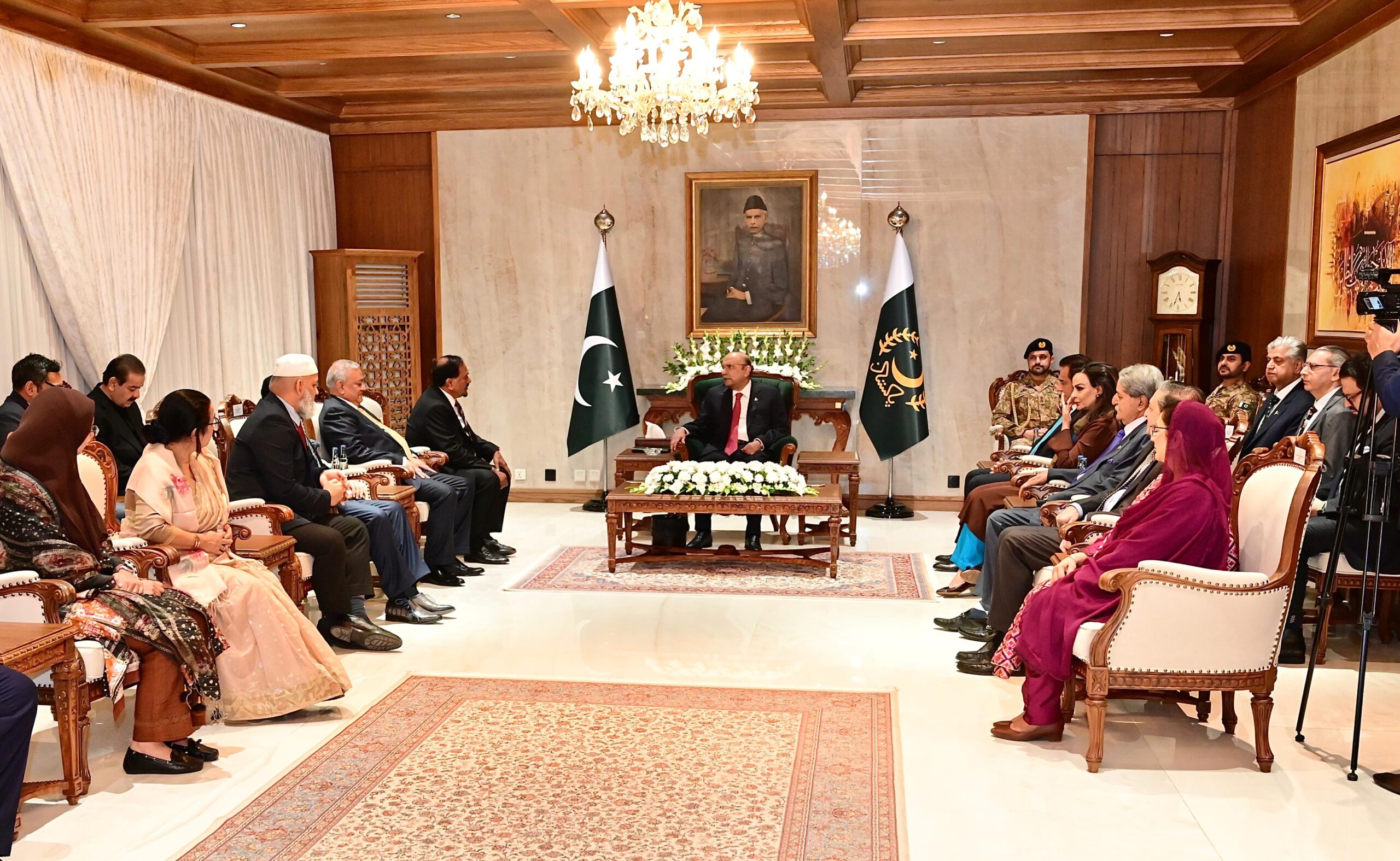
During a meeting at the President’s House in Islamabad, President Zardari welcomed the visiting Bangladeshi Speaker and expressed confidence that his November 23-29 official visit would help advance bilateral relations and pave the way for further high-level exchanges. He stressed the need for a forward-looking partnership based on sovereign equality, mutual respect and mutual benefit.
The President said Pakistan attaches great importance to its relations with Bangladesh, which are rooted in shared history, common faith and deep cultural and familial ties. He noted renewed momentum in bilateral engagement, particularly in high-level exchanges, education, trade, culture and people-to-people contacts.
Highlighting opportunities for cooperation, President Zardari identified agriculture, industry, food security, disaster management, digital governance, space research and defence as important areas. He expressed hope for the early finalisation of around 26 pending Memorandums of Understanding (MoUs) to establish an institutional framework for expanding bilateral cooperation.
President Zardari congratulated Bangladesh on the election of Barrister Adib Chowdhury, Chairman of the Parliamentary Foreign Affairs Committee, to the Executive Committee of the Inter-Parliamentary Union (IPU). He expressed Pakistan’s desire to strengthen parliamentary cooperation at international forums and welcomed efforts to establish a Pakistan-Bangladesh Parliamentary Friendship Group.
He also offered Pakistan’s assistance in arranging training for Bangladeshi parliamentary officials at the Pakistan Institute for Parliamentary Services (PIPS) and sharing institutional expertise in operating a bicameral legislature.
On educational cooperation, the President highlighted the Pakistan-Bangladesh Knowledge Corridor, launched last year, which provides 500 fully funded scholarships to Bangladeshi students at leading Pakistani universities. He said 170 students had already joined Pakistani universities, while another 20 were expected to join shortly. He also welcomed the positive response to the Executive Leadership Training Programme for senior Bangladeshi civil servants at the National School of Public Policy in Lahore.
The President welcomed growing media cooperation and the ongoing visit of diplomatic correspondents from leading Bangladeshi newspapers to Pakistan, observing that regular media exchanges could promote greater mutual understanding between the two peoples.
On connectivity, he welcomed the commencement of direct flights by Biman Bangladesh Airlines and called for increasing flight frequency and destinations in response to growing demand. He also emphasised exploring direct maritime links to facilitate bilateral trade and economic cooperation.
Discussing economic relations, President Zardari observed that bilateral trade remained below its potential and called for effectively utilising existing mechanisms, including the Joint Economic Commission and Joint Working Group on Trade, to explore preferential trade arrangements and advance priority areas identified during the commission’s session in October last year.
He noted that Pakistan’s ongoing rice exports to Bangladesh under a government-to-government agreement could provide a foundation for broader cooperation in food security and essential commodity supplies. Pakistan was also ready, in response to Bangladesh’s request, to provide technical expertise for the refurbishment of sugar plants in Bangladesh.
The President encouraged greater private-sector engagement in textiles, pharmaceuticals, leather, automobiles, construction materials, minerals, chemicals, ceramics and jute. He also reaffirmed Pakistan’s readiness to extend defence cooperation with Bangladesh.
Both sides welcomed progress under the China-Bangladesh-Pakistan Trilateral Mechanism, particularly the identification of 12 priority areas of cooperation during the Kunming meeting held on June 19, 2025.
President Zardari appreciated Bangladesh’s humanitarian role in hosting more than one million Rohingya refugees despite significant economic, social and environmental challenges. He reiterated Pakistan’s support for their safe, voluntary and dignified return to Myanmar in accordance with international law and called on the international community to share Bangladesh’s burden and ensure sustained humanitarian assistance.
The President also requested the Bangladeshi Speaker to convey his warm greetings and best wishes to the leadership and people of Bangladesh.
Speaker Hafiz Uddin Ahmad thanked President Zardari for the warm welcome and hospitality extended to him and his delegation. He conveyed greetings from Bangladesh’s President Mirza Fakhrul Islam Alamgir and Prime Minister Tarique Rahman, recalled his personal memories of Pakistan and emphasised the importance of parliamentary diplomacy and regular institutional engagement between the two legislatures. He also noted the popularity of Pakistani television dramas in Bangladesh, reflecting the cultural affinity between the two countries.
The Bangladesh delegation included Jahrat Adib Chowdhury, MP and Chairman of the Standing Committee on the Ministry of Foreign Affairs; Humam Quader Chowdhury, MP; Muhammad Nazibur Rahman, MP; Nilufar Chowdhury Moni, MP; Nasser Rahman, MP; and Bangladesh High Commissioner to Pakistan Iqbal Hussain Khan.
The meeting was attended by National Assembly Speaker Sardar Ayaz Sadiq, Senator Sherry Rehman, MNA Naveed Qamar, Senator Saleem Mandviwalla and Dr Shazia Sobia Aslam Soomro, MNA and Convener of the Pakistan-Bangladesh Parliamentary Friendship Group in the National Assembly.
Earlier, the Bangladeshi parliamentary delegation visited Parliament House, where National Assembly Speaker Sardar Ayaz Sadiq, accompanied by members of the National Assembly and senior parliamentary officials, received the visiting delegation.
During the visit, Speaker Hafiz Uddin Ahmad Bir Bikram planted a Magnolia grandiflora tree on the Parliament House lawn in the presence of Sardar Ayaz Sadiq and members of the Bangladeshi delegation. A special prayer was offered for the development, prosperity and stability of Pakistan and Bangladesh and for strengthening friendship and cooperation between the two brotherly Islamic countries.
The visiting Speaker and his delegation also toured the National Assembly Hall, where Sardar Ayaz Sadiq briefed them on its historical background and legislative procedures.
As part of his official visit, the Bangladeshi Speaker also visited the Pakistan Military Academy (PMA), Kakul, where he was received by the Academy’s Commandant, Lieutenant General Iftikhar Hassan Chaudhary.
During his visit, Hafiz Uddin Ahmad recalled his military career in the Pakistan Army and his time at PMA, saying the formative years spent at the academy had left a lasting impression on him. He described his memories with warmth, reflecting the shared institutional heritage and longstanding professional and personal bonds between Pakistan and Bangladesh.
The visit to PMA provided an opportunity to observe the academy’s training environment and renew ties between the two countries. The Bangladeshi Speaker is also scheduled to visit Lahore and Karachi during his November 23-29 stay in Pakistan.
The visit reflects the shared commitment of Pakistan and Bangladesh to strengthening parliamentary diplomacy, institutional cooperation and mutual understanding. National Assembly Speaker Sardar Ayaz Sadiq personally pursued the invitation and arrangements for the visit as part of his efforts to promote closer relations between the two parliaments.
