By Khawaja Hamza
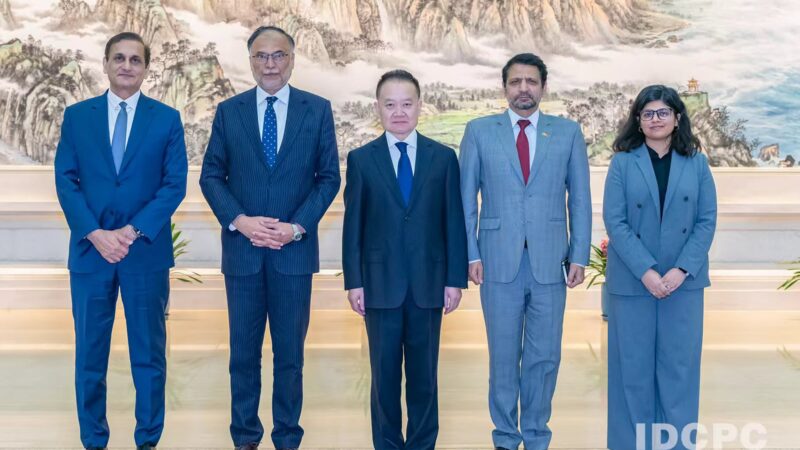
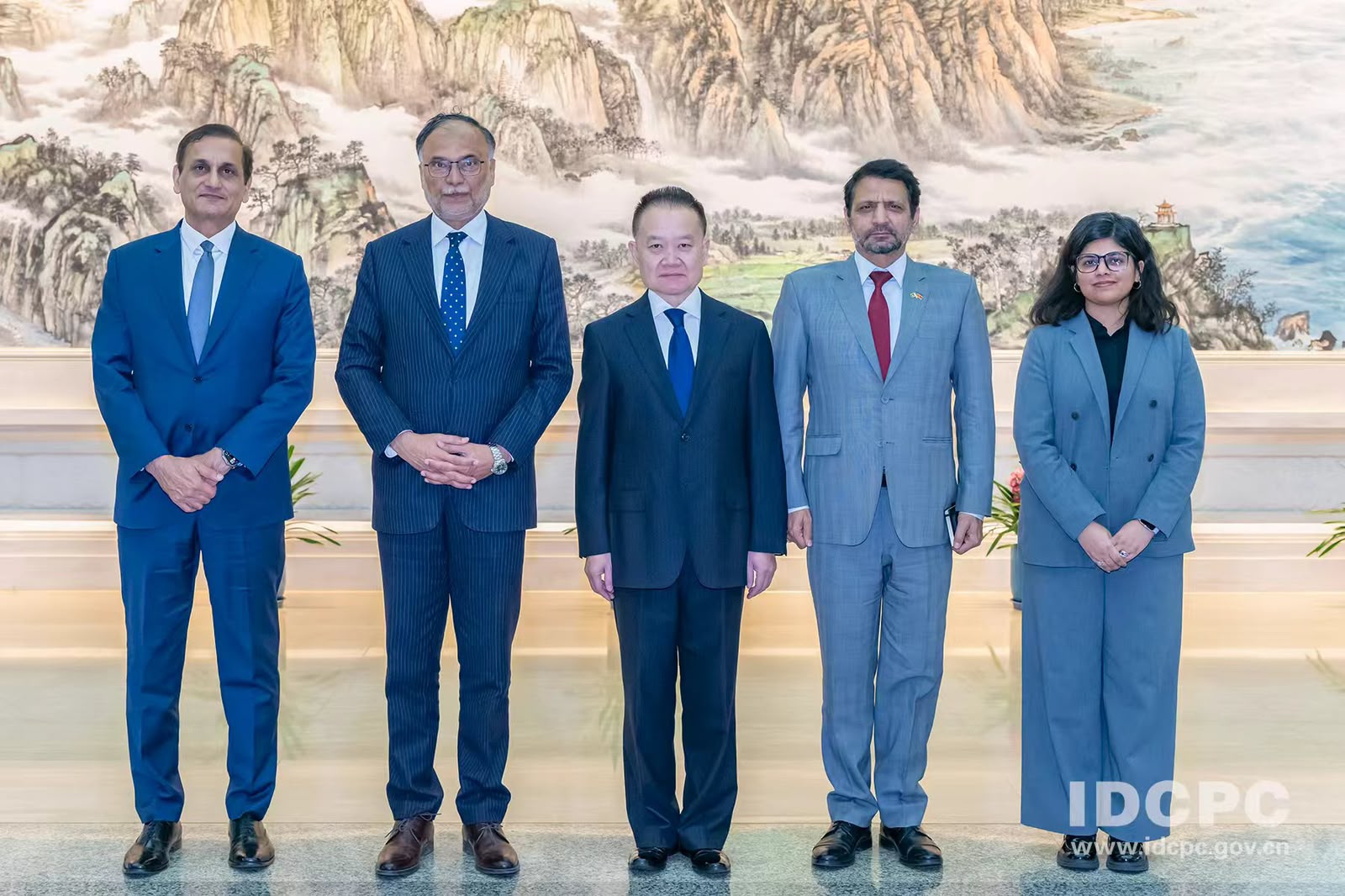
Beijing, Federal Minister for Planning, Development and Special Initiatives Ahsan Iqbal held a meeting on 26 November 2026 with Liu Haixing, Minister of the International Department of the Communist Party of China (CPC) Central Committee (IDCPC). Iqbal sought the department’s support for preferential, zero-tariff access to the Chinese market for Pakistani goods, with the aim of increasing Pakistan’s annual exports to China from about US$3 billion to US$20–25 billion.
Iqbal followed up on a proposal discussed on 3 November and previously raised by Prime Minister Shehbaz Sharif with Chinese President Xi Jinping. He pointed to tariff concessions China has extended to African countries as a possible model for improving the competitiveness of Pakistani exports in a market that imports nearly US$3 trillion in goods annually.
The minister also sought support for a proposed Pakistan–China Knowledge Corridor that would help about 10,000 Pakistani scholars pursue doctoral studies and specialised research over ten years. The proposal envisages scholarships, partnerships with leading Chinese universities and co-financing, with priority fields including artificial intelligence, engineering, advanced manufacturing, modern agriculture, biotechnology and mineral sciences.
Turning to the second phase of the China–Pakistan Economic Corridor (CPEC), Iqbal highlighted industrial and agricultural cooperation, business partnerships, technology transfer, minerals and green development as priorities. He said the first phase had attracted about US$25 billion in investment, added more than 8,000 megawatts of generating capacity and delivered 888 kilometres of highways and motorways, while creating an estimated 236,000 direct and indirect jobs. He linked the next phase to Pakistan’s URAAN development programme and China’s 15th Five-Year Plan, underscoring the importance of policy continuity.
Marking 75 years of diplomatic relations, Iqbal noted that ties with China had enjoyed broad political support across successive Pakistani governments. He proposed designating focal persons and setting timelines to implement the May 2026 memorandum of understanding between the Pakistan Muslim League-Nawaz (PML-N) and the CPC. The proposed areas of cooperation include political dialogue, governance, youth leadership, cultural exchanges and regional cooperation.
Iqbal also called for joint training and faculty exchanges between the CPC Central Party School and Pakistan’s National School of Public Policy under their existing agreement. He followed up on a proposed short orientation programme for senior Pakistani political leaders and welcomed the IDCPC’s programme for young PML-N leaders in Guangxi, which runs from 23 November to 3 December. He raised the possibility of reciprocal exchanges beginning in 2027, subject to mutual agreement.
Iqbal reaffirmed Pakistan’s commitment to the security of Chinese personnel and projects and requested updates on the market access and Knowledge Corridor proposals.