
(By CDR TARIQ MAHMOOD (RETD), RESEARCHER AT NATIONAL INSTITUTE OF MARITIME AFFAIRS)
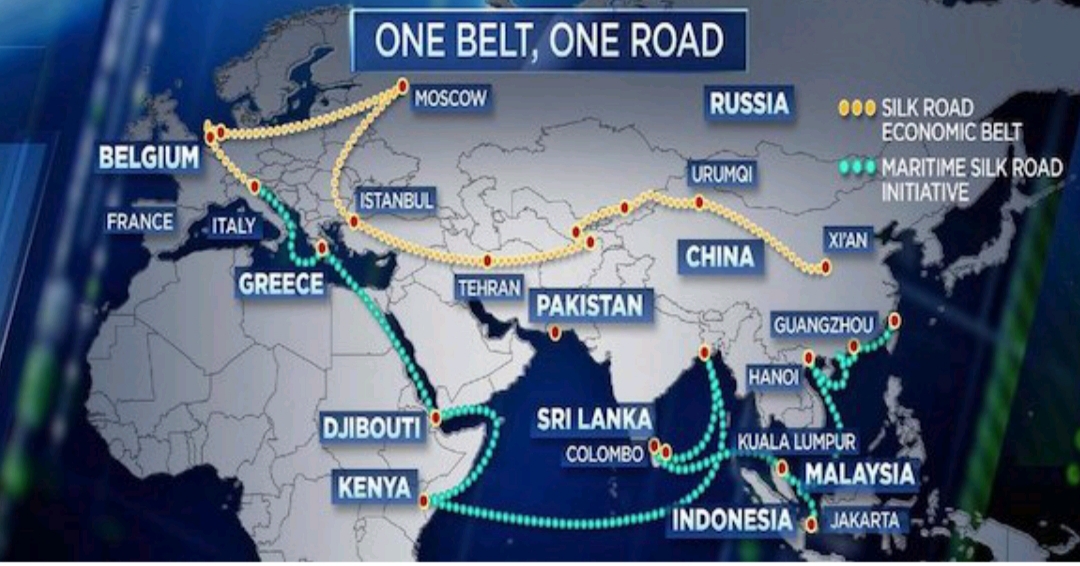
The Makran Coast occupies a location of extraordinary strategic relevance. Situated at the mouth of the Arabian Sea, it lies adjacent to the Strait of Hormuz, a maritime chokepoint through which nearly one-fifth of global oil supplies pass. This proximity places the Makran Coast at the heart of global energy security and international trade. The Strait of Hormuz, is just 400 kilometers from Gwadar, which is one of the world’s most critical maritime passages. Approximately 20 million barrels of oil pass through this strait daily which is about 20% of global consumption. Presently, disruption to this flow has surfaced due to danger of closure of Strait of Hormuz. This has exhibited immediate repercussions on global energy prices and economic stability. The Makran Coast’s proximity to this chokepoint is offering a trans hub, a natural bridge and alternate trade route specifically to China, South Asia, the Middle East, and Central Asia that are home to billions of people and trillions of dollars in economic activity. The western China’s Xinjiang province is geographically closer to Gwadar than to any other major port as Makran Coast represents the shortest route to reach Arabian Sea. Xinjiang is approximately 14,500KMs from Gwadar via sea route whereas through CPEC, it is only 2500KMs offering huge economic benefit and reduction in voyage. Presently, a Chinese ship reaches to Europe between 38 to 41 days whereas by using combination of transportation via CPEC and ship, it will take maximum of 10 days.
In case of total blockage of Strait of Hormuz, for a longer time, Makran Coast provides opportunity for China to use land route as part of CAREC-6 (Central Asia Regional Economical Corridor-6) which is already a planned further extension of CPEC. This route provides unique opportunity even if complete Indian Ocean is unsafe for shipping. The China alone can bypass all three critical chock points that include Strait of Alaska, Strait of Hormuz, Suez Canal and can reach to Europe.
Beyond its maritime significance, the Makran Coast serves as the nearest oceanic access point for several landlocked countries that include Afghanistan, the Central Asian republics (Kazakhstan, Uzbekistan, Turkmenistan, Kyrgyzstan, Tajikistan).
This corridor will not only benefit other countries but will provide golden opportunity for Pakistan to build several ports and Special Economic Zones on over 700KMs of barren land along the coast. The Gwadar Free Zone, spanning over 2,000 acres, has been established to attract investment in manufacturing, logistics, and other services. Phase-I of the free zone is almost operational, with several Chinese and Pakistani companies for setting up operations. Phase-II, which will expand the free zone to over 10,000 acres, is also under development.
Within the CPEC framework, Gwadar serves as the southern terminus of a network of roads, railways, and pipelines connecting Pakistan’s coast to China’s Xinjiang province. The 3,000-kilometer network includes the upgrading of the Karakoram Highway, construction of the Khunjerab rail link, and development of energy infrastructure. For China, Gwadar represents a strategic asset that reduces dependence on the Malacca Strait and provides access to the Arabian Sea.
Russia’s pivot to Asia and its search for warm-water ports create opportunities for collaboration with Pakistan. While historically focused on European markets, Russia is increasingly looking east and south for trade and energy partnerships. The Makran Coast could serve as a gateway for Russian goods to access South Asian and Middle Eastern markets.
Gulf countries, particularly Saudi Arabia and the United Arab Emirates, have shown strong interest in Gwadar’s development. Saudi Arabia has committed to building a $10 billion oil refinery and petrochemical complex in Gwadar, which would transform the city into a major energy hub. The UAE, with its world-class logistics and tourism expertise, could contribute to port development, free zone management, and coastal tourism. Turkey’s experience in balancing maritime industrialization with tourism and cultural preservation offers valuable lessons for Pakistan. Turkish companies have expertise in shipbuilding, port operations, and coastal tourism that could be applied along the Makran Coast.
International shipping companies and multinational corporations are also increasingly viewing Gwadar as a potential competitor to Dubai, Muscat, and Chabahar. The port’s strategic location, deep-water capabilities, and connection to CPEC make it an attractive alternative to congested and costly ports elsewhere in the region. If managed wisely, Gwadar can become a magnet for investment in shipbuilding, oil refining, transshipment, and regional trade.
The Makran Coast, strategically positioned along the Arabian Sea, holds immense economic and geopolitical significance. With the China-Pakistan Economic Corridor (CPEC) and potential future connectivity to Russia, Iran, Saudi Arabia, Turkey, and Europe, the region is poised for substantial growth. Through strategic investments in ports, industrial zones, and trade corridors, coupled with tourism and energy transit initiatives, Makran Coast can emerge as a global economic hub.
Integration with China, Russia, and Europe could transform the region into a thriving commercial center, fostering economic prosperity for Pakistan and the broader region. Taking the advantage on closure of Strait of Hormuz and ongoing development and future projects along Makran coast highlighted above if implemented, can change geopolitical map of the region with new ventures and connectivity through land, air and sea.
