
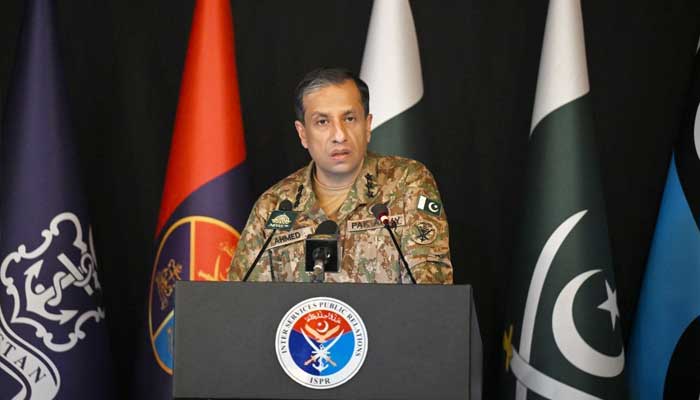
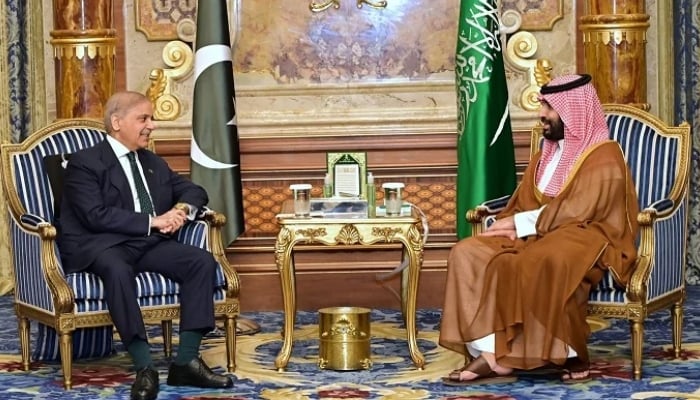
ISLAMABAD, Pakistan’s armed forces have been present in Saudi Arabia for decades, serving in various capacities and across multiple fields, the Director General of Inter-Services Public Relations (DG ISPR) said during an interview with CNN, highlighting the longstanding defence cooperation between the two countries.
The military spokesperson said the Makkah Joint Defence Agreement was not an alliance established suddenly but was built on longstanding cooperation and shared security concerns. He emphasised that the agreement was intended to strengthen collective defence and contribute to regional stability amid emerging security challenges.
Defence Agreement to Remain Exclusively Defensive
Clarifying the practical implementation of the Makkah Joint Defence Agreement, the DG ISPR said its implementation and all resulting measures would be exclusively defensive in nature.
He explained that decisions regarding how the agreement would be implemented, which military units might be deployed and how they would be utilised would be made by operational commanders, based on operational requirements.
According to the spokesperson, the agreement would provide a joint defensive capability to counter potential threats and help maintain stability in the region, where new security challenges have emerged in recent years.
He said the principle underpinning the agreement was that an attack on one participating country would be considered an attack on all, creating a collective defence commitment. This arrangement, he added, would compel any potential hostile actors to think carefully before attempting to pursue their objectives.
The DG ISPR clarified that the agreement was not intended to classify any country as either an enemy or a friend. Rather, it was designed to address defence requirements and strengthen security cooperation.
He specifically stated that one of the agreement’s objectives was to defend Saudi Arabia, emphasising that Pakistan would fulfil its commitment to the kingdom’s defence.
Pakistan Continues Efforts to End US-Iran Conflict
Commenting on diplomatic efforts to end the conflict between the United States and Iran, the DG ISPR said Pakistan had consistently worked to reduce differences between the parties and promote a peaceful settlement through negotiations.
He said Pakistan had undertaken such efforts in the past, was continuing them at present and would continue to do so in the future to facilitate dialogue, narrow differences and prevent the conflict from spreading further.
The spokesperson said Pakistan had played an important role in efforts to secure a ceasefire between the United States and Iran, describing the country’s approach as that of an impartial and honest mediator.
He stressed that Pakistan’s primary interest lay in regional peace and stability and that Islamabad had communicated to its partners and friendly countries that further expansion of the conflict would serve no one’s interests.
The DG ISPR reiterated that Pakistan wanted the dispute to be resolved peacefully through diplomatic engagement rather than allowing it to escalate into a wider regional confrontation.
He said Pakistan would continue supporting efforts to reduce tensions, encourage negotiations and seek peaceful solutions to outstanding differences.
Focus on Collective Defence and Regional Stability
The DG ISPR’s remarks highlighted two key aspects of Pakistan’s stated policy: strengthening defence cooperation with Saudi Arabia through the Makkah Joint Defence Agreement and continuing diplomatic efforts to prevent the US-Iran conflict from widening.
While the defence agreement was described as exclusively defensive, its practical implementation, including any force deployments and operational arrangements, would be determined by military commanders.
At the diplomatic level, Pakistan’s stated position remains focused on reducing tensions, facilitating dialogue and protecting regional stability. The spokesperson maintained that further escalation would not benefit the countries involved or the wider region.
