

By Khawaja Nayyer
ISLAMABAD: Pakistan has reiterated its support for the Kashmiri people’s right to self-determination, rejected India’s criticism of the Organisation of Islamic Cooperation (OIC), and called for the protection of Muslim religious sites in India. Islamabad has also reaffirmed its commitment to regional peace, collective defence cooperation, and diplomatic engagement to address tensions in the Middle East and Afghanistan.
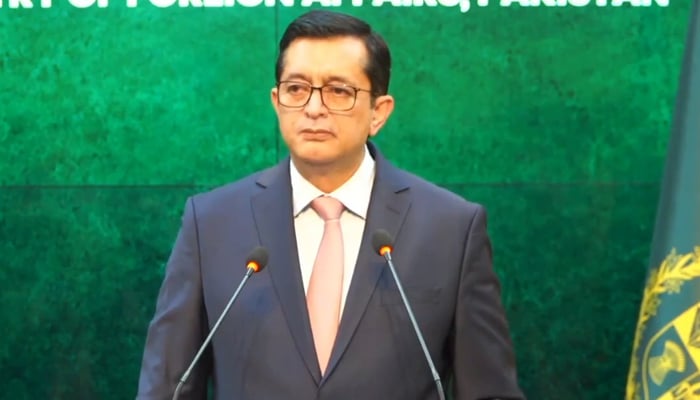
These positions were conveyed during the weekly press briefing by Sajjad Haider, spokesperson for Pakistan’s Ministry of Foreign Affairs.
Pakistan Rejects India’s Criticism of OIC Resolution on Kashmir
Pakistan has categorically rejected what it described as baseless and unwarranted assertions by India’s Ministry of External Affairs regarding the resolutions adopted at the 52nd Session of the OIC Council of Foreign Ministers in Baghdad on Jammu and Kashmir.
The spokesperson said Pakistan appreciates the resolutions, which reflect the collective and longstanding position of OIC member states and are firmly grounded in relevant United Nations Security Council resolutions.
He said the OIC resolution rejected India’s unilateral measures aimed at altering the internationally recognised disputed status of Jammu and Kashmir. It also reaffirmed continued political, moral and diplomatic support for the Kashmiri people until they realise their inalienable right to self-determination in accordance with the relevant UN Security Council resolutions.
The resolution further called upon the international community, including the UN Security Council, to take effective measures to implement the relevant resolutions.
Pakistan views the OIC’s continued support as an important reaffirmation that the Jammu and Kashmir dispute remains an international concern requiring a just and lasting resolution.
The spokesperson said India’s portrayal of the OIC’s collective position was misleading and dismissive of legitimate international concerns. He urged India to fulfil its international obligations, respect the fundamental rights of the Kashmiri people, and create conditions for a peaceful settlement in accordance with UN Security Council resolutions and the wishes of the people of Jammu and Kashmir.
Pakistan Expresses Concern over Threat to Historic Mosque in New Delhi
Pakistan has expressed grave concern over reports that the Indian government issued another eviction notice against a mosque, specifically the historic Race Course Mosque in New Delhi.
The spokesperson said the mosque, which has long been recognised as a waqf property and listed as a heritage site, is facing the threat of demolition under the BJP government.
He described the development as part of what Pakistan considers a systematic targeting of Muslim places of worship and waqf properties across India, reflecting worsening Islamophobia.
Referring to reported demolitions of mosques in Saharanpur, Ujjain and other locations, he said these incidents indicate a disturbing trend of using legal and administrative measures to target places of worship belonging to minority communities, particularly Muslims.
According to the spokesperson, such actions undermine Islamic institutions and place India’s Muslim community under sustained institutional pressure. He said these measures contravene international law and norms concerning the protection of religious sites and the rights of religious minorities.
Pakistan called upon the international community to take note of these developments, urge Indian authorities to stop discriminatory measures, and fulfil their obligations to protect Muslim heritage and religious sites in India.
Pakistan, Saudi Arabia and Türkiye Remain Committed to Makkah Joint Defence Agreement
Pakistan has reaffirmed its commitment to the Makkah Joint Defence Agreement (MJDA), describing it as a framework for strengthening collective defence, deterrence, regional security and stability among Pakistan, Saudi Arabia and Türkiye.
The spokesperson said matters relating to the agreement, its ratification and operationalisation remain under discussion among the three countries, including through the Strategic Political and Defence Committee, which held its latest meeting on October 5, 2026.
He explained that each country follows its own constitutional and legal procedures for approving and ratifying international agreements. Pakistan and Saudi Arabia have completed their ratification processes, while Türkiye is undertaking the required procedures under its domestic legal framework.
Pakistan remains committed to the letter and spirit of the agreement, which the spokesperson described as defensive in nature, consistent with the UN Charter, and aimed at promoting regional peace and stability.
Addressing questions about the agreement’s provisions, the spokesperson confirmed that Pakistan endorses the text released through the Turkish Parliament. He said the agreement contains 16 articles and that there are no hidden provisions, describing its provisions and articles as explicit and clear.
Collective Defence and Article 2
The spokesperson addressed Article 2 of the agreement, which, according to the text discussed during the briefing, provides that an armed attack originating from outside against any one party shall be considered an attack against all parties.
He said the agreement is essentially defensive and consistent with Article 51 of the UN Charter, which recognises the right to self-defence.
According to the spokesperson, the agreement is not directed against any particular country and establishes a framework for collective assistance in the event of external armed aggression against any of the three parties.
He clarified that the nature and extent of assistance would be determined collectively by the three countries when a situation arises, following an objective assessment of the circumstances and in accordance with the agreement’s provisions.
Regarding whether reported Houthi attacks against Saudi Arabia would trigger the agreement, he said the relevant provision also establishes a mechanism for invoking it. The matter would have to be decided by the three partner countries in accordance with the agreement.
Pakistan Says Another Conflict with India Is Not the Desired Outcome
Pakistan has expressed concern over the potential for renewed tensions with India following the May 2025 conflict and continuing disputes over Jammu and Kashmir and the Indus Waters Treaty.
The spokesperson said India has continued to maintain that its so-called Operation Sindoor remains ongoing, even after the initial phase of the operation.
He stressed that war is not a solution to disputes and said Pakistan wants peace and stability, with all outstanding issues resolved peacefully and in accordance with international law.
He specifically referred to Jammu and Kashmir and the Indus Waters Treaty, describing the latter as an agreement governed by international law and brokered by the World Bank following ten years of negotiations.
Although these issues continue to present potential risks of conflict between the two countries, the spokesperson said Pakistan believes India would not engage in another conflict.
He added that Pakistan is fully prepared to protect its sovereignty and territorial integrity.
However, the spokesperson said the possibility of another false-flag operation by India could not be ruled out. He said Pakistan did not know when such an incident might occur but remained prepared for all eventualities.
Pakistan Reaffirms Commitment to the Indus Waters Treaty
Pakistan has called for international attention to the Indus Waters Treaty, warning that any attempt to divert or deprive Pakistan of its allocated water could have serious implications for regional peace and security.
The spokesperson said the treaty is not merely a bilateral matter between Pakistan and India but also has broader international significance because it establishes rules governing the use and sharing of transboundary waters.
He warned that allowing an upper-riparian country to misuse treaty provisions or weaponise water could set a precedent for other regions around the world.
Pakistan believes the United States, the five permanent members of the UN Security Council, the wider international community, international institutions and organisations working in the water sector should play their respective roles in upholding international law and the treaty framework.
The spokesperson urged the international community to advise India against actions that could create a warlike situation between the two countries.
He reiterated that Pakistan would not allow its share of water to be diverted or taken away from the rivers meant to flow into the country.
He also recalled the National Security Committee’s warning that any diversion of Pakistan’s water would be considered an act of war.
Pakistan Says It Will Continue Adhering to Applicable Sanctions Regimes
Responding to questions about the closure and reopening of crossings along the Pakistan-Iran border, the spokesperson said Pakistan’s position on sanctions remained unchanged.
He stated that Pakistan, as a responsible member of the international community, adheres to and will continue to adhere to all applicable sanctions regimes in accordance with international and domestic laws.
He reaffirmed Pakistan’s commitment to a rules-based international order founded on multilateralism and international law.
Asked whether this represented a shift towards accepting unilateral sanctions imposed by individual countries, the spokesperson said he had already addressed the matter and had nothing further to add.
He said Pakistan remained in constant and constructive communication with all relevant stakeholders and valued its longstanding strategic partnership with the United States.
Pakistan, he added, remained committed to strengthening diplomatic, economic and security ties with Washington while adhering to international practices and established frameworks.
Border Situation and Trade Disruptions
The spokesperson did not provide a definitive account of the reasons for the reported border closure, the circumstances leading to its reopening, or the operational status of individual crossings.
He said he did not have direct knowledge of the current circumstances on the ground and was not privy to those details. However, he confirmed that Zaireen, or pilgrims, continued to travel between the two countries.
Questions were raised during the briefing about the status of the Taftan, Mirjaveh and Gabd-Rimdan crossings, reported disruptions to trade, possible anti-smuggling operations, and whether sanctions on Iran had contributed to the restrictions. The spokesperson did not provide specific operational details or confirm the full status of each crossing.
He also did not confirm whether US pressure had directly prompted Pakistan to close the border, nor did he endorse the Iranian Interior Ministry spokesperson’s reported explanation attributing the closure to US pressure.
Regarding the broader context, Pakistan maintained that it was communicating with relevant stakeholders and would continue to follow its stated approach to applicable sanctions and international obligations.
Pakistan Continues Mediation Efforts between Iran and the United States
Pakistan has reiterated its role as a mediator between Iran and the United States, urging both countries to exercise restraint, resolve outstanding issues through diplomacy, and honour their commitments under the Islamabad Memorandum of Understanding (MoU).
The spokesperson said Pakistan remained deeply concerned about the evolving regional situation and believed dialogue and diplomacy were the only viable means of achieving an amicable and peaceful resolution.
He said the Islamabad MoU contains provisions that, if implemented by both sides, could help de-escalate tensions and restore peace and stability.
Pakistan intends to continue prioritising diplomatic efforts and take appropriate measures on its own part to support regional peace.
Asked whether negotiations between Washington and Tehran were currently underway or whether Pakistan was urging them to resume talks, the spokesperson said the two countries needed to negotiate and reiterated Pakistan’s support for a negotiated settlement.
Pakistan’s Position on Iran’s Nuclear Material
Responding to a statement by Iran’s Supreme National Security Council secretary that enriched uranium would not be allowed to leave Iran because it was a national asset, the spokesperson said decisions regarding the country’s nuclear material were matters for the two countries concerned to decide and negotiate between themselves.
Pakistan Calls for De-escalation across the Middle East
Pakistan has expressed a strong desire for peace throughout the wider region amid continuing tensions stretching from the Bab al-Mandab Strait to the Strait of Hormuz.
The spokesperson said Pakistan had actively pursued mediation efforts that resulted in the Islamabad MoU and would continue to prioritise dialogue and diplomacy.
He stressed that both Iran and the United States needed to consider and implement the MoU’s provisions if the situation was to calm down.
Pakistan believes de-escalation, dialogue and diplomacy remain the only practical way forward.
Pakistan’s Position on Yemen and the Houthis
Pakistan has reiterated its concern over the continuing conflict in Yemen and its implications for regional peace and security.
The spokesperson said Pakistan supports Yemen’s sovereignty, unity and territorial integrity and believes that a lasting solution can only be achieved through dialogue and a negotiated political settlement.
Pakistan continues to support credible diplomatic initiatives aimed at ending hostilities and restoring peace.
At the same time, the spokesperson unequivocally condemned attacks against Saudi Arabia and reaffirmed Pakistan’s commitment to the Kingdom’s sovereignty, territorial integrity and security.
He said Pakistan remained supportive of meaningful diplomatic engagement that could contribute to ending the conflict and achieving a durable political settlement.
Pakistan Discusses Regional Security with Türkiye, Saudi Arabia and European Countries
Pakistan has outlined plans for regional diplomatic engagement involving Egypt, Türkiye, Saudi Arabia and the European countries comprising the E3: the United Kingdom, France and Germany.
The spokesperson said the initial meeting would take place among the four countries referred to as the R4: Egypt, Türkiye, Pakistan and Saudi Arabia. This would be followed by a joint meeting involving the R4 and the E3, bringing seven countries together for the first time in this format.
He said the discussions would address issues affecting the wider region, including the safety of maritime sea lanes, the situation in Yemen, the Houthis and the Strait of Hormuz.
The primary objective would be to explore ways of promoting peace and stability and reducing regional tensions.
The spokesperson acknowledged reports that Italy had also been invited to participate but said the E3 primarily comprised the United Kingdom, France and Germany. He described Italy’s participation as a reported recent addition.
He explained that the R4 framework had been established to address regional stability and security concerns and help contain destabilising activities. Its expansion to include the E3 would provide a broader platform for discussions on the regional situation.
Pakistan Highlights Defence Industrial Cooperation under Badr MoU
Pakistan has described the Badr Memorandum of Understanding signed in Qatar as a promising framework for expanding industrial and defence-related cooperation among participating countries.
The spokesperson said the MoU covers technology transfer, training, joint ventures and other forms of industrial collaboration.
He explained that Pakistan has considerable industrial capabilities, Türkiye is strong in defence-related industries, and Indonesia has substantial naval and army-related industrial expertise.
The participating countries could exchange military experiences, establish joint ventures and explore additional areas of cooperation.
The spokesperson emphasised that the Badr MoU is a framework agreement. Specific areas of cooperation would need to be developed further through protocols, understandings and other agreements.
He expressed hope that cooperation among these regional countries would help diversify and strengthen their respective industrial capabilities.
Regarding questions about why international agreements are sometimes made public first by another country rather than Pakistan, the spokesperson said the Badr MoU was announced in Qatar, where the signing event took place. Pakistan’s defence minister attended the event alongside senior officials from the relevant ministries.
Pakistan Says It Remains Open to Dialogue with Afghanistan
Pakistan has reiterated its willingness to pursue a peaceful, negotiated solution to tensions with Afghanistan but stressed that any dialogue must address security threats emanating from Afghan territory.
The spokesperson said Pakistan had consistently engaged with the Afghan Taliban from 2021 until October 2025 and had not avoided negotiations.
He said Pakistan had pursued engagement through bilateral channels and various international and regional forums, including the Moscow Format and discussions in Qatar, Türkiye, Saudi Arabia and China.
According to the spokesperson, these efforts were intended to help Pakistan and Afghanistan reach an understanding that would ease tensions, but they failed because of what Pakistan described as the Taliban’s intransigence.
He said terrorist activities in Pakistan had multiplied and that more than 1,300 Pakistanis had died as a result of terrorist attacks over the preceding year.
Pakistan, he explained, was now assessing whether further dialogue would be useful without an acknowledgement of the security threats and a credible mechanism to address them.
The spokesperson referred to reports from the UN Monitoring Team and the Special Inspector General for Afghanistan Reconstruction (SIGAR), which he said indicated that more than 20 terrorist organisations were operating in Afghanistan.
He stated that Pakistan was not the only country concerned about these groups, pointing to similar concerns in China, Uzbekistan, Iran and other countries in the region.
Pakistan’s position, he said, was that Afghanistan must curb terrorism and establish a credible mechanism to control threats originating from its territory and directed towards Pakistan.
He maintained that Pakistan remained ready for dialogue and diplomacy if the Afghan Taliban demonstrated a willingness to address these concerns.
Pakistan Comments on Russia’s Role in Afghanistan
Pakistan has welcomed constructive engagement by Russia on Afghanistan and regional security but said no new Russian initiative to bring Pakistan and Afghanistan together was currently on the table.
The spokesperson said Russia had played a positive role through the Moscow Format since 2017, providing a platform for discussions on Afghanistan and regional security.
However, he said the latest developments showed that the Taliban authorities had not accepted formulations that they had previously agreed to.
He argued that further discussions would have limited practical value unless the Taliban recognised the threat posed by terrorist organisations operating from Afghan territory and took steps to control it.
The spokesperson also referred to the recent Moscow Format meeting, saying Afghanistan had not appeared ready to acknowledge the presence of terrorist organisations operating within its territory.
Pakistan, he added, remained willing to engage in talks if there was a clear understanding that Afghanistan would act against terrorism.
Pakistan Values Relations with the United States
Pakistan has welcomed statements by US Secretary of State Marco Rubio recognising Pakistan as a nuclear-armed state and expressing Washington’s interest in maintaining cooperative relations with Islamabad.
The spokesperson said Pakistan enjoyed strong relations with the United States across multiple areas, including trade, investment, education and people-to-people contacts.
He noted that Pakistani exports to the United States exceeded $5 billion and described the US as one of the most important destinations for Pakistan’s exports.
He also highlighted the presence of Pakistani students in the United States and the broader people-to-people relationship between the two countries.
According to the spokesperson, India tends to view Pakistan’s relations with other countries through a zero-sum perspective, particularly because of India’s own strategic alignment with the United States.
He said Rubio’s remarks addressed this perspective by explaining that Washington could maintain relations with Pakistan even while maintaining a strategic relationship with India.
Pakistan, he added, remained committed to further strengthening its diplomatic, economic and security ties with the United States.
Pakistan Calls for Revival of SAARC
Pakistan has reiterated its support for reviving the South Asian Association for Regional Cooperation (SAARC), arguing that a functioning regional organisation would benefit all countries in South Asia.
The spokesperson said Pakistan and the Maldives enjoyed longstanding relations and that both countries were members of SAARC.
He described the organisation as one of the least functional regional bodies globally and attributed its prolonged inactivity to India’s position.
He recalled that the last SAARC summit was scheduled to take place in Islamabad in 2016 but did not proceed.
According to the spokesperson, countries across the region would benefit from the organisation’s revival, particularly through greater regional trade, connectivity, transit cooperation and energy exchanges.
He said intra-regional trade within SAARC accounted for less than five per cent, reflecting the limited economic integration of South Asia.
Pakistan believes a functioning SAARC could benefit every country in the region by improving cooperation and facilitating the movement of goods, energy and other resources.
Pakistan Continues to Advocate Diplomatic Solutions to Regional Conflicts
The spokesperson reiterated that Pakistan’s foreign policy approach favours the peaceful settlement of disputes through diplomacy and negotiations.
He said Pakistan had made sustained efforts to engage Afghanistan, facilitate dialogue between Iran and the United States, and work with regional and international partners to reduce tensions.
He maintained that diplomatic efforts must be accompanied by practical steps to address the underlying issues, particularly terrorism emanating from Afghan territory and the implementation of commitments made under the Islamabad MoU.
Pakistan, he said, would continue to pursue peace and stability while protecting its sovereignty, territorial integrity, national security and international obligations.
