By Khawaja Hamza
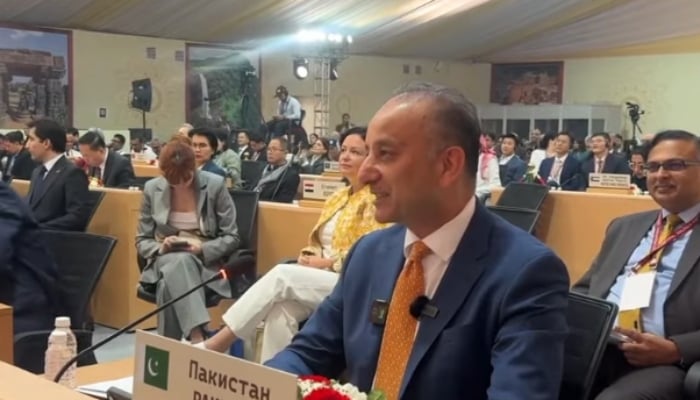
Pakistan’s Minister for Climate Change and Environmental Coordination, Dr Musadik Malik, has described climate change as a major threat to civilisation and historical heritage while addressing the First Shanghai Cooperation Organisation (SCO) Civilisations Dialogue Forum in New Delhi on November 21, 2026.
Speaking at the forum, Malik highlighted Pakistan’s rich historical and cultural heritage, noting that the country is the custodian of three important periods of civilisation reflecting its diverse historical and cultural influences. He referred to the historical connections between South Asia, Central Asia, Persia and Arabia, highlighting Delhi’s Old Fort as an important symbol of shared heritage.
He recalled that Mughal Emperor Humayun, who came from Central Asia, laid the foundations of the fort, while his rival Sher Shah Suri also became part of its history. Malik said Pakistan’s historical links extended northwards to Bukhara and Samarkand, while its cultural connections reached westwards to Persia and Arabia.
The minister said Pakistan had made every effort to promote regional stability and would support all initiatives aimed at advancing peace and security. Pointing to several centres of instability in the region, he expressed hope that greater engagement among countries would help improve the situation.
“Whoever makes efforts to advance peace and security, we will stand with them,” Malik said, emphasising Pakistan’s commitment to supporting regional peace and stability.
On the sidelines of the forum, Malik held separate meetings with representatives from Iran, India, Azerbaijan, Tajikistan and Nepal to discuss strengthening bilateral relations, cultural cooperation and regional engagement.
During his meeting with President of Iran’s Islamic Culture and Relations Organisation, Dr Mohammad Mahdi Imanipour, the two sides reaffirmed their commitment to further strengthening the longstanding friendly relations between Pakistan and Iran. They also discussed expanding bilateral cooperation in various fields.
Malik also met Indian Minister for Culture and Tourism Gajendra Singh Shekhawat and Indian Secretary of Culture Vivek Agrawal. Discussions focused on promoting cultural links and cooperation between Pakistan and India, as well as matters of mutual interest. Both sides highlighted the importance of strengthening cultural collaboration and civilisational connections.
In another meeting, Malik held talks with Azerbaijan’s Minister of Culture Adil Karimli, during which both sides reaffirmed their resolve to further strengthen the longstanding fraternal relations between Pakistan and Azerbaijan. Malik emphasised expanding cooperation across all areas of bilateral relations, particularly cultural exchanges and mutual collaboration.
The Pakistani minister also met Nepal’s Minister for Culture, Tourism and Civil Aviation Khadak Raj Paudel. During the meeting, Malik expressed deep sorrow over the loss of precious human lives in recent floods in Nepal and conveyed Pakistan’s heartfelt condolences and sympathies to the bereaved families.
Highlighting the growing risks of natural disasters caused by climate change, Malik stressed that urgent global action was necessary to address the increasing threats posed by climate-related disasters.
Malik also held a bilateral meeting with Tajikistan’s Minister of Culture Sattoriyon Amonzoda, highlighting Pakistan’s resolve to expand multifaceted cooperation, particularly through increased people-to-people exchanges. He also presented proposals, including the establishment of a Virtual Green University to promote cooperation and research in climate culture.
During his engagements, Malik called for more dialogue and cooperation under the SCO framework, saying interaction among different civilisations and cultures was particularly important at a time when the region was experiencing significant changes and geopolitical uncertainty.
He described dialogue among India, Pakistan, Russia, China and Central Asian countries as a welcome development, stressing that meaningful engagement was essential for promoting understanding among nations with different identities and historical backgrounds.
Malik arrived in New Delhi on November 20 to lead Pakistan’s delegation at the forum. His visit marked the first trip to India by a Pakistani federal minister since May 2023, when then foreign minister Bilawal Bhutto-Zardari visited Goa to attend an SCO Council of Foreign Ministers meeting.
His arrival drew criticism from several Indian opposition politicians, who questioned the government’s decision to invite a Pakistani minister. However, the Indian government defended the invitation, explaining that invitations had been extended to all SCO member states in accordance with established multilateral practices. Pakistan had initially been invited to nominate its heritage minister before Islamabad selected Malik to lead the delegation.
Responding to a question about India’s concerns over cross-border terrorism, Malik indicated that further discussions would take place following his statement at the forum.
The SCO Civilisations Dialogue Forum focused on shared historical heritage and cultural connections among member states, with the objective of promoting regional heritage, strengthening cultural cooperation and encouraging dialogue among participating countries.