
By Khawaja Nayyer
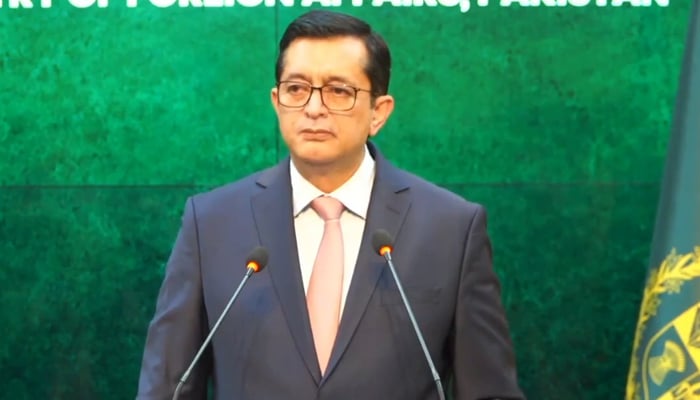
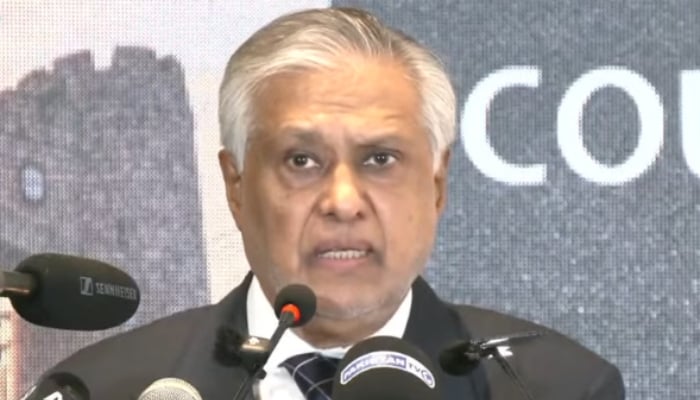
Islamabad- Foreign Office Spokesperson Sajjad Haider on Friday said Pakistan remained committed to regional peace, stability, economic cooperation and constructive diplomacy, strongly condemning Israeli military escalation in Gaza and reaffirming support for Saudi Arabia and the Palestinian people.
Addressing the weekly press briefing in Islamabad, the spokesperson discussed Pakistan’s diplomatic engagements, regional security, relations with Afghanistan and India, mediation efforts between Iran and the United States, and cooperation with international organisations.
Responding to a question about Afghanistan’s exclusion from the ECO meeting, the spokesperson said Afghanistan’s membership in the organisation remained suspended and its participation in ministerial-level meetings was subject to the host country’s discretion. He said Afghanistan was not invited to the ECO Council of Ministers meeting in Islamabad because Pakistan had not recognised the incumbent Afghan regime.
He clarified that he did not know the exact date when Afghanistan’s membership was suspended. He added that the flag displayed at the ECO meeting was that of the former Afghan government rather than the incumbent administration.
The spokesperson said Pakistan wanted Afghanistan to become peaceful, prosperous and stable, fully integrated into the broader ECO framework and at peace with itself and all its neighbours. However, meaningful progress required the Afghan authorities to address the legitimate security concerns of neighbouring countries, particularly the threat of terrorism emanating from Afghan soil.
He said regional countries had serious concerns regarding the alleged facilitation of terrorist activities by the Afghan Taliban and that addressing these concerns was essential for regional peace, stability and development.
The spokesperson also confirmed that Pakistan’s borders with Afghanistan remained closed and bilateral trade was not taking place. Regarding energy imports, he said Pakistan was keen to diversify its energy supplies from different countries and would continue exploring available options in accordance with international law. He referred to the recent visit of a Turkmenistan delegation and said the Turkmenistan-Afghanistan-Pakistan-India (TAPI) gas pipeline project was also on the agenda.
He said Deputy Prime Minister Ishaq Dar and Turkmenistan’s Foreign Minister Rashid Meredov co-chaired the sixth Pakistan-Turkmenistan Joint Intergovernmental Commission meeting in Islamabad on November 17. Both sides reviewed bilateral cooperation in trade, investment, energy, transport, connectivity, agriculture, industry, tourism, education, science and technology.
The two countries agreed to strengthen economic engagement and institutional cooperation and signed the JIC Protocol and a Programme of Cooperation between their foreign ministries for 2026-2030. They also exchanged a memorandum of understanding on tourism cooperation.
The spokesperson said Deputy Prime Minister Ishaq Dar held delegation-level talks with ASEAN Secretary-General Dr. Kao Kim Hourn at the Ministry of Foreign Affairs on November 19. Both sides reviewed progress under the Pakistan-ASEAN Sectoral Dialogue Partnership and discussed expanding cooperation in trade, investment, regional connectivity, agriculture, food security, climate resilience and digital innovation.
The deputy prime minister highlighted the importance of business linkages and people-to-people exchanges and reaffirmed Pakistan’s commitment to strengthening its partnership with ASEAN.
Responding to a question about Pakistan’s efforts to obtain full Dialogue Partnership status with ASEAN, the spokesperson said Pakistan remained committed to strengthening relations with the important regional organisation. He said Pakistan maintained diplomatic missions in nine of the ten ASEAN member countries and had witnessed an increase in high-level exchanges with the region, including visits by the presidents of Indonesia and the prime ministers of Malaysia, as well as senior officials from Singapore and ASEAN.
Pakistan was currently focusing on implementing the Action Plan for 2024-2028, which envisaged cooperation in investment, trade, education, people-to-people contacts, civil service training and financial technology. He said Pakistan had trained more than 45 diplomats from the ASEAN region at its Foreign Service Academy in recent years. The academy had also trained over 1,600 foreign diplomats from 122 countries.
The spokesperson expressed hope that these engagements and collaborative activities would eventually pave the way for Pakistan’s full Dialogue Partnership with ASEAN.
The spokesperson said Pakistan had strongly condemned the attempted Houthi attack on a Saudi Aramco administrative building in Riyadh on November 9, noting that no casualties had been reported. Pakistan condemned the targeting of civilian facilities and called for an immediate and unconditional cessation of attacks against Saudi Arabia.
He said Islamabad had commended the vigilance and swift response of Saudi authorities and reaffirmed full support for measures necessary to safeguard the Kingdom’s security, sovereignty and territorial integrity.
Pakistan had also condemned another Houthi militia attack targeting a tower in Riyadh’s King Abdullah Financial District, describing it as a grave violation of Saudi Arabia’s sovereignty and a serious threat to regional peace and security. Pakistan expressed solidarity with the Saudi government and people and reaffirmed the Kingdom’s right to defend its sovereignty and territorial integrity.
The spokesperson said Saudi Arabia’s security and stability remained of paramount importance to Pakistan, adding that Islamabad’s commitment to the safety and well-being of the Saudi people was steadfast.
On Palestine, the spokesperson said Pakistan had joined the foreign ministers of 14 other countries in condemning Israeli airstrikes on Nasser Medical Complex in Khan Younis and continued attacks against Palestinian civilians. The joint statement called for the protection of civilians and medical facilities, unhindered humanitarian assistance and implementation of relevant ceasefire arrangements.
Pakistan and the participating countries also welcomed sanctions imposed by the United Kingdom and Australia against Israeli settlement activities in the occupied Palestinian territories, including measures targeting entities involved in settlement construction and obstruction of humanitarian aid. They condemned continued settlement expansion, particularly the E1 plan, called for accountability under international law and reaffirmed support for a two-state solution based on the June 4, 1967 borders, with East Jerusalem as the capital of Palestine.
Responding to reports that Israel had resumed military operations in central Gaza after the ceasefire, the spokesperson strongly condemned the Israeli military incursion, describing the escalation as a serious violation of the ceasefire agreement and an undermining of international efforts to consolidate peace.
He said Israeli military actions continued to cause civilian casualties, destroy civilian infrastructure and displace Palestinians despite the ceasefire. Pakistan called on the international community to take urgent and effective measures to ensure strict adherence to the ceasefire, prevent further Israeli escalation, protect Palestinian civilians and guarantee the immediate, safe and unhindered delivery of humanitarian assistance to Gaza.
The spokesperson reiterated Pakistan’s unwavering support for the Palestinian people and their inalienable right to self-determination.
Responding to a question about the effectiveness of the Board of Peace amid continued Israeli military operations, he said Palestine remained one of the two pillars of Pakistan’s foreign policy, alongside the Kashmir dispute. He said Pakistan’s decision to join the Board of Peace was aimed at promoting peace and stability and ending the bloodshed of innocent Palestinians.
He noted that hundreds of thousands of Palestinians had been affected by Israeli aggression over the past couple of years, with more than 70,000 people having lost their lives. Pakistan remained committed to protecting Palestinian rights and supporting a two-state solution through diplomatic efforts.
He added that Pakistan was also providing humanitarian assistance and supporting Palestinian students, with hundreds currently studying at different universities across the country.
Regarding Iran’s call for an extraordinary OIC foreign ministers’ meeting on Gaza, the spokesperson said Pakistan and Iran shared the same position on Palestine and had consistently supported the Palestinian cause. He assured that Pakistan would participate in efforts in this regard in every possible way.
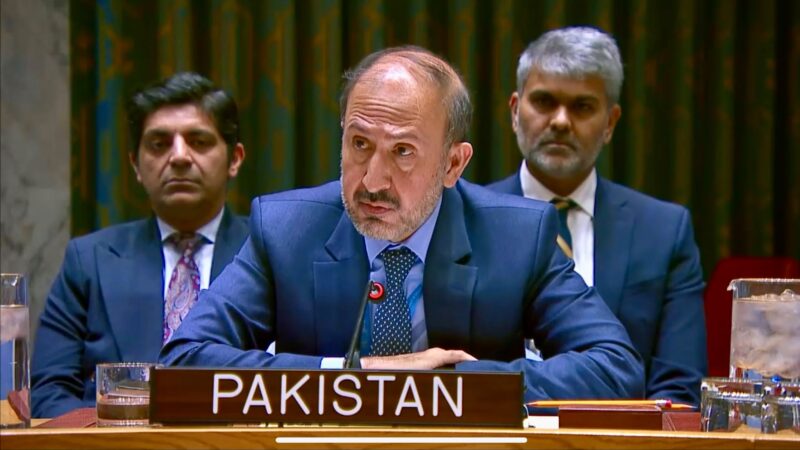
Clarifying reports and social media discussions concerning a photograph of Pakistan’s Permanent Representative to the United Nations in Geneva receiving credentials from Israel’s newly appointed representative, the spokesperson said the interaction was purely procedural and had no connection with bilateral relations.
He explained that the Conference on Disarmament (CD), comprising 65 member states, was the world’s single multilateral disarmament negotiating forum, and its presidency rotated among member countries. Pakistan’s Ambassador Tahir Hussain Andrabi, who currently serves as the CD president, had received credentials from newly appointed ambassadors of Türkiye, Ireland, Germany, Malaysia and Bangladesh, as well as Israel.
Under established procedures, incoming permanent representatives accredited to the conference presented their credentials to its incumbent president, who acted on behalf of the conference rather than in a national capacity. The spokesperson said the process was facilitated through the CD Secretariat at UN premises and involved no bilateral engagement or change in Pakistan’s national position.
He reiterated that Pakistan’s position on Palestine remained unchanged, stressing support for an independent, sovereign, viable and contiguous Palestinian state based on pre-1967 borders, with Al-Quds Al-Sharif as its capital, in accordance with relevant UN Security Council resolutions and international legitimacy.
The spokesperson categorically rejected what he described as undiplomatic and irresponsible remarks made by India at a recent UN Security Council Arria-formula meeting on natural resources. He said India’s allegations were baseless and had been effectively rebutted by Pakistan’s representative during the same meeting.
He accused India of interfering in Pakistan’s internal affairs and attempting to divert attention from Pakistan’s concerns regarding what Islamabad describes as India’s weaponisation of shared water resources.
The spokesperson also alleged that India had supported terrorist activities in Balochistan and Khyber Pakhtunkhwa to undermine Pakistan’s stability and disrupt development projects. He said Pakistan had repeatedly presented evidence of India’s alleged involvement and sponsorship of terrorist activities.
Referring to the Indus Waters Treaty, the spokesperson said the Court of Arbitration constituted under the treaty had unanimously ruled on August 31, 2026, that the agreement remained binding and fully in force, with no legal basis for its unilateral suspension or termination. He said India’s refusal to accept the ruling raised serious questions about its commitment to international law and treaty obligations.
He urged India to implement UN Security Council resolutions on Jammu and Kashmir instead of using international platforms to make allegations against Pakistan.
On the Kashmir dispute, the spokesperson said Jammu and Kashmir remained a disputed territory between Pakistan and India, with more than a dozen UN resolutions on the dispute still pending. He said the issue could only be resolved through a free, fair and impartial plebiscite under UN auspices.
Referring to India’s actions since August 5, 2019, he accused New Delhi of attempting to suppress the Kashmiri freedom struggle through arrests, restrictions on freedom of expression and other measures. He said thousands of Kashmiris had been jailed or detained and their freedom of speech curtailed.
Pakistan would continue providing diplomatic and moral support to the Kashmiri people in their struggle for the right to self-determination, he added.
Responding to a question about reports concerning a militant figure allegedly involved in the hijacking of a train in Balochistan and other terrorist attacks, the spokesperson said the Balochistan Liberation Army (BLA) was a proscribed terrorist organisation.
He alleged that the organisation received support from India and said Pakistan had repeatedly presented dossiers highlighting alleged links between the BLA and India. The government was working to provide relief to affected people and prevent terrorist activities, he said.
The spokesperson referred to statements issued by the Inter-Services Public Relations (ISPR), which had reported successful intelligence-based operations against terrorist elements, including the BLA. He also alleged that the BLA was based in Kabul and received support from India, adding that Pakistan had been sharing relevant information internationally and raising the issue during engagements with world leaders.
The spokesperson said Pakistan remained actively involved in ongoing mediation efforts between Iran and the United States. He said Iranian Foreign Minister Abbas Araghchi’s recent visit to Islamabad included meetings with Pakistan’s leadership, including the prime minister and Chief of Defence Forces Field Marshal Asim Munir.
Responding to a question about the future of mediation efforts, he said Pakistan continued to play its role and remained part of the ongoing diplomatic process.
Regarding the Islamabad MoU, the spokesperson said Pakistan had brought the two sides together, facilitated negotiations and helped secure the signing of the memorandum electronically. He said subsequent meetings had also taken place in Bürgenstock, Switzerland, but implementation of the Islamabad MoU unfortunately remained impeded.
Pakistan hoped both sides would find ways to resolve their differences in accordance with the memorandum, which provided a roadmap for dispute resolution and de-escalation. He said the foundation for a peaceful region had already been established through the mutually agreed MoU and stressed that de-escalation was essential.
Commenting on a recent meeting of three major world leaders in China, where issues relating to peace and preventing nuclear conflict were discussed, the spokesperson described the development as positive.
He said confrontation among major powers had increased in recent decades, making it increasingly difficult for smaller countries to maintain a balance in international relations. He welcomed efforts by major powers to sit together, discuss differences and seek peaceful solutions, saying any positive outcome would benefit all countries, including Pakistan.
He added that Pakistan maintained good relations with all global powers, including the United States and China, and believed that dialogue among major countries could create opportunities for peace and stability.
The spokesperson said the Makkah Joint Defence Agreement reflected the shared commitment of Pakistan, Türkiye and Saudi Arabia to strengthening collective defence, deterrence and regional stability. He confirmed that the next formal meeting under the agreement would be held in Pakistan towards the end of November.
The meeting would review progress under the agreement, strengthen institutional coordination and discuss matters of mutual interest as the alliance’s institutional framework continued to evolve. He stressed that the agreement was defensive in nature and was not directed against any country, reaffirming Pakistan’s full commitment to it.
Commenting on reports that Pakistani national Asif Merchant had been sentenced to 27 years in prison by a US court over an alleged plot to assassinate senior American officials, including President Donald Trump, the spokesperson said Pakistan had seen the reports.
He said Pakistan had previously sought information regarding the case but had not received any specific input. Explaining the issue of consular access, he said such access was generally requested by the detained individual, following which the relevant embassy approached the concerned authorities.
The spokesperson said Pakistan had not received any specific request for consular access from Asif Merchant and declined to comment on his alleged links with any country or entity, noting that he had been arrested, investigated and sentenced by US authorities.
Regarding the annual Sikh pilgrimage, the spokesperson said approximately 2,700 Sikh pilgrims from India were expected to visit Pakistan. He said the exact number of visas issued so far was not immediately available, but instructions had been issued to Pakistani embassies worldwide to facilitate visa issuance to Sikh pilgrims.
Several hundred pilgrims from other countries were also expected to visit Pakistan for the religious event. He reaffirmed Pakistan’s commitment to religious freedom, interfaith harmony and cooperation, highlighting recent initiatives involving Buddhist delegations and the Gandhara Strategic Dialogue.
He said Pakistan had recently hosted a Sri Lankan Buddhist delegation that visited various Buddhist heritage sites. The Gandhara Strategic Dialogue, held on November 18, brought together more than 100 participants, including around 20 monks from eight countries, as well as international experts from Germany, the United States and China.
Pakistan would continue promoting its religious and cultural heritage and strengthening interfaith harmony, he added.
Responding to a question about the International Court of Justice proceedings concerning allegations of genocide against Muslims in Myanmar and reports regarding Pakistan’s alleged arms supplies to Myanmar, the spokesperson said Pakistan had taken note of the reports. He said Pakistan’s position remained fully aligned with the OIC statement on the situation in Myanmar.
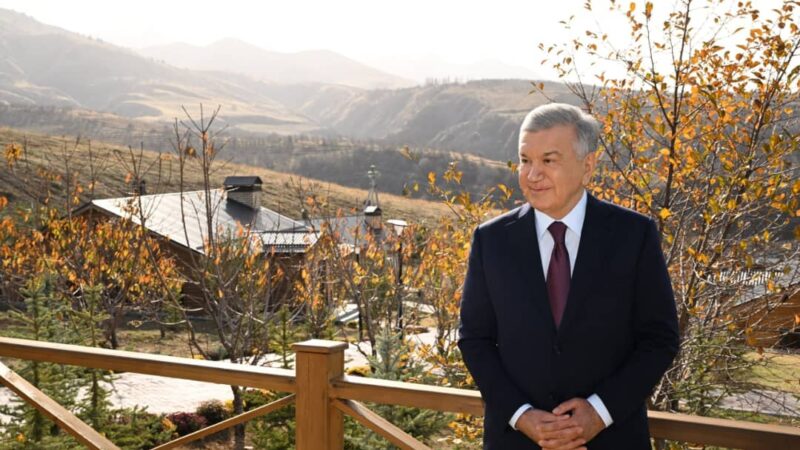
The spokesperson said Deputy Prime Minister Ishaq Dar held two telephone conversations, on November 11 and 13, with Uzbekistan’s Foreign Minister Bakhtiyor Saidov. Both sides discussed bilateral cooperation, including engagement through the Shanghai Cooperation Organisation and ECO, and stressed the importance of close coordination on shared regional priorities.
On November 15, Ishaq Dar also held a telephone conversation with Egyptian Foreign Minister Badr Abdelatty. They discussed regional and international developments and coordination at the forthcoming R4 and R4+E4 meetings. The Egyptian foreign minister reiterated his invitation to Prime Minister Shehbaz Sharif to visit Cairo, which was positively received.
Regarding the expected R4 and E4 meeting, the spokesperson said exact dates had not been finalised but the meeting was most likely to take place in Germany in December.
He said Foreign Secretary Ambassador Asim Iftikhar Ahmad held the seventh round of Pakistan-Italy Bilateral Political Consultations with Italian Secretary-General Ambassador Riccardo Guariglia. The discussions covered trade, investment, defence, education, technology, culture and other areas of mutual interest.
Similarly, the 20th round of Pakistan-Sweden Bilateral Political Consultations was held in Islamabad on November 19. Both sides reviewed bilateral relations and discussed trade, investment, education, technology, healthcare and other areas of cooperation, besides exchanging views on regional and global developments.
The spokesperson said Deputy Prime Minister Ishaq Dar addressed a delegation of 35 senior Bangladeshi civil servants participating in the Executive Leadership Training Programme in Pakistan. He highlighted longstanding friendship, shared cultural ties and positive momentum in Pakistan-Bangladesh relations, and emphasised the potential for enhanced cooperation through the Knowledge Corridor and exchanges in governance and public administration.
He said Ishaq Dar also addressed the opening session of the Pakistan Minerals Investment Forum 2026 (PMIF-26) and inaugurated its international exhibition in Islamabad on November 12. He highlighted economic diplomacy as a central pillar of Pakistan’s foreign policy and emphasised the role of the Special Investment Facilitation Council in promoting international investment partnerships.
The spokesperson said the deputy prime minister also addressed the Margalla Dialogue on November 10, sharing Pakistan’s perspective on the changing global order. He emphasised effective multilateralism, adherence to the UN Charter and international law, and the importance of dialogue and diplomacy in resolving conflicts and addressing global challenges.
On November 17, Ishaq Dar separately received Lana Nusseibeh, a candidate for the position of UN Secretary-General, and International Rescue Committee President and CEO David Miliband.
During his meeting with Nusseibeh, he reaffirmed Pakistan’s support for the United Nations, effective multilateralism, international law and relevant UN resolutions. In his meeting with Miliband, discussions focused on the organisation’s humanitarian activities, relief and recovery efforts, community resilience and challenges arising from humanitarian crises and climate change.
The spokesperson further said Foreign Secretary Ambassador Asim Iftikhar Ahmad received a high-level Turkish delegation on November 18, led by Deputy Head of the Directorate of Communications Ferhat Pirincci. The delegation also included former Turkish Defence Minister Fikri Isik and members of the Turkish Parliament. Discussions focused on strategic communications, countering disinformation and strengthening institutional cooperation between the two countries.
Concluding his briefing, the spokesperson said Pakistan’s diplomatic engagements reflected its continued commitment to constructive diplomacy, stronger bilateral partnerships, regional peace and stability, and addressing shared challenges through dialogue, cooperation and respect for international law. He said Pakistan would continue pursuing a foreign policy centred on national security, economic prosperity, constructive engagement, regional cooperation and the peaceful resolution of disputes.