


By Khawaja Nayyer
ISLAMABAD: Pakistan’s Foreign Office (FO) on Thursday rejected reports claiming that Deputy Prime Minister and Foreign Minister Ishaq Dar shared information regarding Iran’s nuclear programme during a meeting with US Secretary of State Marco Rubio.
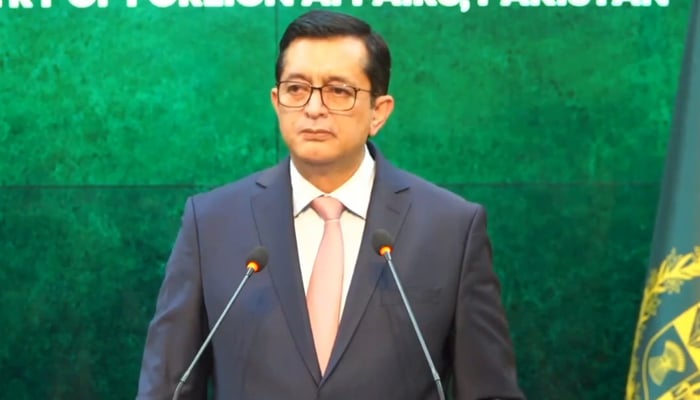
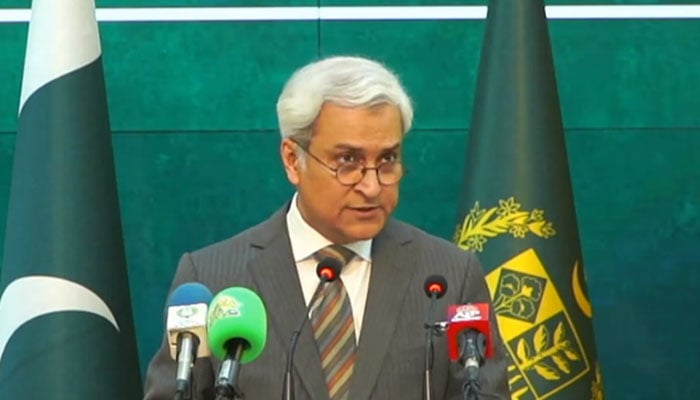
Addressing a weekly press briefing, FO spokesperson Tahir Andrabi said no such information was discussed during Dar’s meeting with Rubio in Washington on May 29. The meeting focused on bilateral relations and regional security, with Rubio later commending Pakistan’s efforts to support peace in the Middle East.
The clarification follows claims by former CIA analyst Larry Johnson, who cited an unnamed source alleging that Dar conveyed Iran’s intentions regarding its nuclear capabilities to Rubio. According to the report, the alleged message caused concern within the US administration.
However, Rubio dismissed the claims during a congressional hearing on Wednesday. Responding to questions from Congressman Scott Perry, Rubio said he was unaware of any such report and confirmed that no message regarding Iran demonstrating a nuclear weapon had been relayed through Dar.
Separately, the Foreign Office strongly criticised India’s reported plans to divert water from the Chenab River to the Beas River through the proposed Chenab-Beas Link Project.
Andrabi described the project as a serious violation of the Indus Waters Treaty (IWT), international treaty obligations, and established principles of international water law. He noted that India plans to transfer approximately 1.9 million acre-feet of water annually from the Chenab basin into the Beas system.
The FO also expressed concern over India’s plans to conduct silt flushing at the Salal Dam in Indian-administered Kashmir, warning that such measures could provide water control capabilities beyond what is permitted under existing agreements.
According to Andrabi, India has neither formally informed Pakistan about these projects nor sought consultations as required under the treaty framework.
He accused India of attempting to “weaponise water” and warned that any action threatening Pakistan’s water, food, or economic security would be unacceptable and could further destabilise South Asia.
Reaffirming Pakistan’s commitment to dialogue, Andrabi stressed that Islamabad retains all available options to protect its rights under the Indus Waters Treaty and safeguard its national interests.
The Foreign Office also called on the international community to urge India to avoid water-related coercive measures, halt projects aimed at reducing or diverting water allocated to Pakistan, and ensure full implementation of the Indus Waters Treaty.
