
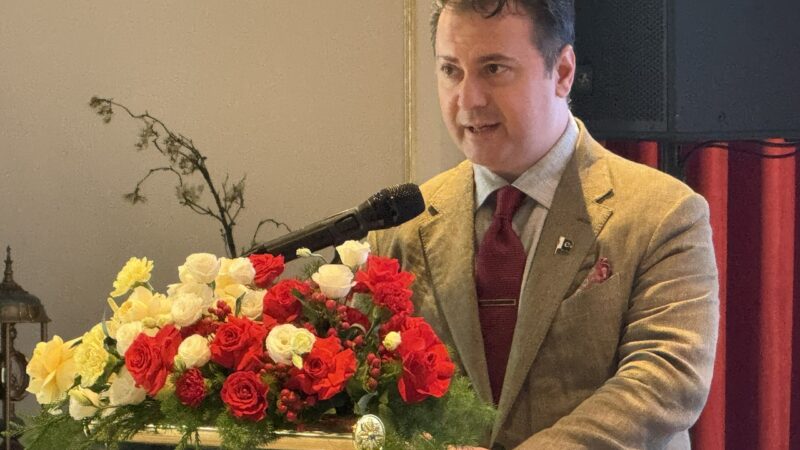
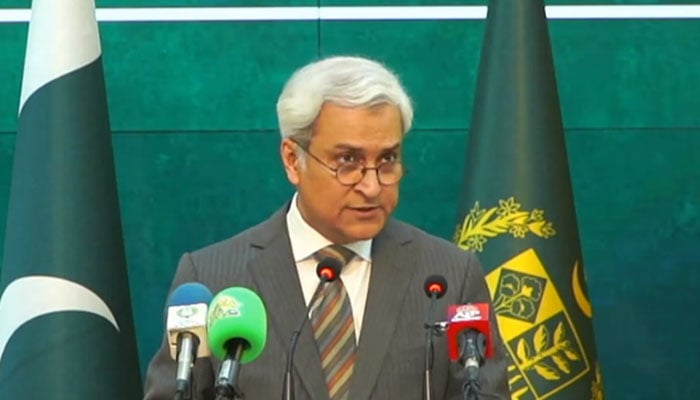
ISLAMABAD, Pakistan on Thursday voiced serious concerns over the worsening human rights situation in Indian Illegally Occupied Jammu and Kashmir (IIOJK), with Foreign Office Spokesperson Ambassador Tahir Andrabi calling for the immediate release and proper medical care of detained Kashmiri leaders, while underscoring that diplomatic engagement on key regional conflicts remains active and functional.
In his opening statement, Ambassador Andrabi said the Foreign Office could not hold last week’s briefing due to traffic restrictions in Islamabad’s Red Zone and proceeded to outline key developments over the past two weeks.
Ambassador Andrabi highlighted what he described as a core policy position: Pakistan will continue to press for a peaceful resolution of the Kashmir dispute in line with international law while simultaneously pursuing sustained diplomatic engagement to de-escalate regional tensions.
He drew particular attention to the prolonged detention of senior Hurriyat leaders, including Shabbir Ahmad Shah and Yasin Malik, stating that Shah’s reported critical health condition and denial of basic medical access were deeply concerning. “We call upon India to end the sham trials and ensure immediate access to medical care,” he said, adding that such actions reflect a broader pattern of repression in the territory.
The spokesperson also condemned recent measures targeting educational and cultural institutions in Kashmir, including the sealing of Jamia Siraj-ul-Uloom and reported restrictions on Urdu language instruction. He termed these steps part of a systematic attempt to erode the socio-cultural identity of Kashmiris, linking them to rising Islamophobia and the influence of Hindutva ideology.
On India’s administrative actions, Andrabi rejected the creation of new districts in Ladakh, asserting that such steps contravene United Nations Security Council resolutions and do not alter the disputed status of the region.
Ambassador Andrabi emphasized that channels of communication remain open on multiple fronts, particularly regarding tensions between the United States and Iran. He described ongoing mediation efforts as constructive, noting that recent ceasefire understandings had helped prevent further escalation and civilian casualties.
“The clock of negotiations has not stopped,” he remarked, adding that Pakistan remains engaged with all relevant stakeholders and supports direct dialogue to achieve lasting stability.
He also addressed concerns over a potential blockade of the Strait of Hormuz, warning of serious implications for global trade and energy security, and confirmed that the matter is under discussion at the United Nations Security Council.
On Afghanistan, Andrabi dismissed recent allegations by Kabul as propaganda, reiterating Pakistan’s demand that Afghan territory must not be used for attacks against Pakistan. He described this as a one-point agenda consistently raised in bilateral engagements.
In response to questions on overseas Pakistanis, the spokesperson provided updates on detainees in Southeast Asia and Africa. He confirmed that more than 80 Pakistanis detained in Cambodia are receiving consular access and would be repatriated after completion of legal formalities, while cautioning citizens against fraudulent overseas job offers.
Providing an additional update, Andrabi said 27 Pakistani nationals detained in Kampala, Uganda, were scheduled to return to Pakistan on Thursday, while around 30 others were in the process of arranging their travel. He added that the remaining individuals, who were on visit visas, would also depart in due course. The spokesperson noted that Ugandan immigration authorities had imposed financial penalties, but Pakistan’s mission was actively engaging with local authorities to seek a waiver.
He further noted that Pakistani authorities are actively engaged in efforts to secure the release of crew members aboard a hijacked vessel off the Somali coast, with assurances from regional authorities that the situation is being closely monitored.
He also condemned unprovoked firing and shelling by Afghan forces on April 26 and 29 in border areas of South Waziristan, including Angoor Adda, which injured civilians, including women and children, and damaged homes. He expressed solidarity with affected families and said measures were underway to ensure safety and prevent further incidents.
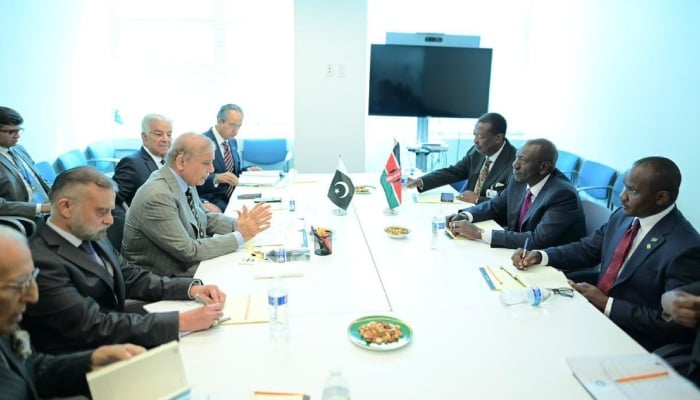
Turning to the Middle East, the spokesperson highlighted Pakistan’s continued diplomatic engagement to support de-escalation between the United States and Iran, emphasizing sustained contacts with both sides. He said the efforts, led by Prime Minister Shehbaz Sharif, Deputy Prime Minister Ishaq Dar, and senior military leadership, reflect Pakistan’s commitment to dialogue-driven conflict resolution.
He detailed a series of high-level engagements, including multiple telephonic contacts between Prime Minister Shehbaz Sharif and Iranian President Masoud Pezeshkian, consultations with Saudi Crown Prince Mohammed bin Salman, meetings with Qatar’s Amir Sheikh Tamim bin Hamad Al Thani, and participation in the Antalya Diplomacy Forum where the Prime Minister met Turkish President Recep Tayyip Erdogan.
The spokesperson said these engagements reinforced Pakistan’s role in facilitating recent U.S.-Iran ceasefire understandings and advancing regional peace efforts, which have been widely acknowledged by international partners.
He further noted extensive diplomatic outreach by Deputy Prime Minister Ishaq Dar, including engagements with counterparts from Türkiye, Egypt, Saudi Arabia, the United Kingdom, Canada, Iran, and others, as well as participation in the R-4 consultative framework aimed at enhancing regional cooperation.
On Palestine, Andrabi reiterated Pakistan’s position, referring to joint statements condemning Israeli actions in Jerusalem, particularly violations at Al-Aqsa Mosque and attempts to alter the status of holy sites.
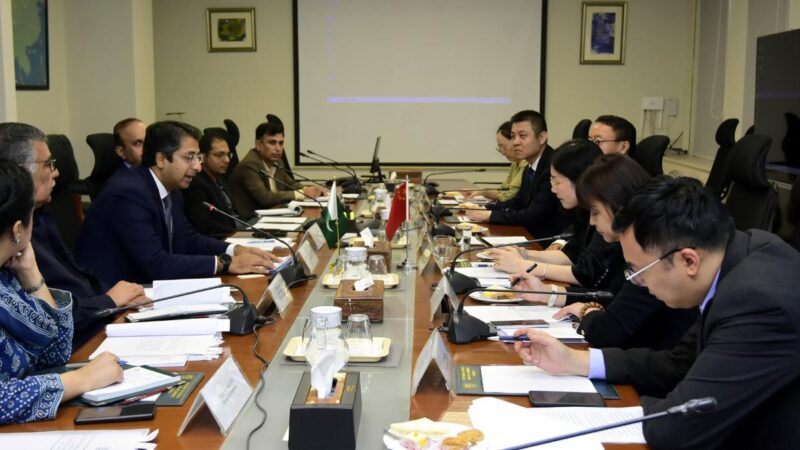
He also mentioned that President Asif Ali Zardari was on an official visit to China, describing it as part of ongoing high-level exchanges marking the 75th anniversary of diplomatic relations between the two countries.
Ambassador Andrabi maintained that Pakistan’s foreign policy remains anchored in dialogue, de-escalation, and the protection of fundamental rights, with Kashmir continuing to occupy a central place in its diplomatic agenda.
