



By Khawaja Hamza
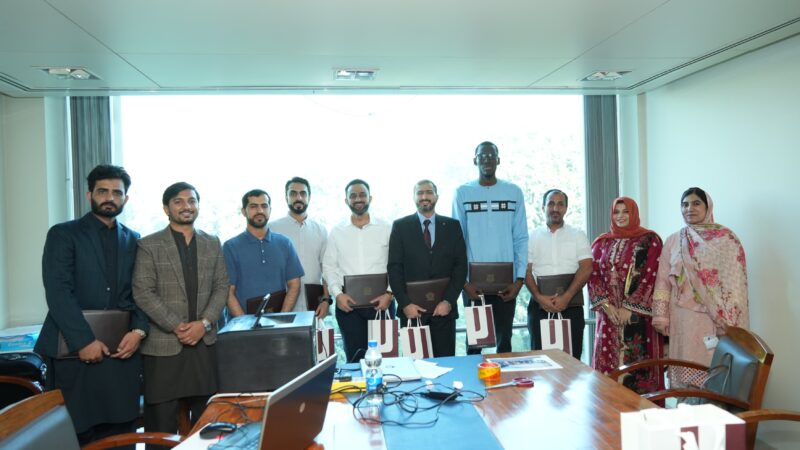
Islamabad, The five-day UN/Pakistan International Training Course, on Space-Based Disaster Management- Shifting Focus from Reactive to Proactive Approaches organized by Pakistan Space & Upper Atmosphere Research Commission (SUPARCO), successfully concluded today at the COMSTECH Secretariat, Islamabad, following an intensive program held from 2–6 November 2026.
The training brought together national and international experts and participants to strengthen institutional capacities and promote the effective use of space-based technologies for disaster risk management. The programme comprised 13 sessions, and featured 11 technical presentations delivered by national and international experts. The sessions provided an opportunity for knowledge exchange, technical discussions, and sharing of best practices on emerging applications of space-based information in disaster preparedness, monitoring, assessment, and mitigation.
Three partner organizations — Inter-Islamic Network on Space Sciences and Technology (ISNET), National Disaster Risk Management Fund (NDRMF), and GIZ Pakistan — contributed to the programme by supporting discussions and knowledge-sharing on key areas of disaster management. Major topics included Early Warning Systems, Glacial Lake Outburst Flood (GLOF) Monitoring, Flood Modelling, Heatwave Assessment, and Space-Based Disaster Risk Reduction.
The training emphasized the growing importance of satellite-based observations, geospatial technologies, and data-driven decision-making in strengthening disaster resilience. Particular attention was given to the integration of space-based information into national disaster management frameworks to improve risk assessment, enhance early warning capabilities, and support timely and informed responses to natural hazards.
The training also featured live demonstrations of the Space4Climate website and its theme-specific portals, SUPARCO’s Disaster Watch Portal , and the NatCat Risk Calculator Dashboard , highlighting their practical applications in climate monitoring, disaster surveillance, and risk assessment.
A key outcome of the programme was its emphasis on shifting disaster management strategies from reactive response mechanisms towards proactive, anticipatory, and risk-informed approaches. Through expert-led presentations and interactive discussions, participants gained insights into how space-based technologies can support early identification of potential hazards, improve preparedness, and reduce the adverse impacts of disasters on vulnerable communities.
The five-day programme concluded with a closing ceremony, reaffirming the importance of continued collaboration among national institutions, international partners, and technical experts to advance space-based disaster management capabilities.
