


By Khawaja Hamza
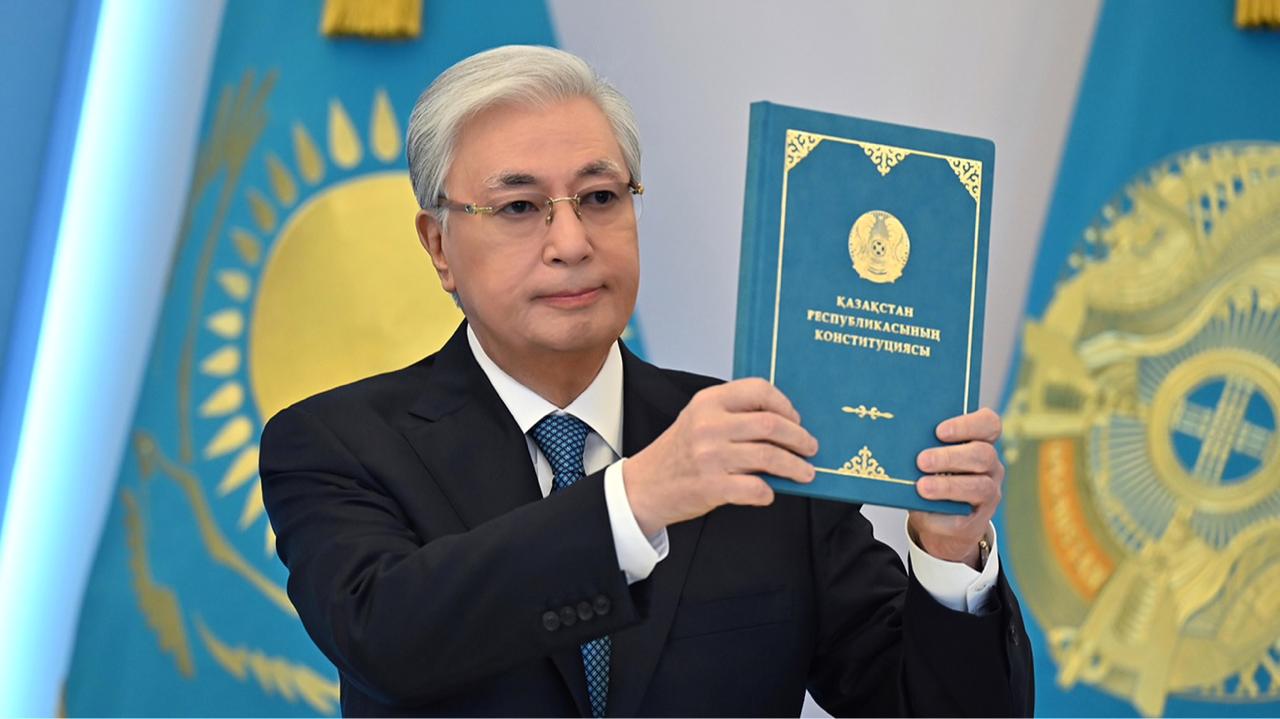
On August 23, 2026, Kazakhstan will hold elections to its newly established Kurultai, marking the first parliamentary election under the country’s new Constitution adopted through a nationwide referendum on March 15, 2026. The vote represents far more than the election of 145 legislators. It is the first practical test of an ambitious constitutional transformation designed to redefine Kazakhstan’s political institutions, legislative process, and governance philosophy. Whether viewed as a democratic breakthrough, a managed political transition, or a combination of both, the election is likely to become one of the most consequential political events in Central Asia in recent decades.
The constitutional reforms received official approval with more than 87% support on a turnout exceeding 73%, providing the legal foundation for replacing the bicameral Parliament with a unicameral Kurultai, introducing a Vice Presidency, establishing the People’s Council, and restructuring several state institutions. The Constitution also declares the people as the sole source of state power and emphasizes the protection of human rights, rule of law, and democratic governance.
Unlike many constitutional amendments in the post-Soviet space that merely adjusted existing institutions, Kazakhstan chose to redesign much of its political architecture. The former Senate and Mazhilis have been replaced by a single legislative chamber consisting of 145 deputies elected entirely through proportional party lists, while constitutional safeguards retain quotas for women, youth, and persons with disabilities and maintain a five-percent electoral threshold.
Equally significant is the transparency with which the transition has been organized. The electoral calendar was publicly announced months in advance. Political parties were given defined periods for nomination, registration, campaigning, and public outreach. The Central Election Commission published detailed procedures while international organizations, including the OSCE Office for Democratic Institutions and Human Rights (ODIHR), deployed election observation missions well before polling day.
Seven registered political parties are contesting the election, representing a wide ideological spectrum ranging from agrarian and social-democratic movements to liberal, reformist, environmental, and business-oriented parties.
Throughout the campaign, parties have organized nationwide caravans, public debates, business forums, environmental events, rural outreach programs, youth meetings, and policy discussions. This diversity of campaigning reflects a more structured and issue-oriented electoral environment than has traditionally characterized Central Asian politics.
The campaigns themselves reveal an encouraging evolution. Rather than focusing solely on personalities, many parties are presenting detailed legislative agendas. Economic diversification, digital transformation, environmental sustainability, rural healthcare, pension reform, entrepreneurship, agricultural modernization, and regional development dominate public discussion. Such policy-centered campaigning contributes to healthier democratic competition because voters evaluate programs rather than simply political loyalty.
Transparency, however, cannot be measured solely by electoral procedures. It must also be judged by whether institutions permit meaningful competition and whether citizens possess confidence that their votes genuinely influence political outcomes. Kazakhstan has invited international observers, maintained formal electoral procedures, and promoted institutional modernization. These are important democratic indicators.
At the same time, independent analysts have offered more cautious assessments. Some observers argue that while the constitutional reforms introduce modern institutions, they also preserve or even expand significant presidential authority through appointments to key state bodies, raising questions about the long-term balance between executive and legislative power. Reuters, the Associated Press, and several research institutions have highlighted this debate, emphasizing that the real measure of reform will be how these institutions function in practice after the election rather than merely how they are designed on paper.
This balanced perspective is important because democratic development is rarely achieved overnight. Institutional reform is a process rather than an event.
Countries typically evolve through successive stages of constitutional refinement, political competition, judicial independence, media development, and civic participation.
When Kazakhstan is compared with its Central Asian neighbors, the distinction becomes increasingly apparent.
Turkmenistan remains among the world’s most centralized political systems, where electoral competition is extremely limited.
Tajikistan continues to operate under a highly presidential model with restricted political pluralism. Uzbekistan has introduced notable reforms under President Shavkat Mirziyoyev, expanding economic liberalization and opening greater political space, yet its democratic institutions continue to evolve gradually. Kyrgyzstan has historically exhibited the region’s most competitive electoral politics but has also experienced repeated political instability, revolutions, and constitutional reversals.
Kazakhstan appears to be attempting a different path—combining political stability with gradual institutional modernization rather than pursuing abrupt democratization.
The constitutional reforms seek to preserve administrative continuity while expanding legislative participation, modernizing governance, and encouraging more programmatic political competition.
Another noteworthy feature of Kazakhstan’s transition is its emphasis on digital governance. President Kassym-Jomart Tokayev has outlined plans for a fully digital Parliament supported by predictive analytics, Big Data, artificial intelligence, and modern legislative technologies.
The government has simultaneously introduced a Digital Code and AI legislation, positioning digital governance as an integral component of democratic modernization rather than merely technological advancement.
The broader implications extend well beyond Kazakhstan itself.
Central Asia has traditionally been viewed through the lens of geopolitical competition among Russia, China, Europe, Türkiye, and the United States. Yet internal political modernization may increasingly become the region’s defining story.
If Kazakhstan demonstrates that constitutional reform can coexist with political stability, sustained economic growth, and stronger institutions, it may provide a model that neighboring states study carefully, even if each follows its own distinct path.
Successful implementation could also strengthen Kazakhstan’s international standing. Foreign investors generally seek predictable legal systems, transparent governance, and institutional stability.
Democratic consolidation, if accompanied by rule of law and administrative efficiency, can improve investment confidence while enhancing Kazakhstan’s role as the leading economic and diplomatic bridge between Europe and Asia.
The Kurultai itself will therefore become the principal indicator of success. Its effectiveness will depend not simply on passing legislation but on conducting meaningful parliamentary oversight, scrutinizing executive decisions, debating national priorities, and representing the diverse interests of Kazakhstan’s citizens.
A legislature that operates independently, transparently, and professionally can gradually strengthen public trust in democratic institutions.
Ultimately, the August 23 election should not be viewed as the destination of Kazakhstan’s democratic journey but as its beginning. Democratic systems are judged less by constitutional texts than by consistent implementation, institutional accountability, peaceful political competition, judicial independence, media freedom, and citizens’ confidence that their participation matters.
Kazakhstan has now established the constitutional framework, scheduled competitive elections, invited international observation, modernized its legislative institutions, and articulated an ambitious vision of a “Just Kazakhstan.” Whether that vision ultimately matures into a durable democratic model will depend upon how faithfully these new institutions operate after the ballots are counted.
For Central Asia, the significance is profound. Should Kazakhstan successfully combine political stability with progressively stronger democratic institutions, it may redefine regional expectations and demonstrate that constitutional modernization, economic development, and accountable governance can advance together. If the reforms are implemented consistently and inclusively, Kazakhstan may well emerge not only as Central Asia’s largest economy but also as one of its most influential democratic reformers.
