

By Khawaja Hamza
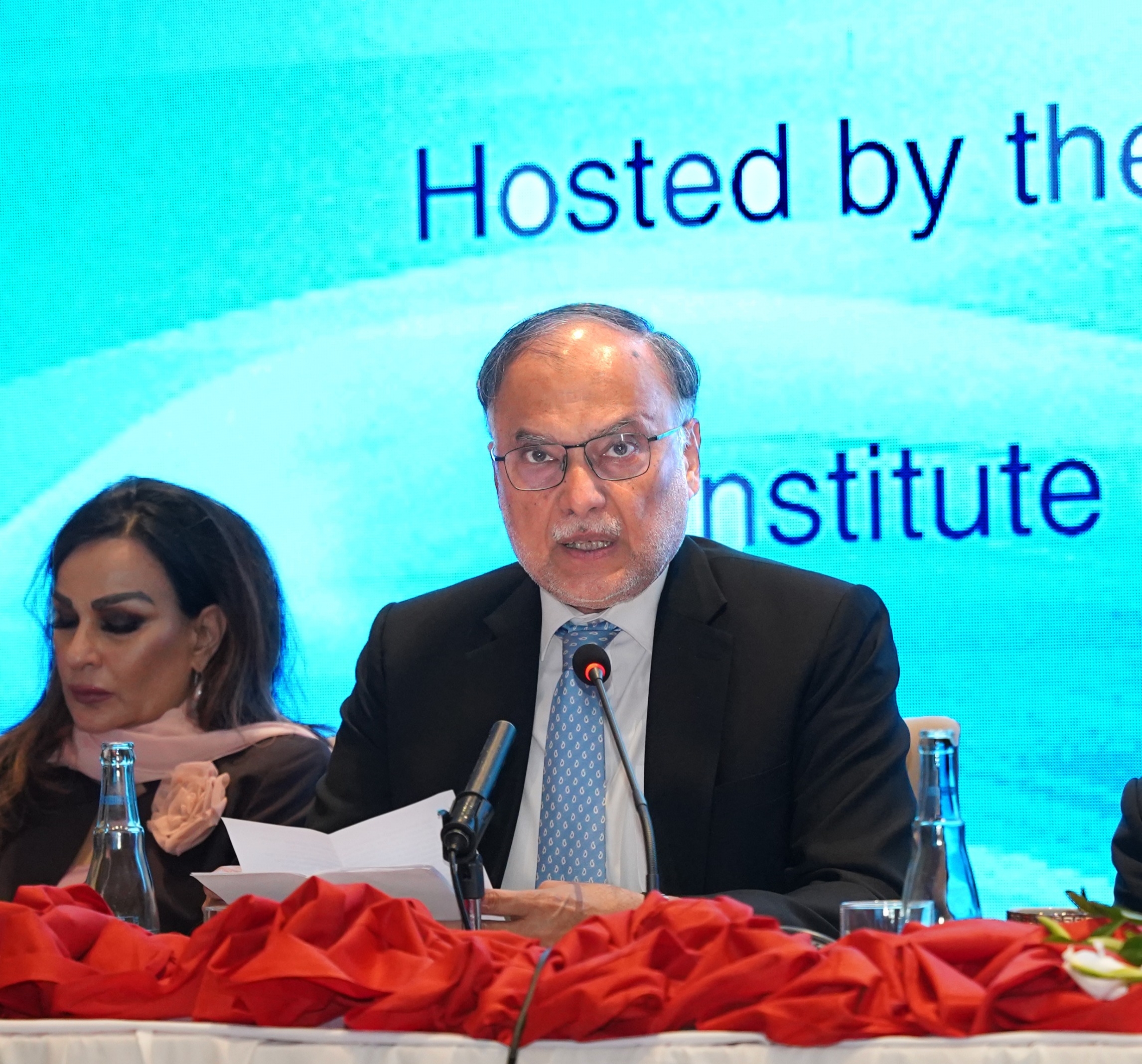
Islamabad, Federal Minister for Planning, Development and Special Initiatives Ahsan Iqbal and Deputy Prime Minister and Foreign Minister Senator Mohammad Ishaq Dar have called for strengthening political, institutional and governance cooperation between Pakistan and China, emphasising the importance of policy continuity, visionary leadership, effective governance and people-centred development for sustainable national progress.
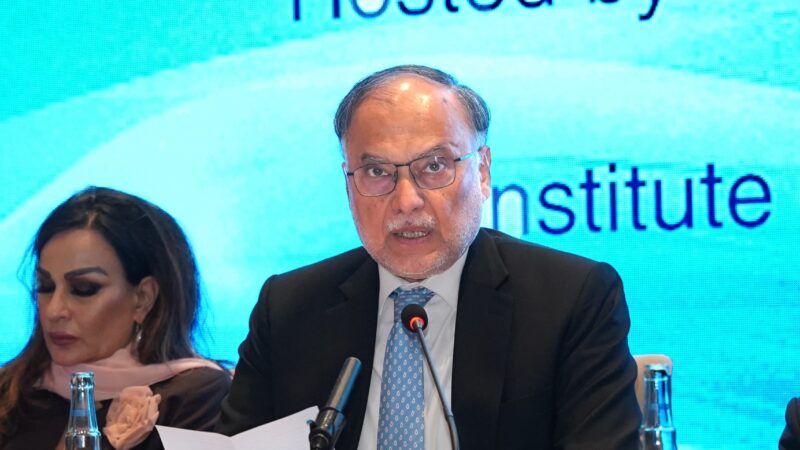
Addressing the Symposium on Xi Jinping Thought on Party Building and Seminar on China-Pakistan Governance in Islamabad on Monday, attended by Liu Haixing, Minister of the International Department of the Central Committee of the Communist Party of China (IDCPC), along with parliamentary representatives, government officials and leaders of Pakistani political parties, the two leaders highlighted China’s development experience as an important source of lessons for Pakistan.
Ahsan Iqbal said Pakistan’s political parties could learn valuable lessons from the Communist Party of China’s (CPC) emphasis on public service, organisational discipline, self-reform, accountability, institutional strength and long-term national planning. He stressed that national development strategies should remain above electoral cycles, warning that Pakistan had paid a heavy price whenever effective policies were abandoned following changes in government.
He said sustainable development required political continuity, consistent policies and strong institutions, adding that the Pakistan Muslim League-Nawaz (PML-N) was committed to promoting these principles within Pakistan’s democratic framework.
Recalling the launch of the China-Pakistan Economic Corridor (CPEC) under former Prime Minister Muhammad Nawaz Sharif, Ahsan Iqbal said its first phase had transformed an initial memorandum into approximately $25 billion in investment. The projects delivered more than 8,000 megawatts of electricity, 888 kilometres of highways and motorways, and approximately 236,000 direct and indirect employment opportunities.
He reaffirmed that Pakistan-China friendship transcended political differences and changes in governments, describing it as a national consensus deeply rooted in the hearts of the people of both countries.
Referring to URAAN Pakistan and CPEC 2.0, the planning minister proposed the establishment of five political corridors between the CPC and Pakistani political parties to complement the five economic corridors. The proposed areas include strategic dialogue, governance and development learning, youth and leadership development, cultural connectivity, and regional peace and cooperation.
He particularly emphasised youth engagement, proposing reciprocal exchanges between young leaders of the CPC and Pakistani political parties, with an initial cohort planned for 2027. The initiative would include structured learning opportunities at China’s Central Party School to help develop future political leadership and strengthen long-term institutional ties.
Congratulating President Xi Jinping and the CPC on the successful conclusion of the Fifth Plenary Session of the 20th Central Committee, Ahsan Iqbal said the 75th anniversary of Pakistan-China diplomatic relations provided an important opportunity to open a new chapter of political and institutional cooperation.
He said the real measure of leadership was not limited to achievements during a particular tenure but lay in the lasting institutions, policies and foundations established for future generations.
Meanwhile, Deputy Prime Minister and Foreign Minister Senator Mohammad Ishaq Dar, who co-chaired the symposium, thanked Liu Haixing for accepting his invitation and participating in the conference. He said the gathering provided an important opportunity to discuss the role of political parties in governance, institution-building and national development while further deepening longstanding party-to-party exchanges between Pakistan and China.
Ishaq Dar acknowledged the intellectual contribution of President Xi Jinping’s Thought on Party Building and the CPC’s experience in translating its principles into effective governance and tangible development outcomes. He said Liu Haixing’s address had provided a comprehensive understanding of the subject through five dimensions: theoretical foundations, practical application, a people-centred approach, cultural roots and global significance.
The foreign minister observed that visionary leadership was essential for national unity, institutional stability and sustainable development. He attributed China’s remarkable progress under President Xi Jinping to the CPC’s commitment to party discipline, organisational capacity, anti-corruption efforts and people-centred governance.
He highlighted China’s achievement in lifting hundreds of millions of people out of poverty and successfully accomplishing its first centenary goal of building a moderately prosperous society in all respects. He said China was now advancing towards its second centenary goal of building a great modern socialist country in all respects.
Dar said China’s development experience demonstrated how far-sighted leadership could establish long-term national priorities, mobilise collective efforts and translate policy objectives into tangible benefits for the people. He described governance cooperation, leadership development and institutional strengthening as important areas through which Pakistan could benefit from China’s experience.
Highlighting Pakistan’s economic progress, he said the country had made significant strides towards economic self-reliance and stabilisation and was now moving towards economic consolidation. These gains, he added, were supported by governance reforms, including macroeconomic discipline, institutional modernisation, digital tax administration and simplified regulations.
He noted that 2026 was particularly significant for both countries as Pakistan and China were celebrating the 75th anniversary of diplomatic relations, while the Communist Party of China was commemorating its 105th founding anniversary.
Dar said that over the past 75 years, bilateral relations had developed into an All-Weather Strategic Cooperative Partnership based on mutual trust, respect and support. He emphasised that broad-based political consensus across Pakistan’s political spectrum remained a major strength of the relationship and reflected recognition of China as an important strategic partner.
He said the Pakistan-China partnership continued to serve as a source of peace and stability in the region and beyond. Referring to his visit to Beijing on March 31, 2026, at the invitation of Chinese Foreign Minister Wang Yi, he recalled that Pakistan and China had jointly launched the Five-Point Peace Initiative for restoring peace in the Middle East.
He also referred to President Xi Jinping’s Four-Point Peace Proposal for the Middle East, describing it as an important expression of China’s approach towards comprehensive, common and indivisible security. He said President Xi’s landmark Global Governance Initiative (GGI) further demonstrated China’s commitment to fairness, justice and equity in the international governance system, particularly in advancing the interests of developing countries and the Global South.
Highlighting the role of the International Department of the CPC Central Committee, Dar said the IDCPC had remained a key partner in strengthening Pakistan-China friendship through sustained engagement with Pakistani political parties.
He said the China-Pakistan Political Parties Forum and the CPEC Political Parties Joint Consultation Mechanism continued to provide important platforms for political dialogue, cooperation and the exchange of governance experiences.
Recalling his visit to Beijing in May 2026, Dar said Pakistan and China had held the Second China-Pakistan Political Parties Forum and the Fourth Meeting of the CPEC Political Parties Joint Consultation Mechanism. The meetings reaffirmed the importance of political engagement in advancing shared objectives under CPEC 2.0. An MoU was also signed between the CPC and the Pakistan Muslim League-Nawaz to promote more structured and sustained party-to-party cooperation.
He said Pakistan had proposed five political corridors during these engagements to strengthen political dialogue, governance cooperation, youth participation, people-to-people exchanges and regional cooperation, stressing that the proposals should now be translated into practical initiatives through regular exchanges and effective follow-up.
Outlining the key recommendations emerging from the symposium, Ishaq Dar identified five broad areas for future cooperation.
The first area involves strengthening political party organisations and grassroots structures through improved organisational capacity, internal cohesion and stronger connections with local communities.
The second focuses on exploring alternative development pathways through long-term planning, high-quality development and modernisation.
The third emphasises strengthening public trust through people-centred governance, prioritising citizens’ welfare, improving public services and ensuring that development benefits reach ordinary people.
The fourth concerns combating corruption and promoting accountability by strengthening discipline, transparency, integrity and mechanisms to prevent the misuse of public office.
The fifth aims to develop a robust framework for inter-party relations based on mutual respect, non-interference, dialogue, cooperation and mutual learning, with regular exchanges of experience in party-building and state governance, particularly among countries in the region.
Dar further stressed that political parties and institutions played a vital role in building national consensus, ensuring policy continuity and facilitating effective implementation of development policies.
He called for expanding parliamentary cooperation between Pakistan’s Senate and National Assembly and China’s National People’s Congress (NPC) and Chinese People’s Political Consultative Conference (CPPCC). He also proposed greater exchanges among think tanks, universities and training institutions, particularly in governance, poverty alleviation and development planning.
Emphasising the importance of young people in carrying forward bilateral relations, he said youth engagement and leadership development were essential to ensuring the continuity of Pakistan-China friendship for future generations.
Concluding his remarks, Dar reaffirmed Pakistan’s commitment to further strengthening its partnership with China through sustained political engagement, institutional cooperation and closer exchanges between political parties.
He called for collective efforts to build an Even Closer China-Pakistan Community with a Shared Future, contributing to peace, stability and prosperity for the people of both countries and the wider region.
Both leaders underscored that the strength of Pakistan-China relations rested not only on government-to-government cooperation but also on lasting political understanding, institutional linkages, people-to-people contacts and cooperation between political parties, providing a strong foundation for the long-term strategic partnership.
