
ISLAMABAD, Federal Minister for Finance and Revenue Senator Muhammad Aurangzeb has said Pakistan’s successful issuance of Eurobonds reflects renewed confidence in the country from international credit rating agencies, global financial markets and investors.
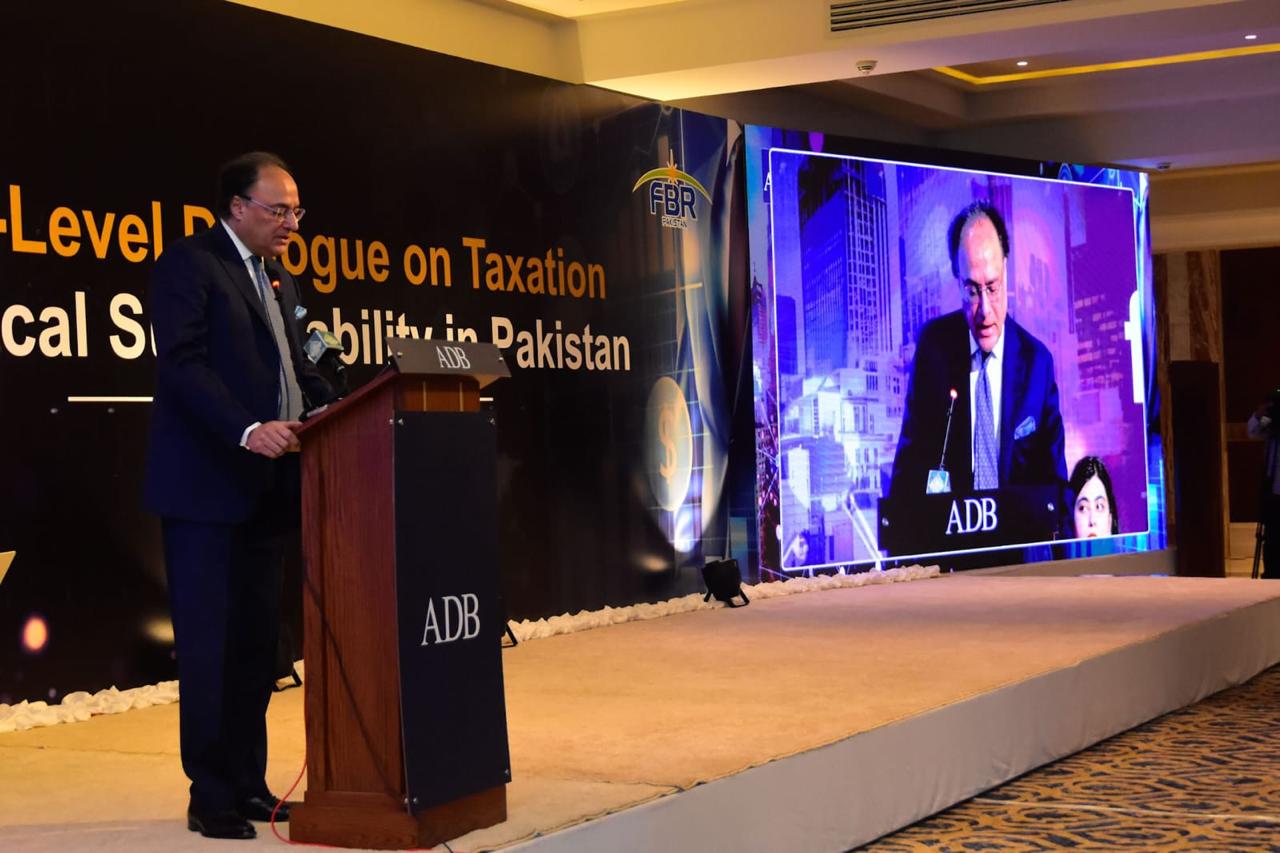
Addressing a high-level dialogue on “Taxation for Fiscal Sustainability in Pakistan”, organized by the Asian Development Bank (ADB) in Islamabad on Thursday, the finance minister said structural reforms were a key component of Pakistan’s journey towards sustainable economic stability.
Aurangzeb said Pakistan had successfully raised $3 billion through a two-tranche Eurobond transaction in the international capital market, describing it as the largest-ever amount raised internationally by Pakistan through a single transaction.
He said the successful transaction followed improvements in Pakistan’s credit ratings by three international credit rating agencies and demonstrated growing confidence among global financial institutions and investors in Pakistan’s economy and its sustainable economic policies.
The minister said the Eurobond issue attracted offers worth approximately $6 billion, almost twice the amount Pakistan raised. Institutional investors from various regions, including Asia, the Middle East, Europe and the Americas, showed strong interest in the transaction, which he described as an important indication of restored investor confidence in Pakistan in global financial markets.
He said Pakistan had undertaken reforms not only in the domestic financing sector but also in external financing. The Eurobond was the first issuance under the country’s renewed three-year Global Medium-Term Note Programme.
According to the finance minister, extending fiscal discipline to external financing aims to secure better borrowing terms, lengthen debt maturities, diversify sources of financing, reduce rollover and refinancing risks, and improve the overall profile of Pakistan’s sovereign debt.
Aurangzeb highlighted the progress made in fiscal and external-sector indicators, saying that the combined size of the current account and fiscal deficits, which had stood at 12.5 percent of GDP several years ago, had declined to 2.6 percent by the end of June. He said the fiscal deficit was at its lowest level in 22 years, while the current account position was improving.
He added that Pakistan had achieved primary surpluses for the past three years, reflecting progress towards fiscal consolidation. However, he stressed that the country needed to continue on this path.
The finance minister said the Federal Board of Revenue (FBR) had played a key role in the structural reform process. The government, he said, was implementing its reform programme, reducing government expenditure and lowering debt-servicing costs.
FBR tax revenues increased by 40 percent over the past two years, while the tax authority collected approximately Rs13 trillion during the last fiscal year, he said.
Aurangzeb noted that when the reform process began, Pakistan’s tax-to-GDP ratio stood at 8.8 percent, which had now increased to 10.3 percent. He acknowledged that the ratio needed to rise further to place the economy on a stronger and more sustainable footing.
He said reforms at the FBR were continuing with a focus on people, processes and technology, with the objective of broadening the tax base, increasing tax coverage and establishing a transparent taxation system.
The minister said that at the time of appointing the FBR chairman, the government had assured him that neither the prime minister nor the finance minister would make recommendations regarding appointments and postings of FBR officers.
He added that the FBR’s operational capacity had been strengthened and third-party audits were being conducted as part of efforts to improve transparency and accountability.
Highlighting the role of technology in tax reforms, Aurangzeb said digitalisation had produced several positive results, including improvements in sales tax collection. The government was also promoting digital invoicing and improving the governance and resource management of the Pakistan Revenue Automation Limited (PRAL).
He said measures such as faceless assessment in customs had improved service delivery, while the business community was providing positive feedback on these initiatives.
The finance minister emphasized that structural reforms were essential for achieving sustainable economic stability. He said Prime Minister Shehbaz Sharif, the federal cabinet and the political leadership were supporting the reform process.
“We want to end the cycle of economic ups and downs that Pakistan has experienced in the past,” Aurangzeb said, stressing that the direction of the country’s economic stabilization process was correct but required continued action.
He also expressed Pakistan’s appreciation for the Asian Development Bank’s assistance, support and cooperation in the country’s journey towards economic stability.
