
Islamabad, PML-N Secretary General and Federal Minister for Planning, Development and Special Initiatives Professor Ahsan Iqbal has said that the Pakistan Muslim League-Nawaz (PML-N) and the Communist Party of China (CPC) can build a stronger political and institutional partnership to support the next phase of Pakistan-China socio-economic cooperation, with the two parties agreeing to develop Five Political Corridors alongside CPEC 2.0.
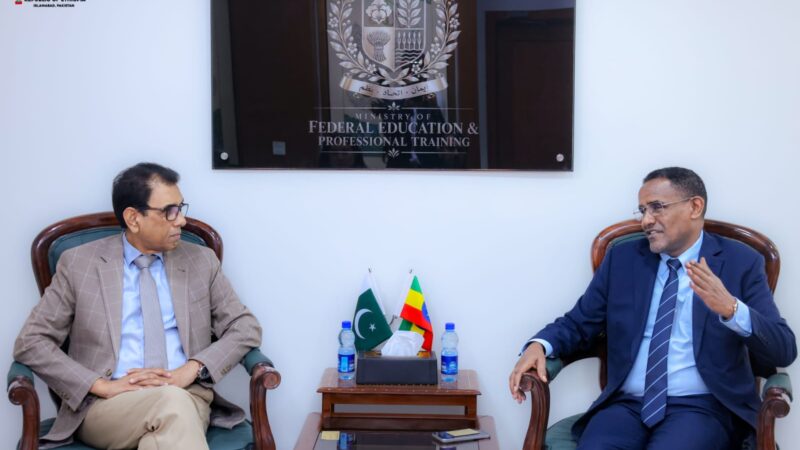
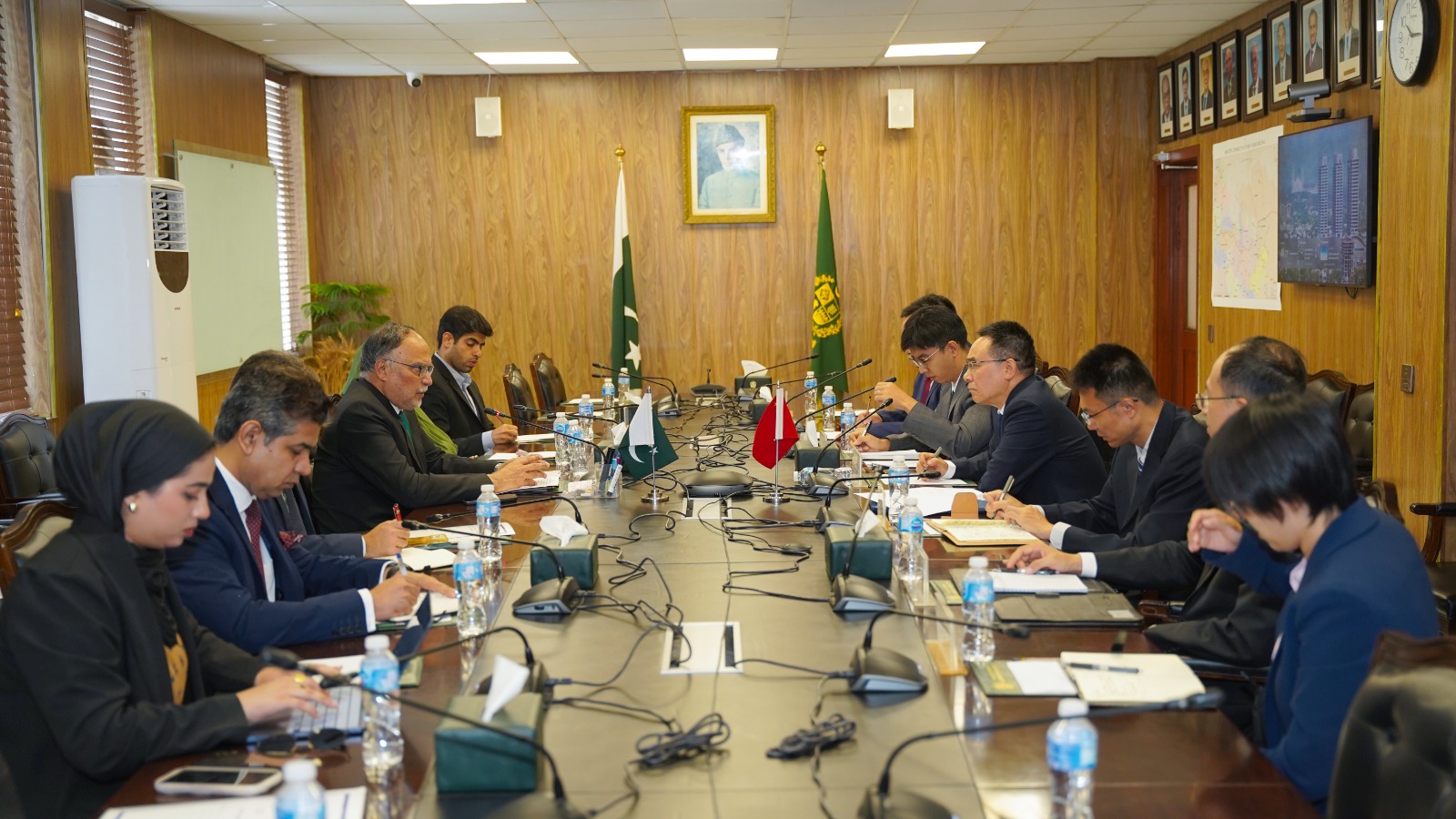
The understanding was reached during a high-level party-to-party engagement led by Ahsan Iqbal with Mr. Liu Daxiu, Head of Delegation and First Class Inspector, Party Building Research Institute, Organization Department of the Central Committee of the CPC, and members of the visiting Chinese delegation.
The engagement focused on strengthening PML-N-CPC relations, governance and development learning, leadership and youth exchanges, and institutional cooperation to complement CPEC 2.0.
Welcoming the delegation, Ahsan Iqbal said the PML-N deeply cherished Pakistan’s relationship with China and recognized its exceptional support at critical moments.
“Pakistan and China are two countries, but we share a common heart that beats together. China has stood by Pakistan through every crisis, and Pakistan can never forget the trust and friendship China has demonstrated,” he said.
Recalling CPEC’s first phase, he said China stepped forward when Pakistan faced severe energy shortages, terrorism and weak investor confidence, investing in the energy sector when even domestic investors were reluctant.
“When even our own investors were hesitant to invest in Pakistan, China came forward. Chinese investment helped Pakistan address its energy shortages at a critical moment and demonstrated extraordinary confidence in Pakistan’s future,” he said.
He recalled that CPEC took concrete shape after Mian Muhammad Nawaz Sharif’s 2013 visit to China and gained decisive momentum with President Xi Jinping’s visit to Pakistan in April 2015.
Ahsan Iqbal said CPEC 2.0 should build on that political commitment through productivity, innovation, green development, livelihoods and regional connectivity.
Ahsan Iqbal said the CPC had been instrumental in China’s socio-economic transformation, while the PML-N had played a major role in Pakistan’s development journey under the leadership of Mian Muhammad Nawaz Sharif and Prime Minister Muhammad Shehbaz Sharif.
“The CPC has been instrumental in China’s transformation. Similarly, the PML-N has played a major role in Pakistan’s development journey. Some of Pakistan’s most important advances in infrastructure, energy, connectivity and economic development have taken place under PML-N governments,” he said.
He said Pakistan was keen to learn from China’s development experience, particularly its institutional capacity, long-term planning, policy continuity and governance.
Highlighting China’s achievement in lifting approximately 800 million people out of poverty, he said Pakistan was learning from the Chinese development experience and that China had demonstrated how sustained development, poverty reduction and modernization could be achieved through long-term vision, strong institutions, continuity and effective implementation.
He stressed that Pakistan’s learning from China would remain within its own constitutional, democratic and political framework.
The two sides agreed to translate the Five Political Corridors, proposed during the China-Pakistan Political Parties Forum in Beijing in May 2026, into a practical annual programme of PML-N-CPC cooperation covering political dialogue and strategic coordination; development and governance learning; youth, innovation and future leadership; people-to-people and cultural connectivity; and peace, stability and regional cooperation.
Ahsan Iqbal particularly emphasized governance and party-building exchanges, proposing structured engagement between the PML-N and CPC’s political education and research institutions, including the CPC Central Party School, Party Building Research Institute and International Department
The proposed exchanges could cover party organization, leadership development, political education, policy research, grassroots organization, governance feedback, digital governance and public communication.
He said the objective was not to replicate China’s political system but to learn from the CPC’s organizational and governance experience within Pakistan’s own political and constitutional context.
He also proposed greater exchanges between the younger political leadership of both parties, including visits by young CPC leaders to Pakistan.
“We welcome the CPC’s young leadership to visit Pakistan and become champions of China-Pakistan friendship,” he said.
Speaking on the occasion, Mr. Liu Daxiu said he felt at home in Pakistan and thanked the PML-N leadership for its hospitality.
He said the Chinese side highly valued the contribution of the PML-N and its leadership to Pakistan-China relations and CPEC.
Referring to Ahsan Iqbal’s longstanding association with CPEC, Mr. Liu said Chinese colleagues affectionately referred to him as “Mr. CPEC”, recognizing his sustained commitment to the flagship initiative.
Mr. Liu said President Xi Jinping had prioritized building a community of shared future between China and Pakistan, adding that China would continue working with Pakistan to promote development, advance CPEC 2.0 and strengthen high-quality Belt and Road cooperation.
He noted significant convergence between China’s 15th Five-Year Plan (2026–2030) and Pakistan’s URAAN Pakistan 5Es framework, particularly on growth, innovation, green development, infrastructure and people-centered development.
The Chinese side welcomed this alignment and strongly endorsed the Five Political Corridors, saying they could provide a political and institutional dimension to CPEC 2.0 and deepen CPC-PML-N exchanges in party building, governance, leadership development, youth engagement and policy research.
Mr. Liu expressed confidence that the CPC and PML-N would continue strengthening institutional cooperation in support of the broader Pakistan-China strategic partnership.
The engagement underscored a shared view that the next phase of Pakistan-China cooperation should extend beyond infrastructure and investment to institution-building, governance, human capital, innovation and political leadership exchanges.
Ahsan Iqbal said the friendship had been built by successive generations and that the PML-N and CPC had a role in ensuring it remained strong for future generations.
“The strength of Pakistan-China friendship lies not only in the projects we build together, but also in the institutions, people and future leadership we connect. The Five Political Corridors can provide a lasting institutional bridge between the PML-N and CPC and complement the development vision of CPEC 2.0,” he said.
He said the PML-N looked forward to further strengthening Pakistan-China friendship under the leadership of Mian Muhammad Nawaz Sharif and Prime Minister Muhammad Shehbaz Sharif.
