
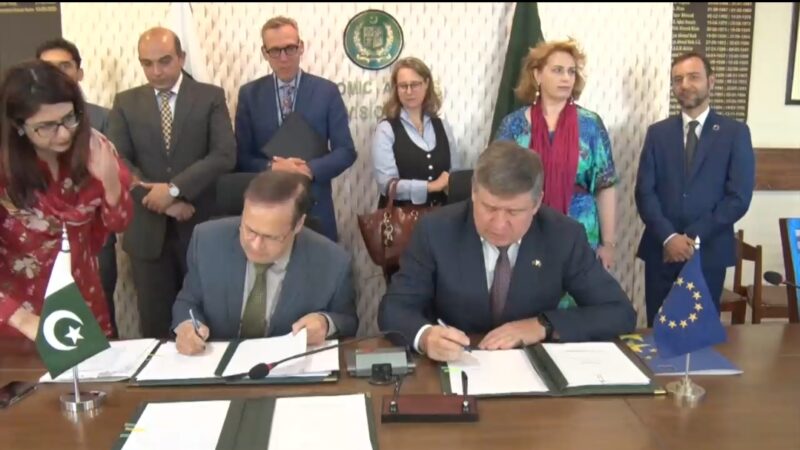



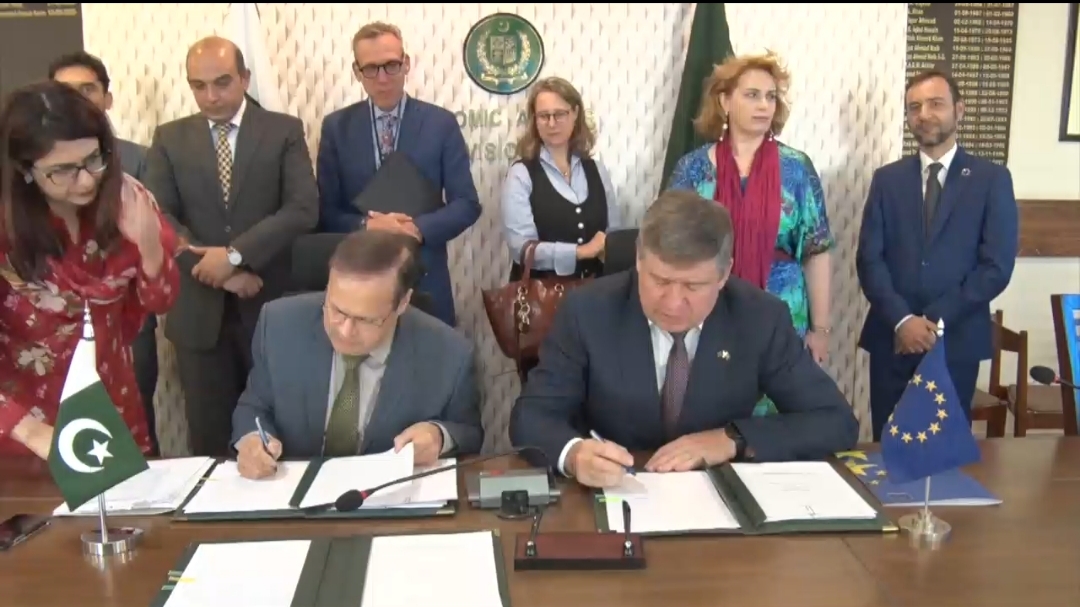
ISLAMABAD, Pakistan and the European Union on Monday signed three grant agreements worth €65 million (around Rs20.64 billion) to support investment, strengthen the rule of law and business environment, and improve energy and environmental resilience.
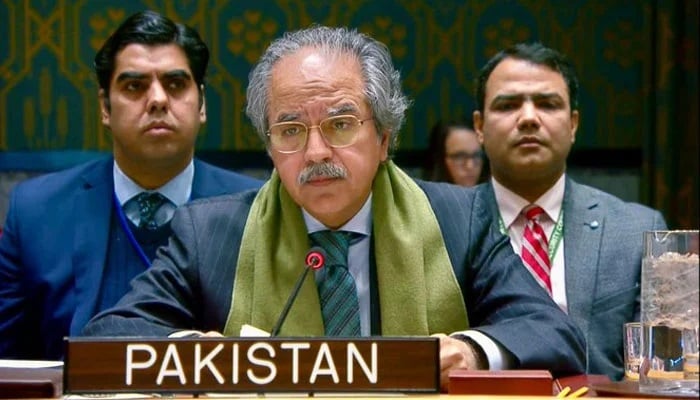
The agreements were signed by EU Ambassador to Pakistan Raimundas Karoblis and Economic Affairs Division Secretary Muhammad Humair Karim.
The funding, provided under the EU’s Multiannual Indicative Programme 2021-2027, will support three initiatives: the Global Gateway Development Facilitation for Pakistan, the Energy and Natural Environment Resilience Programme in Khyber Pakhtunkhwa, and EU Support to the Rule of Law and Business Environment in Pakistan.
The Global Gateway programme aims to attract foreign investment by improving Pakistan’s tax system and strengthening long-term financial planning.
The KP-focused energy programme will promote renewable energy in off-grid rural communities and provide training to encourage private investment and greater private-sector participation in the province’s energy sector.
The rule-of-law programme will improve access to police, prosecution services, courts and legal aid in KP and Balochistan. It will also support Punjab and Sindh in expanding alternative and commercial dispute resolution mechanisms to facilitate investment.
Speaking at the signing ceremony, Karim appreciated the EU’s continued support and said the programmes were aligned with Pakistan’s priorities, including increasing foreign investment, improving electricity access in off-grid areas and strengthening the legal framework for commercial dispute resolution.
Ambassador Karoblis said the agreements reflected the EU’s commitment to Pakistan’s economic development and investment ambitions under its Global Gateway initiative.
He said the programmes would also help strengthen KP’s energy sector and promote sustainable management of natural resources, while improving access to justice in KP and Balochistan. Punjab and Sindh, he added, would receive support to strengthen alternative and commercial dispute resolution through cooperation with the judiciary, legal professionals, universities and the business community.
