

By Khawaja Hamza
Beijing, China and Pakistan on Tuesday jointly proposed a five-point initiative aimed at de-escalating tensions and restoring peace in the Gulf and Middle East, amid growing regional instability.
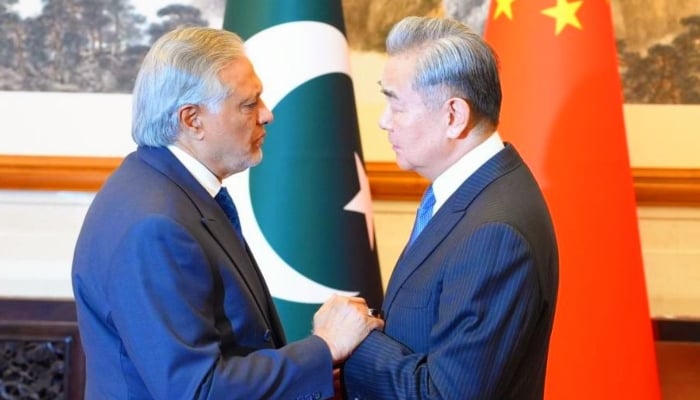
The proposal emerged from a high-level meeting in Beijing between Chinese Foreign Minister Wang Yi and Pakistan’s Deputy Prime Minister and Foreign Minister Ishaq Dar, where both sides reviewed the evolving security situation in the region.
In a joint statement, the two countries called for an immediate cessation of hostilities, urging all parties to exercise restraint and prevent further escalation. They also emphasized the need for unhindered humanitarian access to conflict-affected areas.
The initiative underscored the importance of prompt resumption of peace talks, stressing that dialogue and diplomacy remain the only viable path to resolving disputes. Both sides reaffirmed support for safeguarding the sovereignty, territorial integrity, and national independence of regional states, including Iran and Gulf countries.
China and Pakistan also highlighted the protection of civilians and non-military infrastructure, calling on all parties to adhere strictly to international humanitarian law and halt attacks on critical facilities such as energy installations, desalination plants, and nuclear power infrastructure.
Expressing concern over maritime security, the two countries stressed the need to ensure the safety of shipping routes, particularly in the strategically vital Strait of Hormuz, and called for the safe passage of commercial vessels and crew.
Reaffirming their commitment to global governance, both nations emphasized the central role of the United Nations, urging strengthened multilateral efforts to achieve a comprehensive and lasting peace framework in line with international law and the UN Charter.
The joint initiative reflects Beijing and Islamabad’s shared commitment to promoting stability through diplomacy at a time of heightened geopolitical tensions in the region.
