
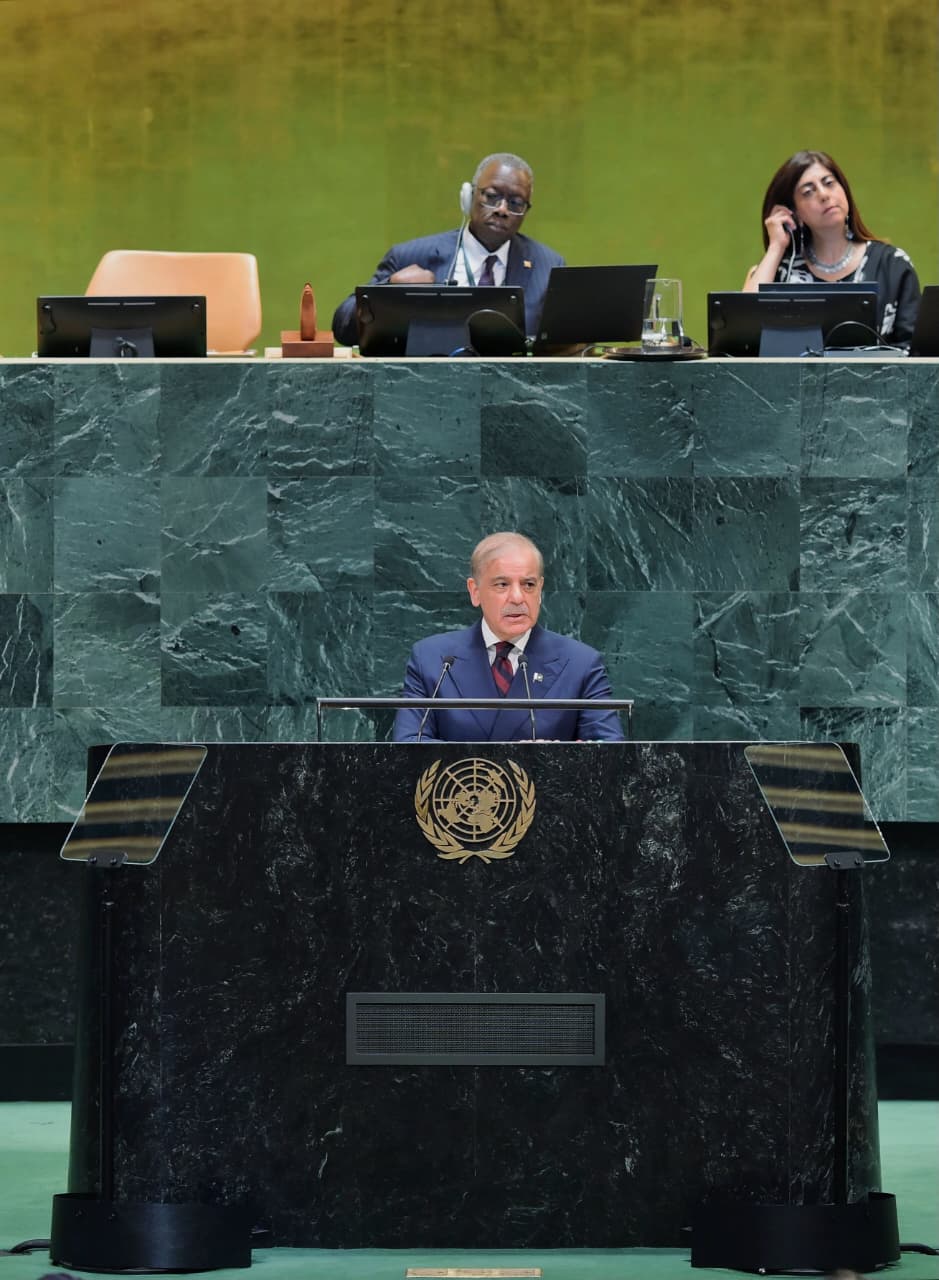
UNITED NATIONS, Prime Minister Shehbaz Sharif on Friday said that Pakistan had chosen peace and dialogue over confrontation, stressing that the resolution of prevailing conflicts, including Middle East, Kashmir and Palestine, was crucial to ensure the restoration of global trust and peace.
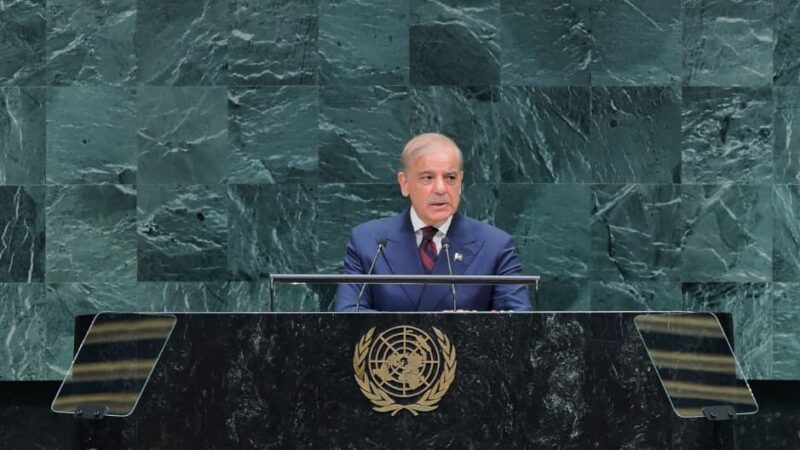
“We live at a dangerous moment. But our future is certainly not predetermined. Therefore, of course, war is a choice. Peace is also a choice. And sometimes, the greater courage lies, not in starting a war- but in preventing one. Pakistan has made its choice. We have chosen dialogue over confrontation. We have chosen cooperation over coercion. We have chosen peace over war,” the prime minister said in his address at the General Debate of the 81st session of the United Nations General Assembly held under the theme, “Restoring Trust, Managing Transformation: A United Nations That Delivers for All.”
Marking his fourth address to the 193-member world body, Prime Minister Shehbaz outlined Pakistan’s vision on pressing global and regional challenges, and touched upon a wide array of issues, prominently the situation in the Middle East, human rights violations and the ongoing humanitarian crises in Palestine and Indian Illegally Occupied Jammu and Kashmir (IIOJK), Indian unilateral suspension of Indus Waters Treaty, the rising threat of terrorism emanating from Afghanistan, the impacts of climate change, widening economic and debt burdens on developing countries, and the urgent need for global de-escalation and dialogue.
Beginning his address with traditional salutations, the prime minister framed Pakistan’s vision for global harmony by quoting a verse from the Holy Quran on peace, followed by Quaid-e-Azam Muhammad Ali Jinnah’s declaration of steadfast support for the United Nations Charter.
Underscoring the Middle East conflict and a “dangerous” surge in hostilities, he said, “Yet, amid the roar of missiles, drones and guns, the voices for diplomacy must echo even louder.”
He told the world leaders that after the eruption of regional conflict, Pakistan acted swiftly and through concerted efforts, it successfully brought Washington and Tehran to dialogue in Islamabad which led to signing of Islamabad Memorandum of Understanding.
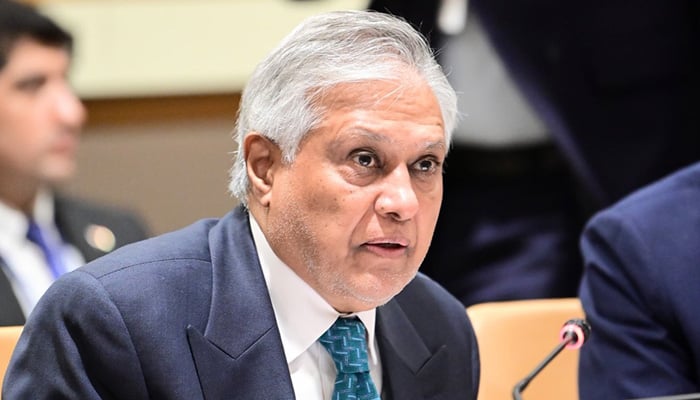
He appreciated the role of Deputy Prime Minister and Foreign Minister Ishaq Dar and Field Marshal Syed Asim Munir’s relentless efforts for creating space for diplomacy under exceptionally difficult circumstances as well as the effort.
Calling the Strait of Hormuz and Bab-Al-Mandeb arteries of global economy, he called for their opening to connect nations instead of becoming choke-points of confrontation.
“These waters must carry the promise of prosperity, not the perils of war,” he remarked.
The prime minister strongly condemned the recent attacks by the Houthis, against the Saudi Arabia particularly the one
attempted to target Holy City of Makkah Al-Mukarramah, which had outraged Muslims across the globe.
“Any threat to the safety and sanctity of the Haramain Sharifain, is a red line, that must never be crossed. No Muslim, can even dare to think, of committing such a heinous crime,” he said and reaffirmed Pakistan’s complete solidarity with the Kingdom.
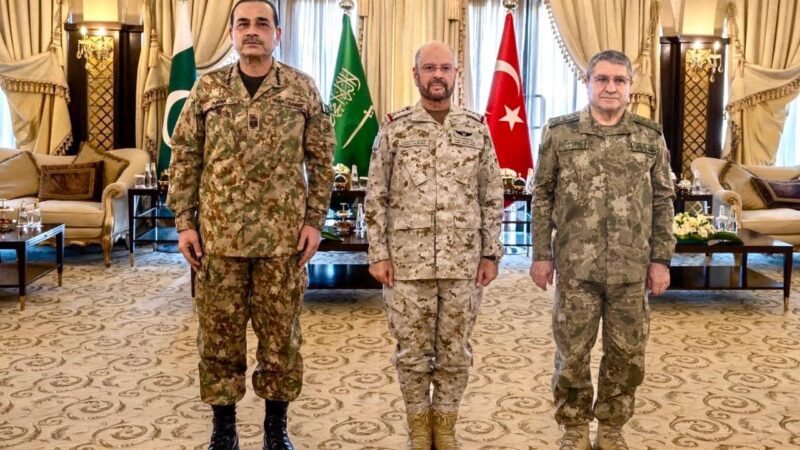
Coming to the Makkah Joint Defence Agreement signed between Pakistan, Saudi Arabia and Turkiye, he said the alliance was not directed against any country but aimed at collective commitment for defence, stability and peace in the region.
Referring to the last year’s war between Pakistan and India, he said Pakistan exercised its inherent right of self-defence and its brave armed forces led by Field Marshal Syed Asim Munir, responded with precision and professionalism.
“They silenced the enemy, repulsed its attacks, and taught it a lesson, it shall never ever forget,” he said and reiterated the praise for US President Donald Trump whose “resolute, and visionary” leadership saved hundreds of millions of lives in South Asia owing to his timely intervention at that critical moment with clarity of thought and action.
The prime minister told the world leaders that peace in South Asia was linked with a just and fair solution of the Jammu and Kashmir dispute as people had been waited for the United Nations to fulfil its commitment of a free and impartial plebiscite.
Highlighting the Indian illegal occupation, arbitrary extra-judicial detention, killings, enforced disappearances, sexual violence and collective punishment, he said that India had been attempting to alter the legal status of Jammu and Kashmir, through demographic re-engineering and other illegal measures.
“Helpless Kashmiri mothers and fathers, yearn for their sons and daughters, who never return. Their homes lie silent, under curfew and in deep grief. For many, there is no closure – only a lifetime spent, searching for graves that bear no names,”
he said and assured the Kashmiri people of Pakistan’s full diplomatic, political, and moral support, till their inalienable right to self-determination.
Calling the shared waters of the Indus River system, the “lifeblood” not only for Pakistan but the entire region, he said that India’s unilateral decision to hold the Indus Waters Treaty in abeyance has no legal basis which was also rejected by UN experts, and more recently, by the Court of Arbitration vindicating Pakistan’s stance on Treaty’s validity.
“Water must never be weaponized. Rivers should nourish nations, not divide them. Therefore, any attempt to stop, impede or divert Pakistan’s share of the waters will be treated as an act of war. India must make no mistake about it,” he declared.
Highlighting the plight of generations of Palestinians suffering under occupation, Prime Minister Shehbaz referred to the tragic deaths of young victims like Hind Rajab and eight-year-old Wafaa Akila to challenge global silence, failure and inaction.
“Does not a child born in Gaza, deserve the same life, the same future and a same dream, as a child anywhere else in the world? The tragedies of Hind Rajab, Wafaa Akila, and countless others, will echo through history, as an indictment of our collective silence and inaction.”
Condemning the expanding violence in the West Bank, Lebanon, and Syria, he reiterated that Pakistan viewed an independent, viable Palestinian state based on pre-1967 borders with Al-Quds Al-Sharif as its capital as the only just and lasting solution.
Apprising the world of Pakistan’s sacrifices against terrorism as a frontline state, having lost almost 100,000 precious lives of armed forces and civilians and suffered economic losses worth over $150 billion, he said that the world was safer today due to these valuable sacrifices which the world must never forget.
The prime minister reiterated that Afghan territory continued to be exploited by the foreign-funded TTP – Fitna-al-Khawarij, and BLA – Fitna-al-Hindustan to destabilize Pakistan which must come to a grinding halt.
He urged the Afghan authorities to fulfill their international commitments and take verifiable, decisive action, to stop the use of Afghan soil against Pakistan, or any other country, besides respecting the fundamental rights of the Afghan people – especially women and girls under all circumstance.
He praised Pakistan’s long-standing role in UN peacekeeping under the blue flag and voiced deep concern over the global rise of Islamophobia, including hate speech, mosque attacks, and the desecration of the Holy Quran.
He specifically highlighted cross-border threats from the RSS-driven Hindutva ideology pointing to the recent demolition of a 150-year-old mosque in Saharanpur and declared that religious hatred must have no place in the world.
Highlighting his government’s mission of economic revival, he said that through difficult and long overdue structural reforms, and stringent fiscal discipline, macro-economic stability had been achieved and efforts were underway for sustainable, and inclusive growth.
He also referred to modernizing agriculture and industry, developing mineral resources, digitalizing economy, equipping youth, with modern AI and IT skills, besides strengthening regional connectivity.
Appreciating the visionary leadership of President Xi Jinping, for spearheading the Global Development Initiative, the Global Security Initiative, the Global Civilization Initiative and, the Global Governance Initiative, he reiterated that developing countries were in dire need of timely debt relief, affordable long-term financing, and a stronger voice in global financial institutions.
He said that Pakistan was opening new pathways with China through the China-Pakistan Economic Corridor as well as with Gulf Central Asia and beyond.
He said that despite contributing less than one per cent of global emissions, Pakistan repeatedly suffered the horrific repercussions of climate change which necessitated the developed world to honour their climate-finance commitments without delay, fund Loss and Damage speedily, and ensure support for adaptation and resilience.
“The theme of this session calls upon us to restore trust. But trust cannot be restored by simple words alone. It must be earned through actions and behaviour. We will restore trust, when the rivers become, life-lines of cooperation, not fault-lines of conflict. We will restore trust, when those, who fuelled the climate crisis, protect those, who suffer most, from its devastating consequences. And above all, trust will be restored, when the guns are silenced and replaced by handshakes and embraces and smiles.”
The prime minister called for a stronger and more effective United Nations, demanding that the Security Council become more representative, democratic, and accountable.
Emphasizing that reforms must reflect the aspirations of the majority rather than a select few, he reaffirmed Pakistan’s motto: “Reform for All, Privilege for None!”
“Let this 81st General Assembly make the same choice – for us, for our children, and for generations yet unborn. Let us restore trust. Let us preserve peace. And let us prove that, even in a divided world, humanity can still choose to stand together,” he remarked.
Earlier, congratulating newly elected 81st General Assembly President Khalil ur Rahman, he praised the able stewardship of outgoing President of 80th session Annalena Baerbock alongside UN Secretary-General António Guterres for his dynamic leadership, and his strong advocacy, for the UN and the Global South and for downtrodden.
