

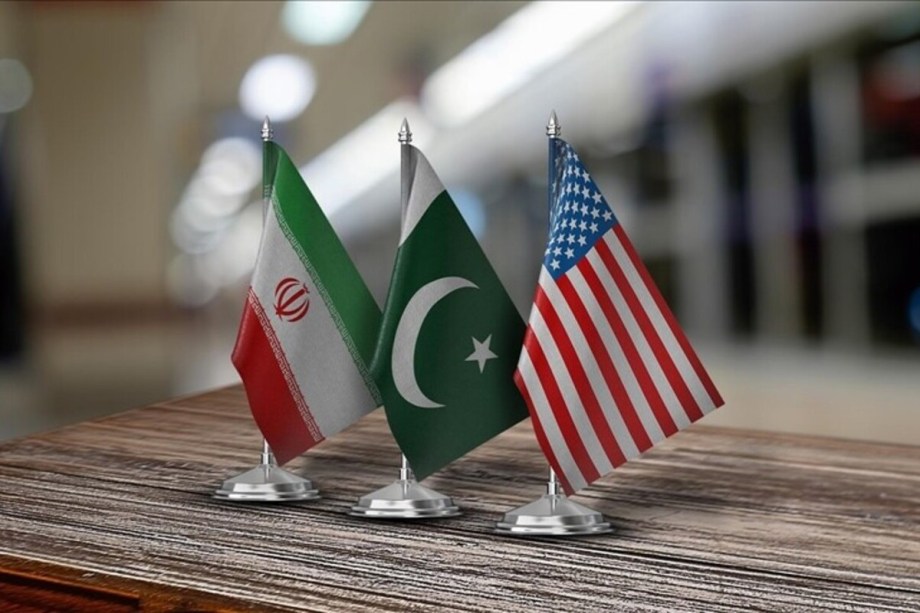
By Khawaja Hamza
A potential peace agreement between the United States and Iran is being viewed by many analysts as a possible turning point for the Middle East and South Asia, with significant economic, geopolitical, and strategic implications for countries across the region, especially Pakistan.
One of the immediate expected benefits of reduced tensions between Washington and Tehran would be stability in the Strait of Hormuz, a critical global energy route through which a large portion of the world’s oil and gas supplies pass. If regional tensions decline, oil and gas prices could stabilize or decrease, providing major relief to energy-importing countries like Pakistan, which has long struggled with inflation and economic pressure linked to high fuel costs.
Under a possible agreement framework, Iran could reportedly commit to ensuring that its nuclear program remains peaceful, while the United States could respond by easing or lifting sanctions imposed on Tehran. Such a development would likely open the Iranian economy to regional and international trade, creating what many believe could become a major economic breakthrough for the wider region.
A peaceful regional environment could accelerate trade, investment, and infrastructure projects involving Pakistan, Iran, Turkey, Gulf countries, and Central Asian states. New economic and political alignments may emerge as countries seek deeper regional connectivity and cooperation. Pakistan’s geographical position could become increasingly important because of its land and sea access routes connecting South Asia, the Middle East, and Central Asia.
Observers also believe that a successful U.S.-Iran understanding could reshape global diplomacy. While the United States may continue to remain a dominant global power, the international order could gradually evolve into a more multipolar system in which China and Russia play increasingly influential roles alongside Washington. Supporters of this view argue that such a balance could create a more stable international environment.
There is also growing discussion that if tensions in the Middle East ease, international diplomatic efforts may intensify to address other major global conflicts, including the Russia-Ukraine war and tensions between China and Taiwan, many believe that broader global stability could encourage diplomatic solutions elsewhere.
Regional observers further speculate that new strategic partnerships may emerge involving countries such as Pakistan, Iran, Turkey, Qatar, Saudi Arabia, Azerbaijan, and possibly Egypt. These discussions often focus on increased economic cooperation, regional security coordination, and shared infrastructure development. Many of these countries are already linked in various ways to China’s Belt and Road Initiative, which aims to strengthen trade and connectivity across Asia, the Middle East, and Europe.
At the same time, India is also expected to push forward efforts to revive the India-Middle East-Europe Corridor (IMEC), a major connectivity initiative seen by some analysts as a strategic alternative to China’s Belt and Road Initiative. In response to evolving regional trade dynamics, discussions have also continued regarding railway and transport projects connecting Pakistan with Iran, Turkey, Europe, and the Middle East, potentially transforming Pakistan into a major transit and trade hub.
Afghanistan could also benefit significantly from a more stable regional environment if it addresses Pakistan’s security concerns and improves bilateral relations with Islamabad. Improved regional cooperation could revive projects such as the TAPI gas pipeline, which has remained delayed for years due to security and political challenges.
However, analysts argue that Pakistan’s ability to fully benefit from these potential opportunities would depend heavily on domestic reforms and long-term stability. Political stability, free and fair elections, institutional continuity, constitutional governance, and improved law and order — particularly in Khyber Pakhtunkhwa and Balochistan — would be essential for attracting investment and ensuring sustainable development.
Experts also emphasize that economic activity must be expanded in underdeveloped regions by creating employment opportunities, improving infrastructure, and providing basic facilities to local populations. They argue that lasting regional integration and economic progress can only succeed if governance remains transparent and constitutional principles are implemented consistently rather than altered for short-term political interests.
Writer is an Islamabad-based journalist, offers in-depth analysis on security, political, and foreign affairs, and can be contacted at hamzakhawaja793@gmail.com
