




Pakistan has responded to India’s unilateral announcement to hold the historic Indus Waters Treaty (IWT) in abeyance by reiterating its formal legal and strategic position, warning that any attempt by New Delhi to alter, deny, or interfere with its lawful share of water carries grave consequences. This position follows a high-level National Security Committee (NSC) declaration issued on 24 April, 2026, which noted that the treaty is a binding international agreement brokered by the World Bank containing no provision for unilateral suspension. Asserting that water is a vital national interest and a lifeline for its 240 million people, the NSC statement emphasized that any attempt to stop or divert the flow of water belonging to Pakistan, or to usurp the rights of the lower riparian, will be considered an Act of War and responded to with full force across the complete spectrum of national power.
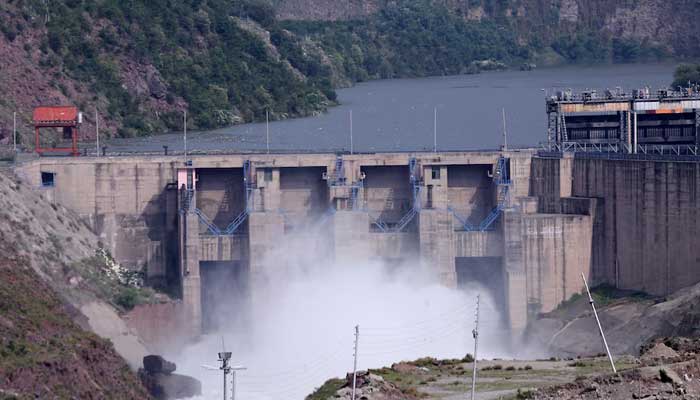
New Delhi has rapidly moved beyond political rhetoric to create facts on the ground by restricting hydrological cooperation, accelerating work on hydropower infrastructure, and initiating sediment-management measures at existing projects. Most alarming for Islamabad is India’s proposed Rs 2,352 crore Chenab–Beas Link Tunnel, designed to divert water from the Chenab basin, a Western River allocated to Pakistan under the treaty into the Beas system. Under the strict legal provisions of the IWT, the Western Rivers are reserved for Pakistan’s unrestricted use, making the Chenab-Beas proposal a direct violation by shifting water across distinct river systems. The underlying intent behind the infrastructure has been laid bare by Indian politicians themselves; former Himachal Pradesh Chief Minister Jai Ram Thakur openly stated that the project would prevent surplus waters from flowing into Pakistan, while BJP leader Anurag Thakur described the initiative as “rubbing salt into Pakistan’s wounds,” demonstrating that the project is being viewed in India as a strategic weapon directed against Pakistan.
While India cannot stop the Indus system overnight, nor can a single tunnel suddenly deprive Pakistan of its due share, the core concern lies in India’s calculated construction of upstream infrastructure to build leverage over downstream flows. The stakes could not be higher, as the Indus Basin supports more than 90 percent of Pakistan’s food production, while agriculture contributes roughly one quarter of the national GDP and sustains tens of millions of livelihoods. Because water availability directly affects food prices, employment, industrial output, and overall economic stability, water security has become entirely inseparable from national security.
In response to India’s unilateral actions, Pakistan is preparing to operate on multiple fronts simultaneously by managing its existing system more efficiently, constructing additional storage, and seeking legal recourse under treaty provisions, even if New Delhi’s unilateral suspension makes legal mechanisms difficult. To fund these critical undertakings, calls are mounting to significantly enhance the federal Public Sector Development Programme (PSDP) of Rs 1.1 trillion to meet WAPDA’s annual requirement of Rs 600–900 billion, while provinces are urged to allocate a greater share of their development budgets toward hydropower and water-storage infrastructure for the next ten years.
The proposed domestic counter strategy includes fast tracking four Chenab storage projects identified by WAPDA totaling nearly 4.5 Million Acre Feet (MAF) at Chiniot, Wazirabad, Midh Ranjha, and the Shah Jiwana Storage Facility. Additionally, Pakistan plans to accelerate construction on the Diamer-Bhasha Dam, Mohmand Dam, and the proposed Dudhnial Multipurpose Project, while expanding the capacity of the Marala Ravi Link Canal to divert floodwaters and building a new Mangla–Marala Link Canal to stabilize low water periods. On the agricultural front, the strategy requires shifting from water intensive crops toward drought resistant varieties in Chenab dependent districts, alongside launching emergency canal lining to plug the 30 to 40 percent of water lost to seepage. By strengthening groundwater regulations and developing flood storage and aquifer recharge infrastructure to capture surplus monsoon flows, Pakistan intends to defeat India’s upstream leverage by building downstream capacity and resilience, ensuring that every drop is judiciously utilized.
The message from Pakistan is clear that Indian violations of the IWT can become triggers for war and will be dealt with firmly, as it remains a matter of survival for 250 million people and Pakistan will not let India usurp its rights.
