
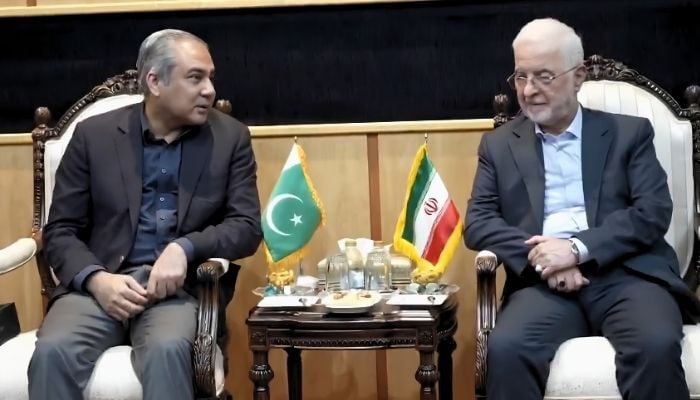
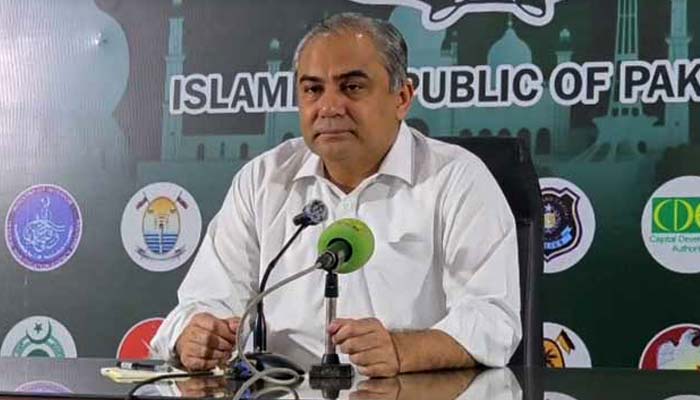
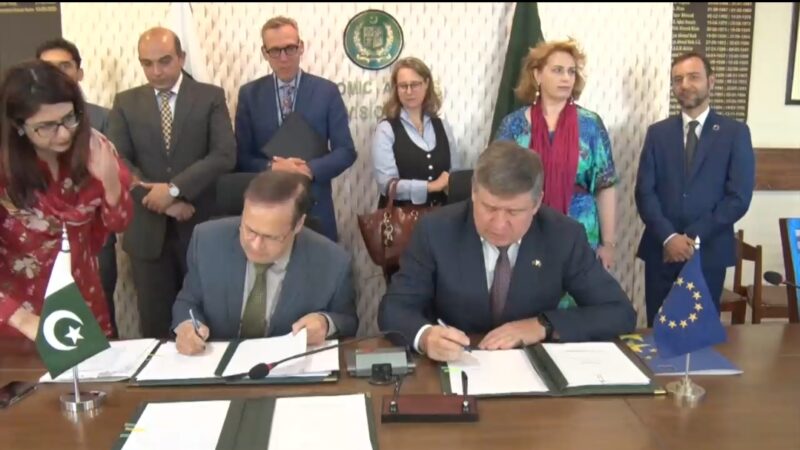
Interior Minister Mohsin Naqvi’s met Iranian counterpart Eskandar Momeni as the duo exchanged views on Pakistan-Iran bilateral relations and the latest situation in the region
“In the meeting, progress was reviewed on the ongoing cooperation between the interior ministries of both countries in various sectors,” the interior ministry posted on X.
The meeting was held amid stalled talks between the United States and Iran to end the war that began in February this year. Since the start of the war, Pakistan has been playing a key role in reducing tensions and promoting regional peace.
The ministry added that Momeni thanked Prime Minister Shehbaz Sharif and Field Marshal Asim Munir for their efforts towards regional peace and stability.
“We are grateful for Pakistan’s continuous efforts to establish peace in the region and the recent visit was very beneficial,” the Iranian interior minister said.
“In the coming times, bilateral relations will become even stronger,” Naqvi added.
The unrest in the Middle East started on February 28 this year following coordinated US-Israeli strikes targeting Iran’s leadership and infrastructure. Tehran responded with retaliatory operations, including the disruption of shipping through the Strait of Hormuz and attacks on Israeli and US targets in the region.
The US then responded by blocking shipping to and from Iranian ports.
A ceasefire was eventually announced on April 8, with Pakistan playing a central role in mediation. The US and Iran also held 21-hour-long talks in Islamabad the same month and eventually inked the Islamabad Memorandum of Understanding signed by Prime Minister Shehbaz Sharif, US President Donald Trump, and Iranian President Masoud Pezeshkian on June 18.
In July, the US and Iran resumed strikes and blamed each other for violations of the Islamabad MoU.
The conflict has looked stalemated for months, with neither the US nor Iran ready for concessions, even as it has deepened a global energy crisis and spilled over into new regional escalations.
Moreover, the Houthis, who have controlled Yemen’s capital since 2014, seized the country’s Red Sea coast this month in an advance that routed forces of the Saudi-backed government.
On Sunday, Iran and the United States exchanged new threats, with President Donald Trump warning Iran would fail economically or face its leadership being wiped out if it didn’t make a deal, and the Iranian military saying it would retaliate harshly to any fresh attack.
Iran’s military central command said any new attack would trigger sustained retaliation against US bases and interests and that Washington’s regional allies would be considered parties to the conflict.
The Iranian military added that it had information that an attack was being prepared, without elaborating on what that information might be.
