


By Khawaja Hamza
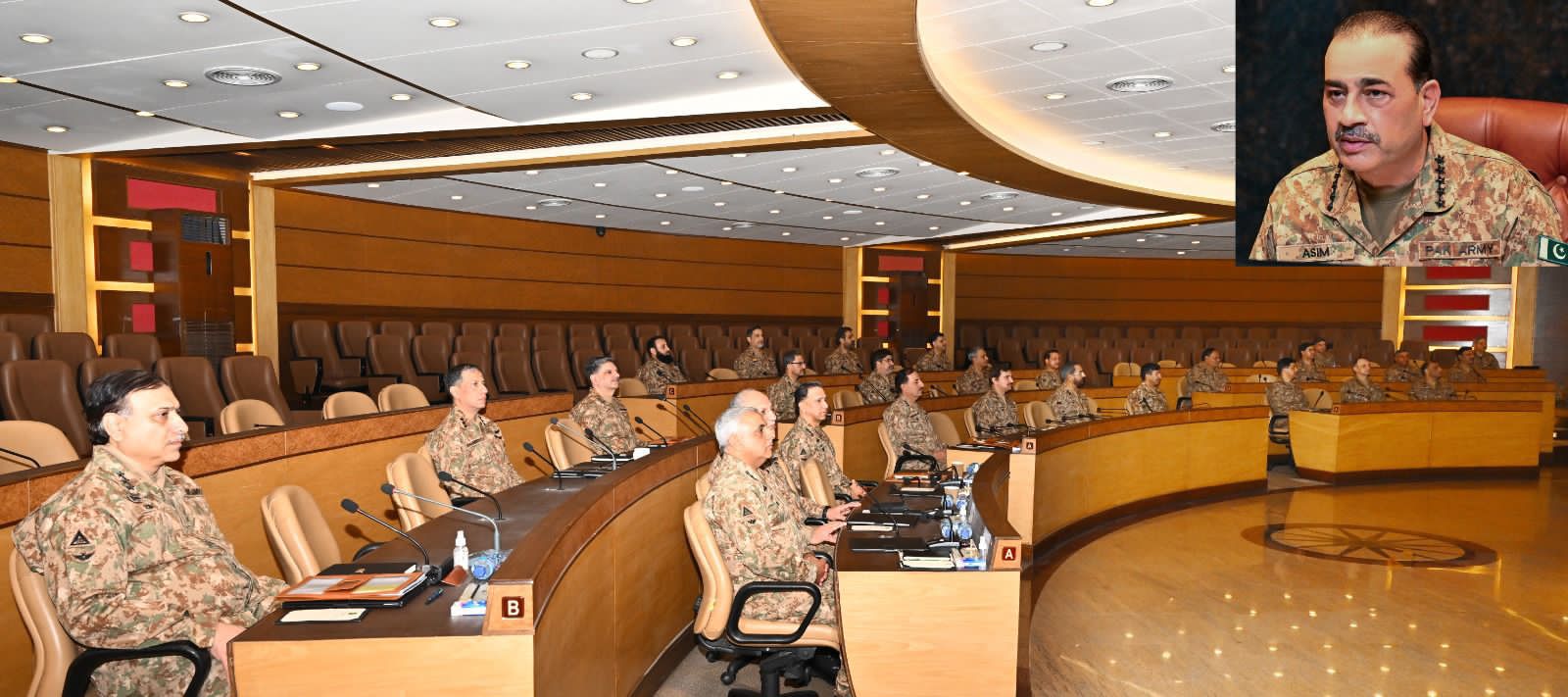
Rawalpindi, Field Marshal Syed Asim Munir, Chief of Army Staff (COAS) and Chairman of the Joint Chiefs of Staff Committee (CDF), chaired the 273rd Corps Commanders’ Conference (CCC) at the General Headquarters (GHQ) in Rawalpindi today. The meeting, which focused on national security and ongoing counter-terrorism operations, underscored Pakistan’s resolve to tackle evolving threats to its sovereignty.
The conference began with a moment of silence as attendees offered Fateha (prayers) for the Shuhada (martyrs) of Pakistan’s Armed Forces, Law Enforcement Agencies, and innocent civilians who have lost their lives in recent terrorist attacks while defending the country.
In his address, Field Marshal Munir paid tribute to the courage and sacrifices of the Pakistan Armed Forces, acknowledging their professionalism in executing intelligence-based counter-terrorism operations in recent months. He also commended the strong collaboration between the military, government, and the Pakistani people, stressing that the nation was steadily progressing toward greater stability and increased respect on the global stage.
National Security and Operational Readiness
The meeting included a detailed review of Pakistan’s current security environment, both internal and external, with a focus on emerging threats. Emphasizing Pakistan’s commitment to safeguarding its sovereignty, the COAS reaffirmed that terrorism—especially that which is sponsored by foreign actors—will be dealt with decisively. The military vowed to take firm action against terrorists, their facilitators, and any political entities involved in creating divisions within the country.
“Pakistan will not tolerate any forces—whether political or otherwise—that seek to undermine national unity, security, or stability,” said Field Marshal Munir. He also addressed the growing nexus between terrorism and political interests, rejecting any attempts to exploit terrorism for vested political gains.
Balochistan Development Initiatives
The forum highlighted recent development initiatives in Balochistan, aimed at empowering local communities and addressing governance-related challenges linked to terrorism. The military expressed its support for these efforts, noting that similar public-centric initiatives should be replicated in other regions, such as Khyber Pakhtunkhwa (KP), to promote lasting peace and stability across the country. These efforts align with Pakistan’s National Action Plan, designed to tackle terrorism and extremism through both security and socio-economic measures.
Support for Kashmir and Palestine
The Corps Commanders’ Conference also reaffirmed Pakistan’s unwavering support for the Kashmiri people’s right to self-determination, emphasizing that Pakistan will continue to advocate for the legitimate struggle of Kashmiris on the global stage. The forum also reiterated Pakistan’s principled stance on the Palestine issue, calling for an immediate ceasefire in Gaza, unrestricted humanitarian aid access, and a credible pathway to Palestinian statehood.
Military Preparedness
Concluding the conference, the COAS urged military commanders to maintain the highest standards in operational readiness, discipline, and training. He stressed the importance of adapting to evolving security challenges, including conventional, sub-conventional, and hybrid threats. The army’s ability to counter a wide spectrum of threats, while safeguarding national sovereignty and territorial integrity, was affirmed.
“Pakistan’s military is prepared to meet every challenge, from conventional warfare to asymmetric threats, ensuring the security of the nation and its people,” Field Marshal Munir stated with confidence.
Today’s conference underscored the Pakistan military’s comprehensive approach to national security, balancing hard military power with socio-economic development. With the ever-present threat of terrorism, the military’s leadership appears focused on both tactical counter-terrorism operations and broader initiatives aimed at ensuring long-term stability. However, the rejection of any political interference in the military’s operations signals a commitment to maintaining Pakistan’s sovereignty, both in defense and governance
