


By Khawaja Hamza
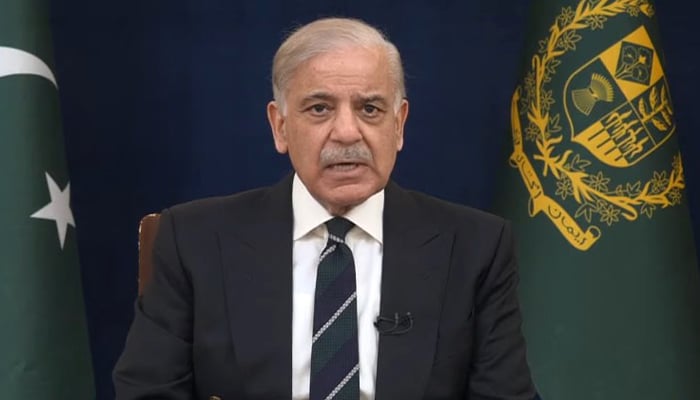
Islamabad, Prime Minister Shehbaz Sharif on Monday announced a wide-ranging austerity and energy-saving plan, saying the measures were necessary to cope with the global fuel crisis triggered by the ongoing tensions involving the United States, Israel and Iran.
Addressing the nation, the prime minister said the entire region had been gripped by conflict and stressed that Pakistan was making diplomatic efforts to help defuse the crisis.
“The entire region is currently in a state of war,” he said, adding that Pakistan was working through diplomatic channels to help resolve the situation peacefully.
The premier also highlighted the security challenges faced by Pakistan along its western borders, noting that the country continued to confront terrorism. He praised the armed forces for effectively dealing with the situation under the leadership of Chief of Defence Staff Field Marshal Asim Munir.
The prime minister condemned the attacks on Iran which he said resulted in the assassination of Iran’s Supreme Leader Ali Khamenei. He also condemned retaliatory attacks on friendly Gulf countries and said Pakistan stood in solidarity with its brotherly nations.
Sharif said he had spoken with leaders of friendly countries to discuss the evolving situation. “I have held detailed discussions with the leaders of brotherly countries and conveyed that Pakistan stands shoulder to shoulder with them in this difficult time,” he said.
The prime minister noted that the global oil market had reacted sharply to the conflict. He said crude oil prices in the international market had surged from around $60 per barrel to more than $100 per barrel, adding that Pakistan’s daily life depended heavily on oil and gas supplies from the Gulf region.
He said the government had taken difficult economic and administrative decisions to manage the situation and reduce the impact of the energy crisis.
“The increase in petroleum prices was a difficult decision taken with a heavy heart,” the prime minister said. “My mind told me there was no option but to increase fuel prices, while my heart worried that it could place a burden on the poor.”
Announcing a series of austerity steps, the prime minister said both federal and provincial governments would adopt strict measures to reduce expenditures and conserve energy.
Under the new plan, fuel allocations for vehicles used by government departments will be reduced by 50 percent for the next two months, while 60 percent of official vehicles will remain off the roads during the same period.
Members of the federal cabinet, advisers and special assistants will not draw salaries for two months, while members of parliament will face a 25 percent salary cut. In addition, all government departments will reduce expenditures by 20 percent.
The government has also imposed a ban on foreign visits by federal and provincial ministers, advisers, special assistants and government officials, except for visits deemed essential for national interest. Teleconferencing and online meetings will be prioritised.
The prime minister also announced a complete ban on official dinners and iftar parties, while seminars and official events will only be held at government venues to minimise expenses.
He further said that 50 percent of staff in both public and private sectors would work from home except in essential services, and government offices would operate four days a week, though banks would remain exempt from the policy.
As part of energy conservation measures, all schools will be closed for two weeks starting at the end of the current week.
The prime minister also warned traders against hoarding essential commodities during the crisis. “I want to warn hoarders not to take unfair advantage of the current situation,” he said.
Sharif concluded by urging the nation to demonstrate unity and responsibility, saying the world was facing new challenges and shifting global alliances.
“Our nation needs unity and a strong sense of responsibility,” he said.
